Sorbus, Genus, sitchensis, Species,
- Genus & species
sitka mountain ash
Western North America: Alaska to California, east to Rockies
Overview
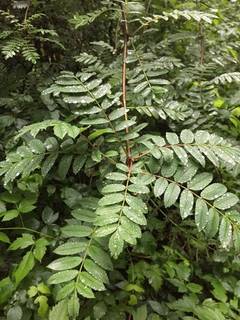
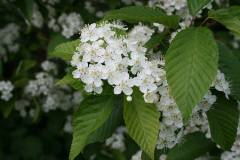
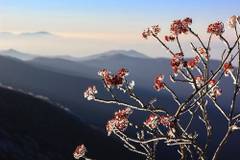
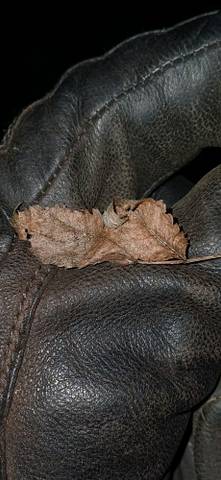
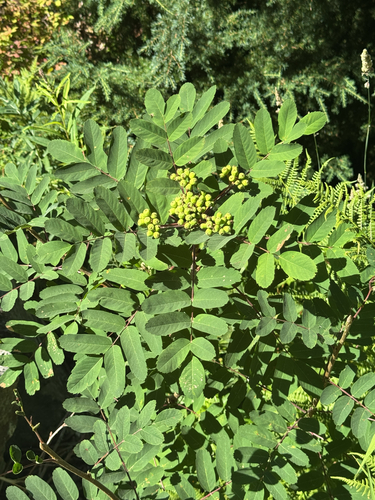
Sorbus sitchensis is a small deciduous shrub or rarely small tree reaching 6-15 feet (1.8-4.5 m) tall and 6-10 feet (1.8-3 m) wide, with multiple stems rising from a basal crown and an open spreading habit. Bark is smooth grey-brown on young stems and becomes lightly fissured on older trunks. Leaves are alternate and pinnately compound with 7-11 leaflets, each leaflet 1-2 inches (2.5-5 cm) long, oblong with rounded tips, blue-green above and slightly paler beneath, with serrations only on the upper third of the margin. Foliage turns red-orange in fall before dropping in October. Flowers are white, 0.3-0.4 inches (8-10 mm) across, in flat-topped clusters of 30-80 from late May through July. Fruits are red to orange-red pomes 0.3-0.5 inches (8-13 mm) across, ripening in August and September and persisting on the shrub into winter until consumed by Bohemian waxwings, varied thrushes, and bears. Plants tolerate heavy snow load and short cool growing seasons but decline within 2-3 years on hot lowland sites with summer drought. Fire blight (Erwinia amylovora) infections produce blackened wilted shoots in some years and require pruning out 6 inches (15 cm) below visible damage.
Native Range
Native to the mountains of western North America from southeastern Alaska south through British Columbia, Washington, Oregon, and northern California, east to Idaho, Montana, and Wyoming. Grows in subalpine forest openings, near treeline meadows, on rocky slopes, and along avalanche tracks at 2,500-7,500 feet (750-2,300 m) elevation.Suggested Uses
Used in mountain native plant gardens, mixed shrub borders in zones 4-7, and bird-attracting plantings in cool-summer climates. Spaced 8-12 feet (2.5-3.5 m) apart in mass plantings or 15+ feet (4.5+ m) for solo specimens. Not suited to small lots in zones 8-10 below 2,000 feet (600 m), where summer heat causes leaf scorch and fruit drop within 2-3 years of planting.How to Identify
Appearance
Size & Dimensions
Height6' - 15'
Width/Spread6' - 10'
Colors
Bloom Information
Late May through July across the range; begins late April at lower elevations in coastal Oregon and extends into early August in the high Cascades and northern Rockies. Individual flowers last 4-6 days; total bloom period at the shrub level lasts 2-3 weeks. Fruits develop within 2-3 weeks of bloom and ripen 10-12 weeks after pollination.
Detailed Descriptions
Foliage Description
Blue-green above, paler beneathGrowing Conditions
Sun Requirements
Requires 4-10 hours of direct sunlight daily
• Full Sun: 6+ hours of direct sunlight
• Partial Shade: 3-6 hours of direct sunlight
• Full Shade: Less than 3 hours of direct sunlight
Care & Maintenance
Care Guide
Establish in moist well-drained acidic to neutral loam at pH 5.5-7.0; the species declines in heavy clay, alkaline soils, or hot dry sites below 2,000 feet (600 m). Water during the first 2 growing seasons; established plants survive on natural rainfall in the native range but require supplemental water in low-elevation gardens during summer dry months. Fire blight is the most common disease in cultivation and produces hooked blackened shoot tips in spring; affected stems must be cut out 6-12 inches (15-30 cm) below visible damage and tools sterilized between cuts. Apple scab and powdery mildew develop on second-year leaves in humid conditions; both are cosmetic. Few pests trouble the species in cool climates. Birds drop seeds throughout neighborhoods, producing volunteer seedlings in adjacent gardens within 5-10 years.Pruning
Cut diseased stems at any time of year; structural pruning for form is performed in late winter (February-March) before new growth begins. Removal of more than one-third of the canopy in a single season triggers vigorous watersprout regrowth from cut points. Spent flower clusters can be removed if fruit is not desired, but most cultivated plants are grown for the persistent red pomes.Pruning Schedule
Prune: February–March
winterearly spring