Sorbus, Genus, alnifolia, Species,
- Genus & species
Korean mountain ash
East Asia (China, Korea, Japan; mountain forests and forest margins, 1,500–7,000 feet / 450–2,100 m)
Overview
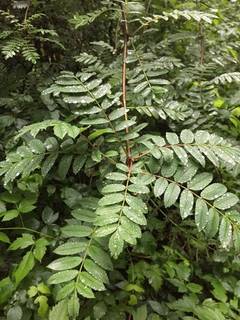
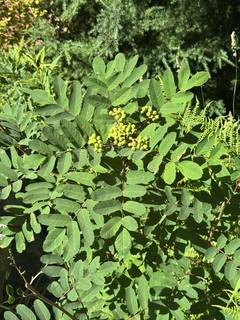
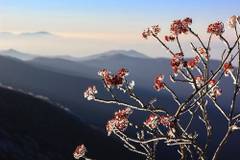
Sorbus alnifolia is a deciduous tree in the rose family (Rosaceae) reaching 30–40 feet (9–12 m) tall with a spread of 20–30 feet (6–9 m). The habit is upright with a straight trunk supporting a broad pyramidal to rounded crown. Native to East Asia — China, Korea, and Japan — the species occurs in mountain forests and along forest margins at elevations of 1,500–7,000 feet (450–2,100 m). Leaves are simple rather than pinnately compound, which separates this species from most other cultivated Sorbus; leaf blades are broadly ovate, 2–4 inches (5–10 cm) long, with prominent parallel lateral veins and sharply serrate margins, resembling alder (Alnus) foliage and giving the epithet 'alnifolia'. Dense corymbs of small white flowers 0.3 inch (8 mm) across open in May–June. Oval orange to pinkish-red pomes 0.3–0.4 inch (8–10 mm) in clusters ripen in September–October and typically hold on the tree for 4–6 weeks until birds strip them. Autumn foliage turns orange to scarlet. Growth rate is moderate at 12–18 inches (30–45 cm) per year. Hardy to zone 4. Resistance to fireblight and to borers is higher than in S. aucuparia, though performance declines in prolonged heat above zone 7.
Native Range
Sorbus alnifolia is native to East Asia — China, Korea, and Japan — where it grows in mountain forests and along forest margins at elevations of 1,500–7,000 feet (450–2,100 m).Suggested Uses
Grown as a medium shade tree, specimen, or street tree at 20–30 foot (6–9 m) spacing where the simple foliage and orange-red fruit display can be seen at close range. The autumn combination of orange-to-scarlet foliage and orange-red pomes fills the late-season color gap between summer flowering and pure leaf-color trees. Cool-summer climates (zones 4–6) suit the species; hot dry climates above zone 7 and poorly drained sites produce heat stress and decline.How to Identify
Appearance
Size & Dimensions
Height30' - 40'
Width/Spread20' - 30'
Bloom Information
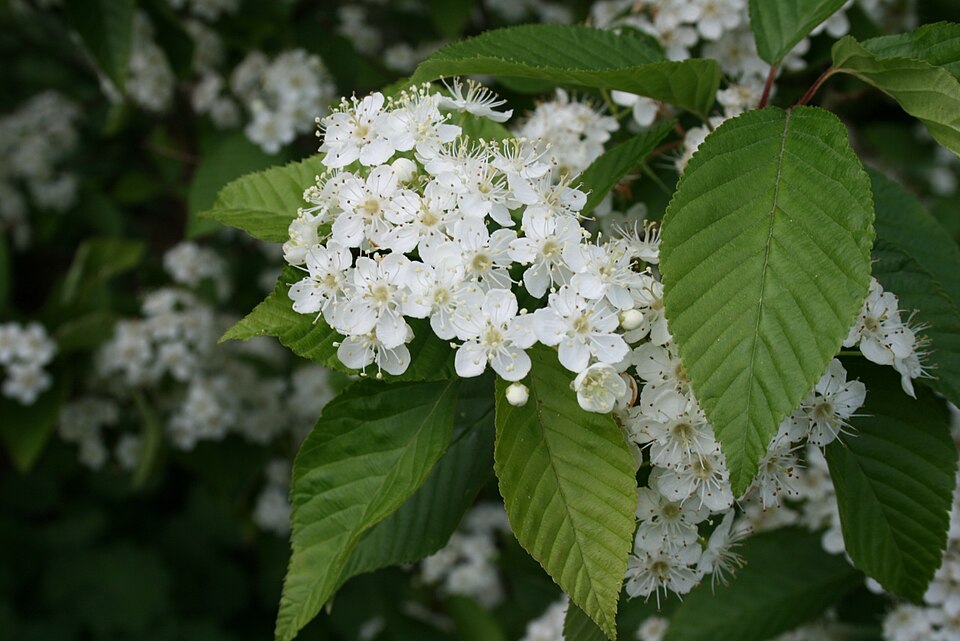
Dense corymbs of small white flowers 0.3 inch (8 mm) across open in May–June over 2–3 weeks. Oval orange to pinkish-red pomes 0.3–0.4 inch (8–10 mm) across in clusters of 6–15 follow and ripen in September–October. Fruit display lasts 4–6 weeks before birds strip the tree.
Detailed Descriptions
Flower Description
White, small 0.3 inch in dense corymbs; followed by orange to pinkish-red pomesFoliage Description
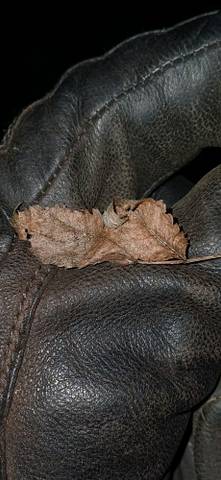
Dark green, simple broadly ovate alder-like 2-4 inches with prominent parallel veins and serrate margins; turns orange to scarlet in autumnGrowing Conditions
Sun Requirements
Requires 4-8 hours of direct sunlight daily
• Full Sun: 6+ hours of direct sunlight
• Partial Shade: 3-6 hours of direct sunlight
• Full Shade: Less than 3 hours of direct sunlight
Care & Maintenance
Care Guide
Grows in full sun to partial shade in moist well-drained slightly acidic soil at pH 5.5–7.0. Hardy to zone 4. Cool-summer climates favor the species; sustained heat above 90°F (32°C) in zones 7–8 causes leaf scorch and reduced fruit set. Moderate moisture through the growing season is needed, with mulching of the root zone to maintain even soil moisture. Resistance to fireblight (Erwinia amylovora) and to borers is higher than in S. aucuparia, though susceptibility rises in heat-stressed trees. Pest and disease problems are rare in suitable sites.Pruning
Prune in late winter (February–March) before bud break. Maintain the central leader, remove crossing or competing branches, and lightly thin the crown to admit light. Minimal pruning is required once the structure is established.Pruning Schedule
Prune: February–March
early spring