Sorbus, Genus, americana, Species,
- Genus & species
American mountain ash
Overview
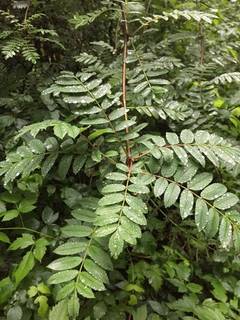
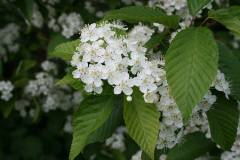
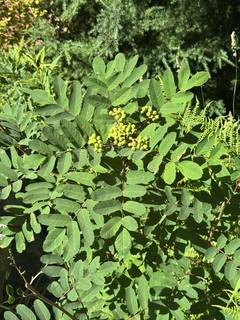
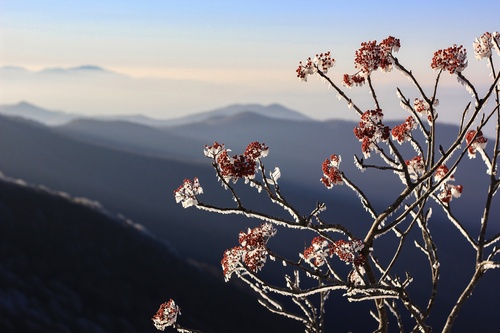
Sorbus americana is a small deciduous tree or large shrub in the Rosaceae, typically 10-30 feet (3-9 m) tall and 10-20 feet (3-6 m) wide, with a rounded, open crown and smooth grey bark that roughens with age. The pinnately compound leaves are 6-10 inches (15-25 cm) long with 11-17 lance-shaped, sharply toothed leaflets, green through the season and turning yellow, orange, and red in autumn. Flat-topped clusters 3-5 inches (8-13 cm) wide of small white flowers open in late spring, followed by dense bunches of round berry-like pomes about 0.25 inch (6 mm) across that ripen bright orange-red in late summer and persist into winter. Birds feed on the fruit and spread the seed. It grows on cool, moist, acidic sites such as mountain slopes, forest edges, swamp margins, and rocky ground. It is short-lived compared with larger forest trees and is prone to fireblight and borer damage, particularly on hot, dry, or stressed sites.
Native Range
Native to northeastern North America, from Newfoundland and eastern Canada south through New England and the Great Lakes region and along the Appalachian Mountains to Georgia. It grows on cool, moist, acidic sites including mountain slopes, woodland edges, streambanks, and bog margins.Suggested Uses
Used as a small specimen or multi-stemmed tree in cool-climate gardens, native and woodland plantings, and wildlife borders, spaced 12-20 feet (3.7-6 m) apart. The spring flowers, autumn colour, and persistent fruit suit naturalistic and bird-friendly plantings. It is poorly suited to hot, dry, or polluted urban sites.How to Identify
Appearance
Size & Dimensions
Height10' - 30'
Width/Spread10' - 20'
Bloom Information
White flowers open in late spring, generally May to June, in broad flat-topped clusters after the leaves expand. Bloom lasts one to two weeks. The flowers carry a strong, sometimes unpleasant scent and are followed by fruit that colours through late summer.
Detailed Descriptions
Foliage Description
greenGrowing Conditions
Sun Requirements
Requires 6-12 hours of direct sunlight daily
• Full Sun: 6+ hours of direct sunlight
• Partial Shade: 3-6 hours of direct sunlight
• Full Shade: Less than 3 hours of direct sunlight
Care & Maintenance
Care Guide
Grows in full sun to partial shade in cool, moist, well-drained acidic soil with a pH around 4.5-6.5. It grows poorly in hot, dry, compacted, or alkaline urban soils, where it becomes stressed and more prone to fireblight and borers. Steady moisture and good air movement reduce disease pressure. It is propagated from seed after cold stratification or by grafting of named forms. Hardy in USDA zones 2-6, it grows most reliably in cool northern and mountain climates.Pruning
Pruned in late winter while dormant to remove dead, crossing, or congested branches and to shape the young crown. Any growth showing fireblight is cut well below the damage and removed promptly. Heavy pruning is limited because large wounds invite borers and disease.Pruning Schedule
Prune: February–March
winter