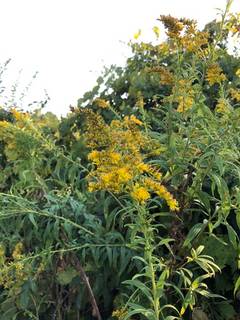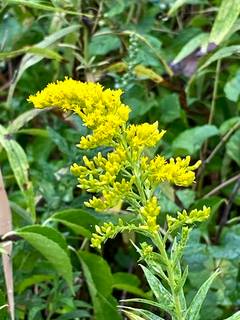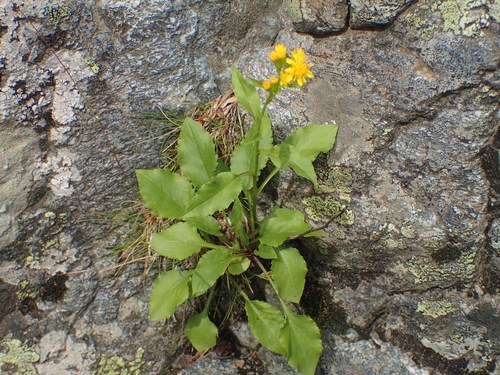
Solidago, Genus, virgaurea, Species,
- Genus & species
European goldenrod
Europe, North Africa, and temperate Asia
Overview
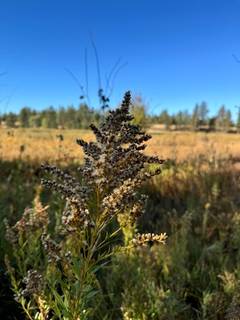
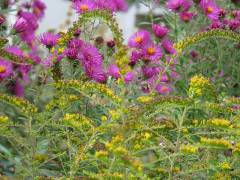
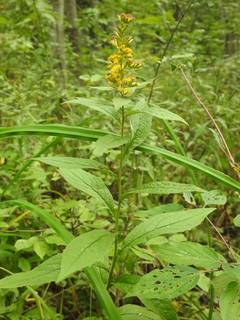
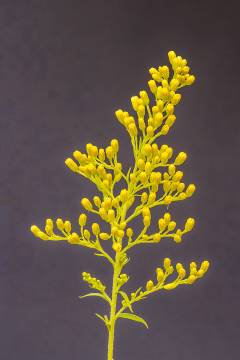
Solidago virgaurea is an upright, clump-forming perennial in the Asteraceae growing 1-3 feet (30-90 cm) tall, with stiff, leafy stems rising from a basal rosette. The lance-shaped leaves are 1-4 inches (2.5-10 cm) long, toothed, and largest near the base. Small yellow flower heads, each combining ray and disc florets, are clustered into narrow, branched spikes at the stem tips from late summer into autumn. It forms a tighter clump than the larger North American goldenrods, spreading slowly rather than running. The flowers draw bees, butterflies, and other late-season insects. Unlike ragweed, which sheds wind-borne pollen at the same season, goldenrod pollen is heavy and insect-carried and is not a major cause of hay fever. Hardy in USDA zones 4-8, it grows in full sun to partial shade in most well-drained soils and tolerates poor, dry ground. It can self-seed where conditions suit. Native to Europe, North Africa, and Asia, Solidago virgaurea grows in woodland edges, grassland, heath, and rocky slopes and has a long record of herbal use.
Native Range
Solidago virgaurea is native to Europe, North Africa, and temperate Asia, ranging from the British Isles across Eurasia. It grows in open woodland, woodland edges, grassland, heath, dunes, and rocky slopes.Suggested Uses
Grown in borders, wildflower and pollinator plantings, and naturalized grassland, where it adds late-season colour. The upright clumps suit the middle of borders among grasses and other late perennials.How to Identify
Appearance
Size & Dimensions
Height1' - 3'
Width/Spread1' - 2'
Bloom Information
Detailed Descriptions
Foliage Description
greenGrowing Conditions
Sun Requirements
Requires 4-8 hours of direct sunlight daily
• Full Sun: 6+ hours of direct sunlight
• Partial Shade: 3-6 hours of direct sunlight
• Full Shade: Less than 3 hours of direct sunlight
Care & Maintenance
Care Guide
Solidago virgaurea grows in full sun to partial shade and tolerates most well-drained soils with a pH of 5.5-7.5, including poor and dry ground. It needs little care once established and tolerates drought. It forms a slowly spreading clump and can self-seed where the soil is bare. Cutting off spent flower heads before seed sets limits self-seeding. Division every few years keeps the clump vigorous. It needs little fertilizer in average soil.Pruning
Cut spent flower stems back after bloom to limit self-seeding and tidy the clump. Cut the whole plant to the ground in late autumn or early spring. Division in spring renews older, crowded clumps.Pruning Schedule
Prune: November
fall
Container Growing
Suitable for container growing
Minimum container size: 2 gallons