Sinningia, Genus, speciosa, Species,
- Genus & species
Gloxinia
Overview
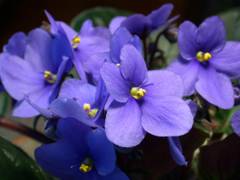
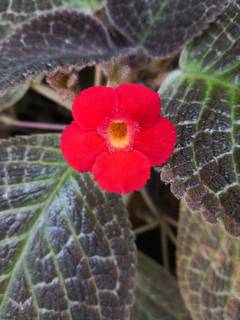
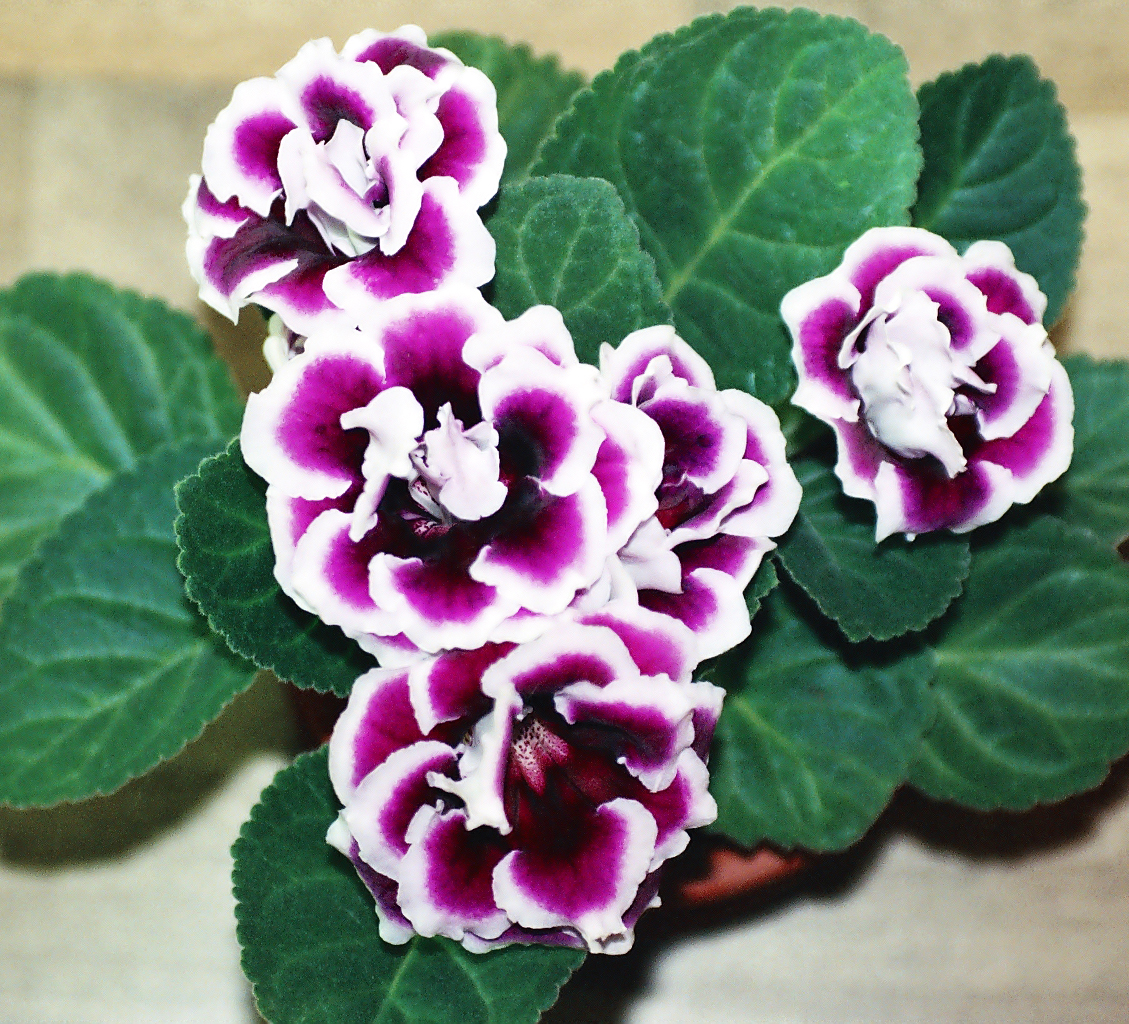
Sinningia speciosa is a tuberous perennial in the Gesneriaceae, native to Brazil, and is the parent species of the florist's gloxinia. Plants form a basal rosette of opposite, oblong to ovate leaves 4–8 inches (10–20 cm) long, covered in short hairs that give the surface a velvety texture, with scalloped margins and prominent veins. Flowers are borne singly on stalks 3–6 inches (7.5–15 cm) above the rosette. Each flower is a nodding to upward-facing bell 2–3 inches (5–7.5 cm) long and wide, with five rounded lobes and a spotted throat. Wild forms are violet to purple, and cultivated selections range through red, pink, white, and bicolored patterns. Overall height is 6–12 inches (15–30 cm) with a spread of 8–14 inches (20–35 cm). The plant grows from a flattened tuber 1–3 inches (2.5–7.5 cm) across. After flowering, the foliage declines and the tuber enters dormancy for 2–4 months. Temperatures below 50°F (10°C) damage foliage and tubers, so the species is grown outdoors only in frost-free climates (USDA zones 10–11) and is otherwise kept in containers indoors.
Native Range
Brazil, in the Atlantic forest region, growing on shaded rock outcrops and humus-rich forest floors.Suggested Uses
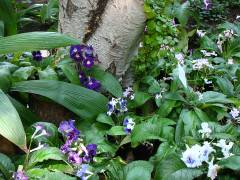
Grown as a flowering houseplant in containers 4–6 inches (10–15 cm) wide on windowsills and under grow lights. Used outdoors as a shaded container or bedding plant in frost-free zones 10–11.How to Identify
Appearance
Size & Dimensions
Height6" - 1'
Width/Spread8" - 1'2"
Bloom Information
Flowers appear from spring through late summer (April–August) in cultivation, with individual plants producing flushes over 8–12 weeks. Each flower lasts 5–10 days. Tubers started in late winter flower 3–4 months after growth begins. Flower production declines as day length shortens in autumn, and the plant enters dormancy.
Detailed Descriptions
Flower Description
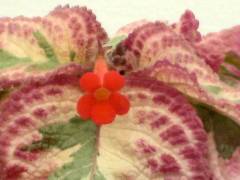
Violet, purple, red, pink, white, or bicoloredFoliage Description
Medium to dark green, paler beneathGrowing Conditions
Sun Requirements
Requires 2-4 hours of direct sunlight daily
• Full Sun: 6+ hours of direct sunlight
• Partial Shade: 3-6 hours of direct sunlight
• Full Shade: Less than 3 hours of direct sunlight
Care & Maintenance
Care Guide
Growth is made in bright, indirect light, with 2–4 hours of filtered sun; direct midday sun scorches the velvety leaves. Day temperatures of 65–75°F (18–24°C) support active growth, and temperatures below 50°F (10°C) cause damage. The potting mix is a loose, peat-based or loam mix with a pH of 5.5–6.5, in a pot with drainage holes. Water is applied at soil level when the top 0.5 inch (1.25 cm) of mix is dry, using room-temperature water, because water on the leaves leaves ring-shaped marks. Relative humidity of 50–60% supports growth, and a balanced fertilizer at quarter strength is applied every 2 weeks during growth. During dormancy, watering is reduced to a few teaspoons monthly and tubers are held at 50–60°F (10–15°C).Pruning
Spent flowers and their stalks are removed at the base once they fade. Yellowing leaves are cut at the base as the plant enters dormancy, and the remaining foliage is left to die back fully before watering is reduced. Pinching is not used because growth arises from the central rosette.Pruning Schedule
Prune: August–September
summerfall
Container Growing
Suitable for container growing
Minimum container size: 1 gallons