© 阿橋 HQ, some rights reserved (CC-BY-SA) · Wikimedia Commons
Episcia, Genus, 'Cleopatra', Cultivar,
- Genus
- Cultivar
Episcia Cleopatra
Cultivated selection; genus native to tropical Central and South America
Overview
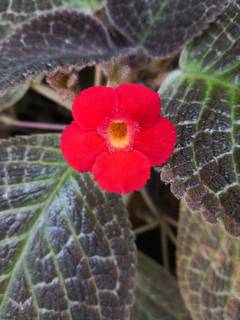
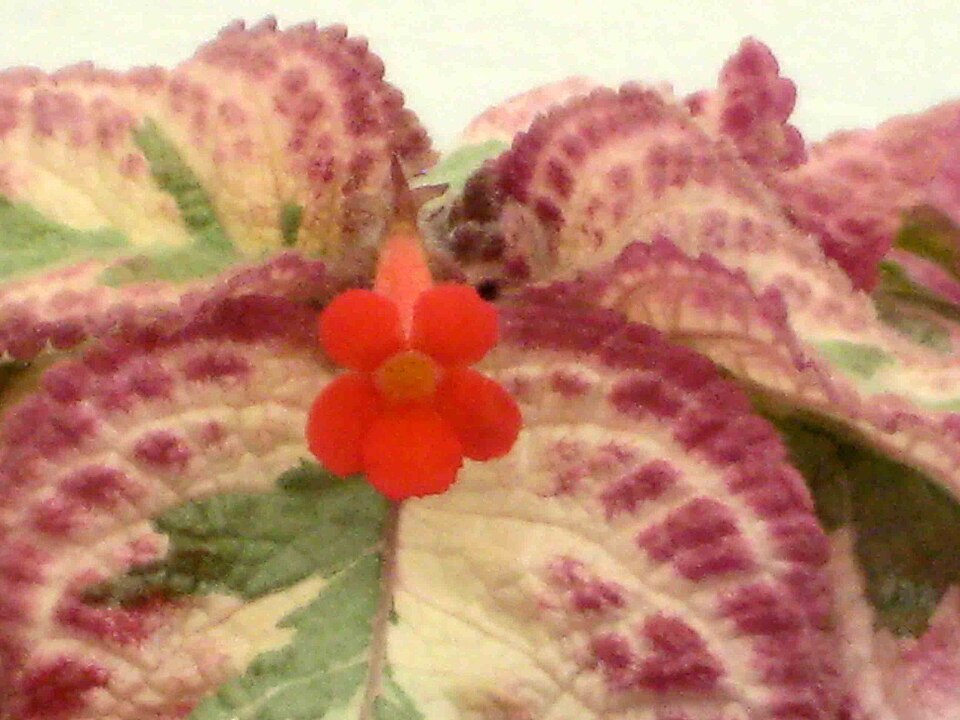
Episcia 'Cleopatra', a variegated flame violet in the family Gesneriaceae, is a low, trailing tropical perennial grown for its patterned foliage. The soft, hairy oval leaves form rosettes and reach 2-3 inches (5-7.5 cm) long, carrying a narrow green zone along the midrib edged in cream-white with broad rose-pink margins. Plants spread by slender stolons, or runners, that root where they touch moist soil, forming colonies that trail 12-24 inches (30-60 cm) over a pot rim. Tubular flowers about 0.75 inch (2 cm) long open orange-red from the leaf axils, though the heavy variegation reduces chlorophyll and the plant flowers sparingly next to solid-green flame violets. The same reduced chlorophyll lowers vigor, making 'Cleopatra' slower and more demanding than standard Episcia selections; it needs steady warmth, high humidity, and shelter from cold drafts to hold its leaf color. Mature height stays low at 4-6 inches (10-15 cm), with spread governed by how far the stolons are allowed to run. As a tender tropical it survives no frost and is grown as a houseplant or in terrariums outside USDA zones 11 and 12.
Native Range
Episcia 'Cleopatra' is a cultivated variegated selection with no wild native range. The genus Episcia is native to the tropics of Central and South America, from Mexico through Brazil, where species grow as creeping plants on the shaded rainforest floor.Suggested Uses
Grown in hanging baskets, shallow pots, and terrariums where the trailing stolons can cascade. Used as ground-level cover beneath taller tropical houseplants in warm, humid rooms.How to Identify
Appearance
Size & Dimensions
Height4" - 6"
Width/Spread1' - 2'
Bloom Information
Flowering can occur at any time of year under warm, bright conditions but stays sparse because of the leaf's low chlorophyll. Most blooms appear from late spring through summer. Each tubular flower lasts a few days, with scattered flowers rather than a heavy flush.
Detailed Descriptions
Foliage Description
Green midrib with cream-white and rose-pink marginsGrowing Conditions
Sun Requirements
Requires 2-4 hours of direct sunlight daily
• Full Sun: 6+ hours of direct sunlight
• Partial Shade: 3-6 hours of direct sunlight
• Full Shade: Less than 3 hours of direct sunlight
Care & Maintenance
Care Guide
Bright indirect light holds the pink and cream variegation, while direct midday sun scorches the soft leaves and deep shade fades the color. Warmth of 65-80F (18-27C) and humidity above 60 percent are needed, which makes terrariums and enclosed cases well suited to the plant. The growing mix is light and free-draining, kept evenly moist but never waterlogged, using tepid water to limit spotting on the hairy foliage. Water left sitting on the leaves or crown in cool conditions causes rot. Feeding with a dilute balanced fertilizer every two to four weeks in spring and summer supports growth. Growth slows in winter, when water and feed are reduced.Pruning
Trailing stolons are trimmed to keep plants compact, and the removed runners root readily as new plants. Dead or faded leaves are pinched out at the base to limit rot in the humid conditions the plant needs.Pruning Schedule
Prune: May–June
late springsummer
Container Growing
Suitable for container growing
Minimum container size: 1 gallons