Episcia, Genus, cupreata, Species,
- Genus & species
episcia flame violet
Tropical lowland forests of Colombia, Venezuela, Brazil, and the Guianas
Overview
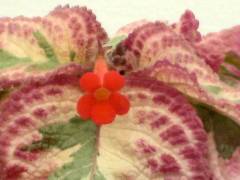
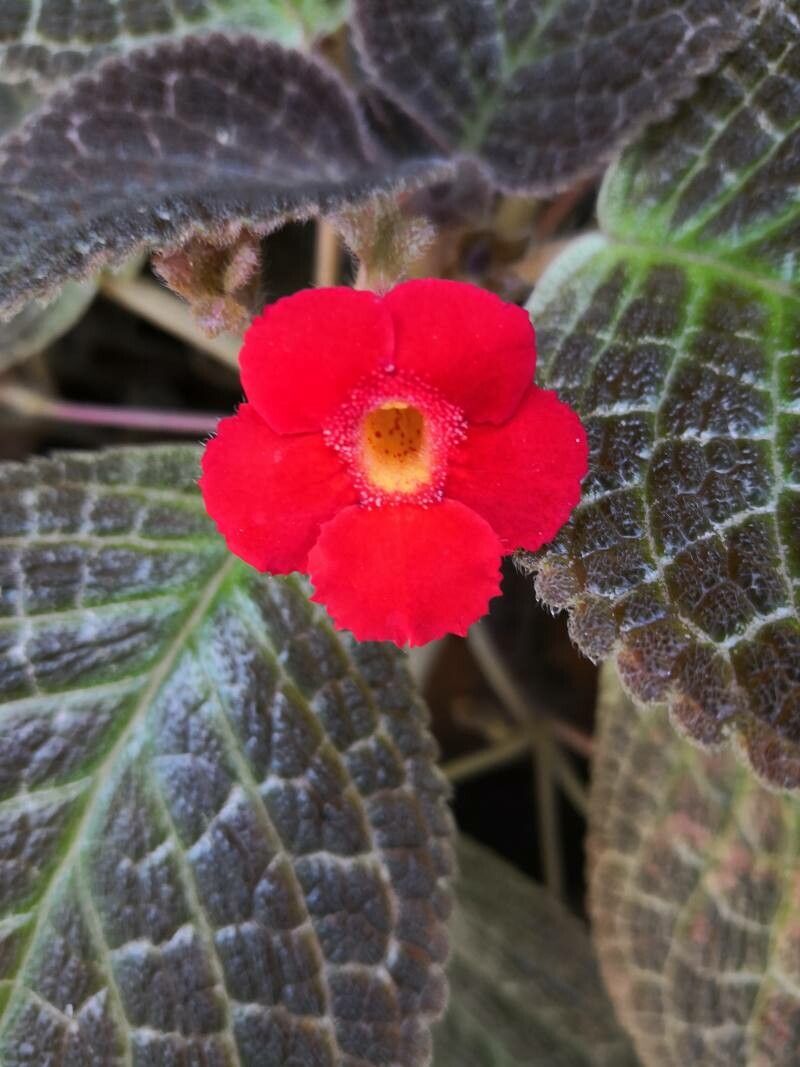
Flame violet is a low-growing perennial reaching 4-6 inches (10-15 cm) tall with horizontal stolons spreading 12-18 inches (30-45 cm) across, forming dense mats from a central rosette. Leaves are 2-4 inches (5-10 cm) long, ovate, and quilted with deeply impressed veins; foliage is olive green, copper, bronze, silver, or chocolate brown depending on cultivar, often with metallic sheen and contrasting silver, white, or pink veins. Leaf surfaces are densely covered with short hairs giving a velvety texture. Tubular orange-red flowers measure 0.75-1 inch (2-2.5 cm) long with five flared lobes spanning 0.5-0.75 inch (1.3-2 cm) across, emerging singly or in pairs from leaf axils. Stolons root readily at each node where they touch moist soil, producing daughter plants within 4-6 weeks. Plants flower year-round indoors under stable warm conditions but cease flowering below 65°F (18°C). Foliage discolors and drops from temperature shock during winter cold drafts; brief exposure to 50°F (10°C) causes leaf yellowing within 24-48 hours. The species hybridizes with E. lilacina and other Episcia species, producing many named cultivars selected for foliage color and flower hue.
Native Range
Native to tropical lowland forests of Colombia, Venezuela, Brazil, and the Guianas at elevations from 100-3,000 feet (30-900 m), where E. cupreata grows as ground cover on shaded humus-rich slopes near streams.Suggested Uses
Grown indoors in shallow 4-6 inch (10-15 cm) pots, hanging baskets where stolons can cascade 12-18 inches (30-45 cm), or as ground cover in heated greenhouses. Used in terrariums and bottle gardens where humidity exceeds 60 percent and temperatures stay above 65°F (18°C). Cultivated as a houseplant in north or east-facing windows; supplemental fluorescent lighting at 8-12 inches (20-30 cm) supports flowering in dim interiors.How to Identify
Appearance
Size & Dimensions
Height4" - 6"
Width/Spread1' - 1'6"
Bloom Information
Flowers year-round indoors under temperatures above 65°F (18°C) and humidity above 50 percent. Peak flowering occurs from late spring through early fall when day length exceeds 12 hours. Individual flowers last 4-7 days; total annual flowering reaches 6-9 months under stable conditions. Flowering ceases below 60°F (15°C) and during dry winter air below 35 percent humidity.
Detailed Descriptions
Foliage Description
Olive green, copper, bronze, silver, or chocolate brown with metallic sheenGrowing Conditions
Sun Requirements
Tolerates up to 4 hours of direct sunlight daily
• Full Sun: 6+ hours of direct sunlight
• Partial Shade: 3-6 hours of direct sunlight
• Full Shade: Less than 3 hours of direct sunlight
Care & Maintenance
Care Guide
Water when the top 0.5 inch (1.3 cm) of soil dries, using tepid water 70-75°F (21-24°C); cold water causes leaf spotting. Maintain temperatures of 70-80°F (21-27°C) day and above 65°F (18°C) night; plants decline rapidly below 60°F (15°C). Maintain bright indirect light at 1,000-2,500 foot-candles; direct sun bleaches the metallic sheen and burns leaf edges within hours. Hold humidity above 50 percent through pebble trays, room humidifiers, or terrarium enclosure; foliage browns at edges below 40 percent. Fertilize every 2 weeks with balanced 20-20-20 at quarter strength during active growth from spring through fall. Repot annually into African violet mix; root rot develops in dense or compacted soil.Pruning
Pinch back leggy stolons to maintain compact rosette form and encourage branching. Remove yellowing or damaged leaves at the petiole base monthly. Trim excess stolons to control spread; rooted daughter plants can be detached and potted separately to start new specimens. Refresh container plantings every 2-3 years as central crowns become woody and flower production declines.Container Growing
Suitable for container growing
Minimum container size: 1 gallons