Image 1 of 4
1 / 4
Plant Reference
Nematanthus, Genus, spp., Multiple species,
- Genus
- Multiple species
goldfish plant
Atlantic forest regions of southeastern Brazil; epiphytes and lithophytes on tree branches and rocky outcrops at low to moderate elevations
Overview
Nematanthus spp. is goldfish plant (guppy plant), a trailing evergreen perennial growing 12-24 inches (30-60 cm) tall and 12-24 inches (30-60 cm) wide. Orange to orange-red pouch-shaped tubular flowers 0.75-1 inch (2-2.5 cm) resembling leaping goldfish, solitary or paired at leaf axils, from March through August (20 weeks). Dark glossy green thick fleshy leaves 1-2 inches (2.5-5 cm), often reddish-purple beneath. In Gesneriaceae. Nematanthus = thread-flower. About 30 species, all epiphytes from the Atlantic forests of southeastern Brazil. Primarily grown as a houseplant in temperate climates — tender (frost-sensitive). The same family as African violets. Requires a cool winter rest (55-60°F / 13-16°C, 6-8 weeks, reduced water) to trigger spring bloom — without this rest period, flowering is sparse. This cool-rest requirement and the need for consistent humidity are the primary care limitations. Bright indirect light (east or west window). Not drought-tolerant. Deer-resistant (indoor). Non-toxic. Zones 10-12 outdoors. Growth rate is moderate.
Native Range
Native to the Atlantic forest regions of southeastern Brazil. Found as epiphytes and lithophytes on tree branches and rocky outcrops at low to moderate elevations.Suggested Uses
Grown as a trailing houseplant in hanging baskets, on shelves, and in containers of at least 1 gallon (3.8 L). Goldfish-shaped flowers. Bright indirect light. Humidity. Non-toxic. Zones 10-12 outdoors.How to Identify
Appearance
Size & Dimensions
Height1' - 2'
Width/Spread1' - 2'
Bloom Information
Detailed Descriptions
Flower Description
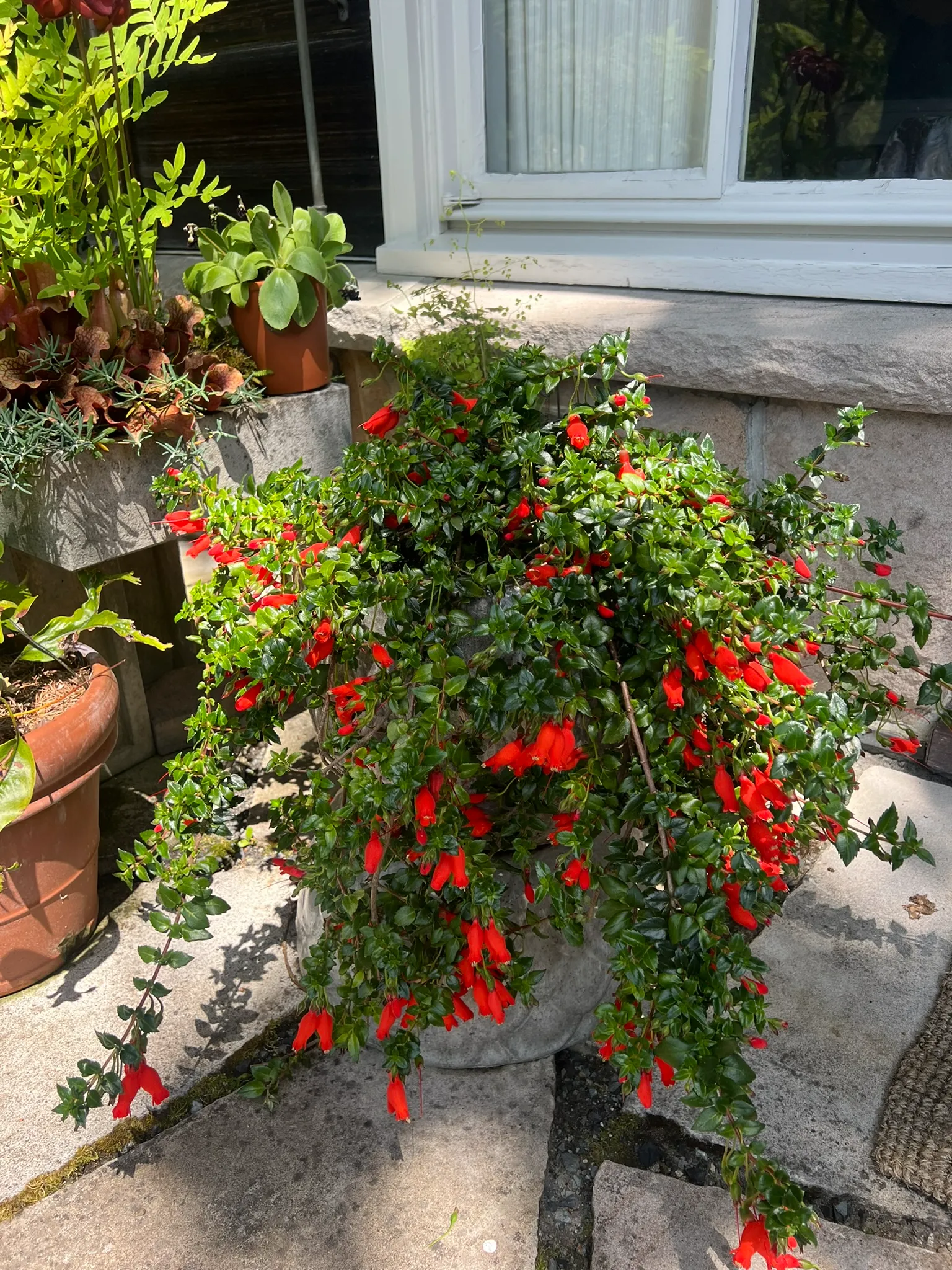
Orange to orange-red, tubular, pouch-shaped (resembling a goldfish), 0.75-1 inch (2-2.5 cm), with a small opening at the tip; solitary or in pairs at leaf axils along the trailing stemsFoliage Description
Dark glossy green above, often reddish-purple beneath, thick and fleshy, ovate to elliptic, 1-2 inches (2.5-5 cm); opposite on trailing stems; the glossy succulent-like leaves store waterGrowing Conditions
Sun Requirements
Needs bright indirect light. Keep it out of direct sun, which can scorch the leaves.
• Bright indirect light: a bright spot near a window, with no direct sun on the leaves
Care & Maintenance
Care Guide
Bright indirect light (2-5 hours — east or west window). Well-drained acidic soil pH 5.5-6.5 (peat-based mix). Consistent humidity. Cool winter rest (55-60°F / 13-16°C, 6-8 weeks) for spring bloom. Pinch stem tips for bushier growth. Not drought-tolerant. Non-toxic. Tender (houseplant in temperate climates). Zones 10-12 outdoors.Pruning
Pinch stem tips in early spring (March-April) for bushier growth. Remove leggy or bare stems. Remove spent flowers (they drop cleanly).Pruning Schedule
Prune: March–April
early spring
Container Growing
Suitable for container growing
Minimum container size: 1 gallons