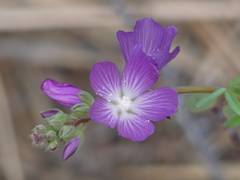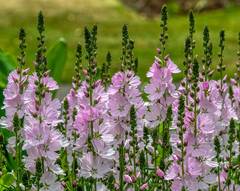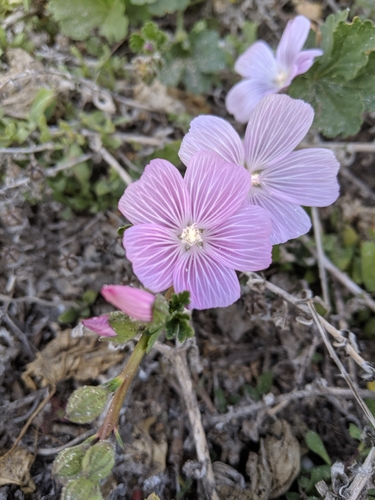
Sidalcea, Genus, malviflora, Species,
- Genus & species
rose checker-mallow
Overview
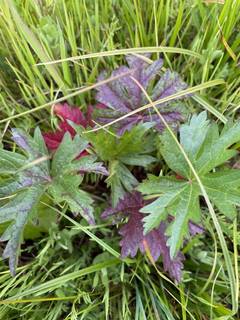
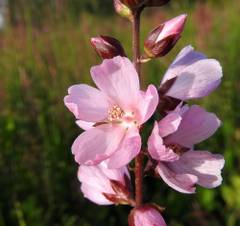
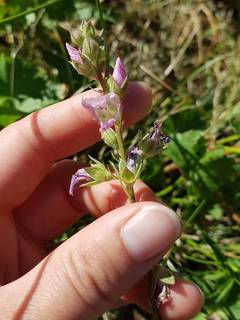
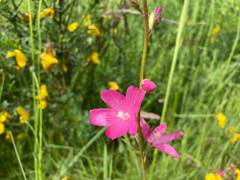
Sidalcea malviflora is a herbaceous perennial reaching 1-3 feet (30-90 cm) tall and 1-2 feet (30-60 cm) wide, with a clumping habit from a thick taproot or short rhizomes. Basal leaves are rounded and shallowly scalloped, 1-3 inches (2.5-7.5 cm) across, on long petioles. Stem leaves become progressively more dissected toward the top, with upper leaves cut into 5-7 deep linear lobes. Pink to lavender-pink five-petaled flowers 1-1.5 inches (2.5-4 cm) across open in loose racemes from April through July, with peak bloom from May to mid-June in most of the range. Each flower lasts 2-3 days; total bloom on an individual plant lasts 4-6 weeks. Petals often have darker pink veining. Stems are slender, slightly hairy, and somewhat lax, often leaning outward at peak bloom. Hairy schizocarp fruits ripen July through August and split into 5-9 mericarps. Foliage stays semi-evergreen in coastal zones 8-10, dying back partially in winter; plants go fully dormant in colder inland sites. Spreads slowly by short rhizomes, expanding 2-3 inches (5-7.5 cm) per year. Lifespan 6-10 years. The species is highly variable across its range, with multiple subspecies recognized by botanists.
Native Range
Native to coastal grasslands, oak woodland openings, meadows, and bluff edges from southern Oregon south through coastal and inland California to northern Baja California, Mexico. Found at elevations from sea level to about 7,000 feet (2,100 m), most commonly below 3,000 feet (900 m). Several distinct subspecies occur in different habitats across the range.Suggested Uses
Used in California native plant gardens, oak woodland understory plantings, and meadow restorations. Spaced 12-18 inches (30-45 cm) apart in groupings of 5-9 plants. Flowers are visited by native bees, and the foliage hosts larvae of the West Coast lady butterfly and the common checkered-skipper.How to Identify
Appearance
Size & Dimensions
Height1' - 3'
Width/Spread1' - 2'
Bloom Information
Flowers from April through July across the range, with peak bloom from May through mid-June. In coastal California (zones 9-10), flowering may begin in March; in inland and higher-elevation sites (zones 7-8), bloom starts in May or June. Individual flowers last 2-3 days; total bloom period extends 4-6 weeks per plant.
Detailed Descriptions
Flower Description
pink to lavender-pinkFoliage Description
medium greenGrowing Conditions
Sun Requirements
Requires 6-10 hours of direct sunlight daily
• Full Sun: 6+ hours of direct sunlight
• Partial Shade: 3-6 hours of direct sunlight
• Full Shade: Less than 3 hours of direct sunlight
Care & Maintenance
Care Guide
Plant container-grown stock or sow seed in fall in well-drained loam to rocky soils with full sun to light afternoon shade. Water during establishment in the first growing season; mature plants tolerate summer drought once dormant in late summer. In garden settings with summer irrigation, foliage may stay green through summer but plants are then susceptible to crown rot in heavy soils. Powdery mildew and rust fungi affect older foliage in humid coastal sites; affected leaves can be removed to the crown. Plants reseed in disturbed soil and produce 5-15 seedlings annually around established clumps. Lifespan can be extended by dividing crowns every 4-5 years in early spring.Pruning
Cut spent flower stalks to the basal foliage in midsummer to reduce self-seeding and encourage a tidy mound. Remove old stems and dead leaves in fall as foliage browns. Divide crowns every 4-5 years in early spring as new shoots emerge.Pruning Schedule
Prune: July & October
summerfall
Container Growing
Suitable for container growing
Minimum container size: 2 gallons