Sidalcea, Genus, campestris, Species,
- Genus & species
meadow checker-mallow
Overview
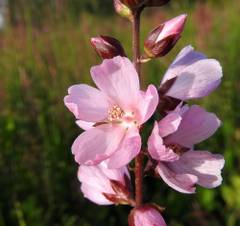
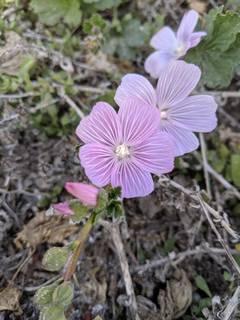
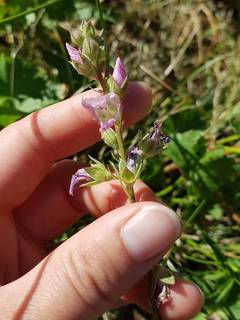
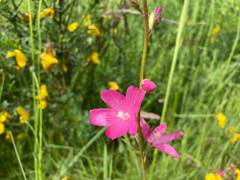
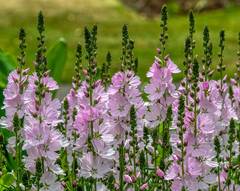
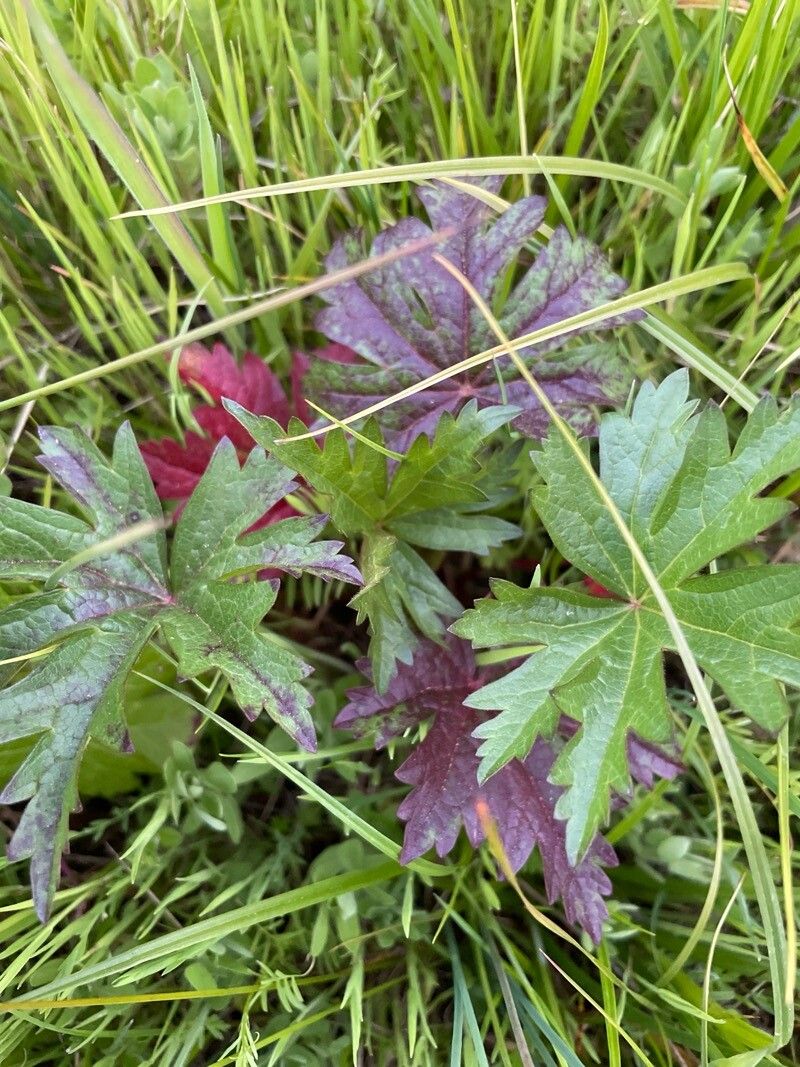
Sidalcea campestris is a herbaceous perennial growing 2-5 feet (60-150 cm) tall and 1-2 feet (30-60 cm) wide, forming an upright clump from a stout taproot and short rhizomes. Basal leaves are rounded with shallow scallops, 2-4 inches (5-10 cm) across, while stem leaves become progressively more deeply divided toward the top, with the upper leaves cut into 5-7 narrow linear segments. White to pale pink, five-petaled flowers about 1.5 inches (4 cm) across open in elongated, spike-like racemes from June through August, blooming bottom to top over 4-6 weeks. Each flower lasts 2-3 days. Stems are hairy and slender, often becoming lax and arching outward at peak bloom. After flowering, hairy schizocarp fruits split into 7-9 wedge-shaped mericarps that disperse from August through October. Foliage dies back to the crown after fall frosts in zones 6-8. Plants self-seed in moist meadow soils, producing 10-30 seedlings near established colonies. Lifespan 5-10 years for individual crowns; populations persist longer through self-seeding. Restricted in the wild to remnant Willamette Valley wet prairies and is listed as a sensitive species in Oregon under state conservation rankings.
Native Range
Native to wet prairies and oak savanna openings of the Willamette Valley of western Oregon and south-central Washington, with scattered historical records south to Douglas County, Oregon. Restricted to seasonally moist heavy soils at elevations of 100-500 feet (30-150 m); fewer than 50 documented populations remain due to agricultural conversion of the prairie habitat.Suggested Uses
Used in native meadow restorations, oak savanna gardens, and pollinator borders in the Pacific Northwest. Spaced 18-24 inches (45-60 cm) apart in groupings of 5-7 plants. The species is a host plant for larvae of the West Coast lady butterfly and several Sidalcea-specialist native bees.How to Identify
Appearance
Size & Dimensions
Height2' - 5'
Width/Spread1' - 2'
Bloom Information
Flowers from late June through mid-August in zones 6-8. Bloom progresses upward along the spike-like raceme, with each individual stalk in flower for 4-6 weeks. Hot, dry summers shorten the bloom by 1-2 weeks; cool wet summers extend it through early September.
Detailed Descriptions
Flower Description
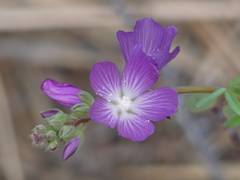
white to pale pinkFoliage Description
medium greenGrowing Conditions
Sun Requirements
Requires 6-10 hours of direct sunlight daily
• Full Sun: 6+ hours of direct sunlight
• Partial Shade: 3-6 hours of direct sunlight
• Full Shade: Less than 3 hours of direct sunlight
Care & Maintenance
Care Guide
Plant container-grown stock or sow seed in fall in heavy, seasonally moist soils with full sun to light shade. Water weekly during the establishment year; mature plants tolerate summer drought once roots reach the moisture-retaining clay subsoil. No fertilizer is needed in native or restored prairie soils; rich garden soils produce floppy stems that lodge after rain. Powdery mildew and rust fungi may discolor lower foliage in humid summers; affected leaves can be cut to the ground. Crowns decline after 5-7 years and benefit from division in early spring. The plant is listed as sensitive in Oregon under state conservation rankings, and nursery-propagated stock from regional seed sources is the typical horticultural source.Pruning
Cut spent flower stalks to the basal rosette in late summer to reduce self-seeding and encourage a second flush of basal foliage. Remove dead stems and old leaves in late fall after foliage has died back. Divide crowns every 4-5 years in early spring as new growth emerges.Pruning Schedule
Prune: August & November
summerfall