Sidalcea, Genus, hendersonii, Species,
- Genus & species
Henderson's checker-mallow
Overview
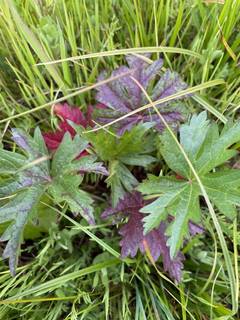
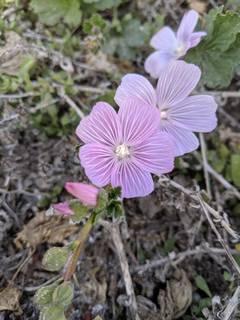
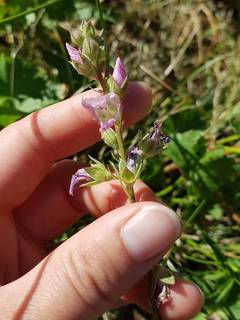
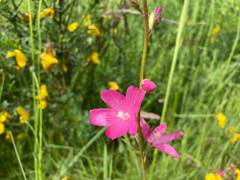
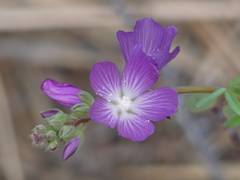
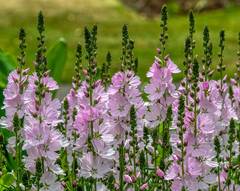
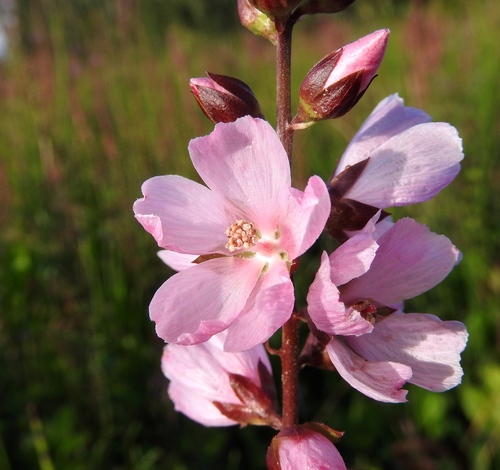
Sidalcea hendersonii is a herbaceous perennial reaching 2-4 feet (60-120 cm) tall and 1-2 feet (30-60 cm) wide, forming an upright clump from a fibrous, mat-forming rhizome. Basal leaves are rounded and shallowly lobed, 2-4 inches (5-10 cm) across, with hairless or sparsely hairy surfaces. Stem leaves become deeply palmately divided into 5-7 narrow segments toward the top of the stem. Bright rose-pink, five-petaled flowers 1.25-1.75 inches (3-4 cm) across open in dense, often one-sided racemes from June through August. Bloom progresses up the raceme over 5-7 weeks, with each individual flower lasting 2-3 days. Stems are mostly hairless and remain upright through bloom. Hairy schizocarp fruits split into 6-8 mericarps in late summer. Foliage dies back to the rhizome after the first hard frost in zones 7-9. Spreads by short rhizomes 2-4 inches (5-10 cm) per year, eventually forming colonies 2-3 feet (60-90 cm) wide. Lifespan 8-15 years in moist soil. Restricted in the wild to coastal wet meadows and tidal marshes; listed as sensitive in Oregon and Washington under state conservation rankings.
Native Range
Native to coastal wet meadows, tidal marsh edges, and seaside bluff seeps from southern British Columbia south through western Washington and Oregon to northern California. Restricted to brackish or fresh-water seepages within 5 miles (8 km) of the Pacific coast at elevations from sea level to 200 feet (60 m).Suggested Uses
Used in coastal native plant gardens, rain gardens, and pollinator restorations in maritime Pacific Northwest sites. Spaced 18-24 inches (45-60 cm) apart in groupings of 5-9 plants. Functions as a larval host for the gray hairstreak butterfly and as a pollen source for several Sidalcea-specialist native bees.How to Identify
Appearance
Size & Dimensions
Height2' - 4'
Width/Spread1' - 2'
Bloom Information
Flowers from mid-June through August in coastal zones 7-9. Bloom lasts 5-7 weeks at a single site, with cool maritime climates extending flowering into early September. In gardens away from coastal fog, hot afternoon sun shortens bloom by 1-2 weeks.
Detailed Descriptions
Foliage Description
medium greenGrowing Conditions
Sun Requirements
Requires 6-10 hours of direct sunlight daily
• Full Sun: 6+ hours of direct sunlight
• Partial Shade: 3-6 hours of direct sunlight
• Full Shade: Less than 3 hours of direct sunlight
Care & Maintenance
Care Guide
Plant container-grown stock in spring or fall in moist, humus-rich soil with full sun to light shade. Provide consistent moisture during the growing season; the species does not tolerate prolonged summer drought once active growth begins. Salt spray tolerance is moderate, suiting coastal sites with brackish exposure but not direct salt-water flooding. Powdery mildew and rust fungi affect lower foliage in humid summers; cut affected leaves to the crown to reduce spread. Crowns expand by 2-4 inches (5-10 cm) per year and benefit from division every 5-7 years in early spring. The species is listed as sensitive in Oregon and Washington, and nursery-propagated stock from coastal seed sources is the typical horticultural source rather than wild collection.Pruning
Cut spent flower stalks to the basal foliage in late summer to limit self-seeding. Remove dead stems and old leaves in late fall after foliage dies back. Divide established clumps every 5-7 years in early spring.Pruning Schedule
Prune: August & November
summerfall
Container Growing
Suitable for container growing
Minimum container size: 3 gallons