Sesbania, Genus, herbacea, Species,
- Genus & species
bigpod sesbania
Southern United States and tropical America
Overview
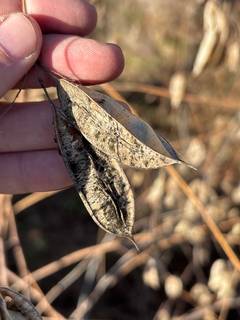
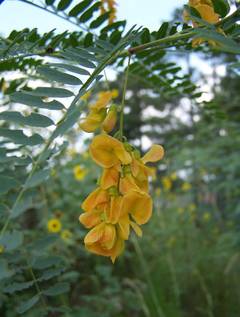
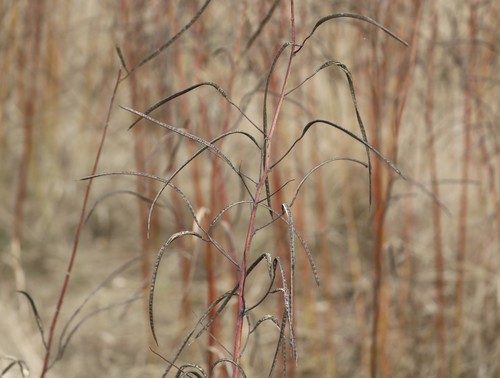
Sesbania herbacea is a fast-growing, soft-stemmed annual legume reaching 3-12 feet (1-3.7 m) tall in a single season, with an upright, sparsely branched form. The leaves are pinnately compound, 4-12 inches (10-30 cm) long, with 20 to 70 small oblong leaflets that fold together at night. From summer into fall it bears loose clusters of pea-like flowers about 0.5 inch (12 mm) long, yellow and often flecked with purple or brown. These are followed by slender, curved seed pods 4-8 inches (10-20 cm) long that hang downward and give the plant the name danglepod. Native to the southern United States and tropical America, it grows in moist, disturbed ground, ditches, floodplains, riverbanks, and the margins of fields and ponds. S. herbacea fixes nitrogen and grows quickly in warm, wet conditions but is killed by frost and lasts only one season. It is treated as a weed in rice, cotton, and soybean fields, where it competes with crops, and its seeds are toxic to poultry and livestock if eaten in quantity.
Native Range
Native to the southern and southeastern United States and through Mexico, Central America, and South America. It grows in moist, disturbed habitats including ditches, floodplains, riverbanks, wet fields, and pond margins.Suggested Uses
Used mainly in wetland restoration, erosion control on wet banks, and as a fast nitrogen-fixing cover or green manure in warm climates, spaced 12-24 inches (30-60 cm) apart. Its quick growth and tolerance of flooded soil suit temporary screening and soil improvement on damp sites. It is rarely grown as an ornamental and is more often managed as an agricultural weed.How to Identify
Appearance
Size & Dimensions
Height3' - 12'
Width/Spread1' - 3'
Bloom Information
Flowering occurs from mid summer into fall, typically July through October, as the plant reaches full height. The small yellow pea-flowers open in loose clusters from the leaf axils. Slender hanging pods develop quickly after bloom and ripen before frost.
Detailed Descriptions
Flower Description
yellow, flecked with purpleFoliage Description
greenGrowing Conditions
Sun Requirements
Requires 6-12 hours of direct sunlight daily
• Full Sun: 6+ hours of direct sunlight
• Partial Shade: 3-6 hours of direct sunlight
• Full Shade: Less than 3 hours of direct sunlight
Water & Climate
Water Needs
Care & Maintenance
Care Guide
Grow S. herbacea in full sun in moist to wet soil; it tolerates seasonal flooding and heavy, poorly drained ground that many plants cannot. As a warm-season annual it germinates in late spring, grows rapidly through summer, flowers, sets seed, and dies at frost. It needs ample moisture for strong growth and little or no fertilizer because it fixes its own nitrogen. It self-sows readily in wet, open ground and can spread into surrounding areas. In farmland it is managed as a weed, and its seeds are toxic to poultry and other animals if consumed.Pruning
Pruning does not apply to this tall, short-lived annual. Cutting plants down before the pods ripen prevents seed drop and limits spread in unwanted areas.Toxicity Warning
Toxic to petsPlanting Guide
Planting Methods & Timing
Planting Method
direct sow
Direct Sow Timing
Late spring after soil warms
Days to Maturity
90–120 days
Plant Spacing
18 inches