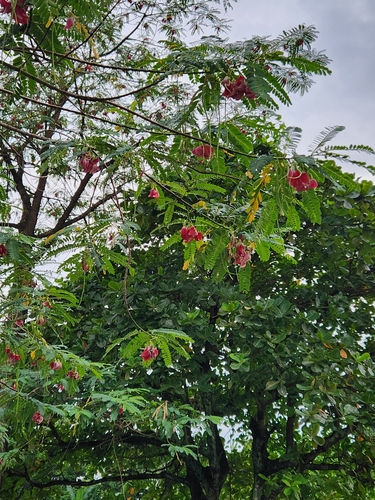
Sesbania, Genus, grandiflora, Species,
- Genus & species
hummingbird tree
Southeast Asia, Indian subcontinent, northern Australia
Overview
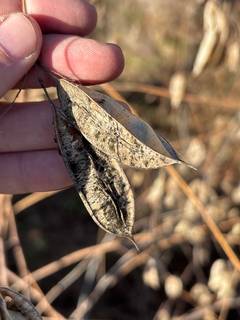
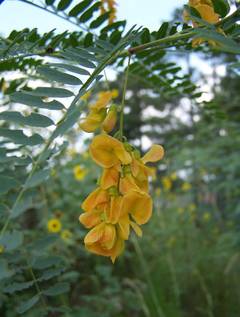
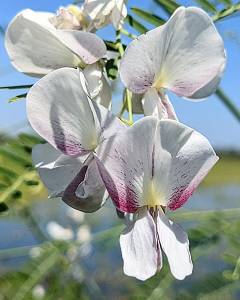
Sesbania grandiflora is the hummingbird tree (vegetable hummingbird), growing 120–360 inches (300–900 cm) tall and 60–120 inches (150–300 cm) wide. Large curved pea-shaped flowers 3–4 inches (7–10 cm) in white or red (two forms exist) — among the largest flowers in the legume family (Fabaceae). The flowers, young leaves, and immature seed pods are edible and consumed as a vegetable in Southeast Asia and India — the flowers are battered and fried, added to soups, or eaten raw. Pinnately compound leaves with many small leaflets 0.5–1 inch (12–25 mm). Nitrogen-fixing: the roots form a symbiotic relationship with Rhizobium bacteria, enriching the soil. Extremely fast-growing — 120–180 inches (300–450 cm) per year in the first 1–2 years, among the fastest-growing trees globally. Short-lived: 8–15 years typical lifespan. Soft brittle wood — branches break in storms. The rapid growth and nitrogen fixation make it suited to agroforestry and land reclamation in tropical regions. Long thin seed pods 12–24 inches (30–60 cm). Native to Southeast Asia, the Indian subcontinent, and northern Australia. Full sun (6+ hours). Adapts to a wide range of soils including clay and alkaline. Frost-tender: killed below 32°F (0°C). Non-toxic — all parts edible. Growth rate is extremely fast. Zones 10–11.
Native Range
Native to Southeast Asia, the Indian subcontinent, and northern Australia. Widely cultivated in tropical regions as a food tree and nitrogen fixer.Suggested Uses
Grown in zones 10–11 in full sun for edible flowers, leaves, and pods. Nitrogen-fixing (agroforestry, land reclamation). Extremely fast-growing but short-lived and brittle. Non-toxic — all parts edible. Hummingbird-pollinated.How to Identify
Appearance
Size & Dimensions
Height10' - 30'
Width/Spread5' - 10'
Bloom Information
Detailed Descriptions
Flower Description
White or red (depending on form), large, curved, pea-shapedFoliage Description
Medium green, pinnately compound with many small leafletsGrowing Conditions
Sun Requirements
Requires 6-10 hours of direct sunlight daily
• Full Sun: 6+ hours of direct sunlight
• Partial Shade: 3-6 hours of direct sunlight
• Full Shade: Less than 3 hours of direct sunlight