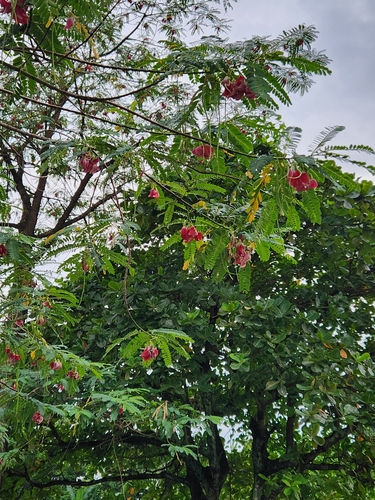
Sesbania, Genus, spp., Multiple species,
- Genus
- Multiple species
riverhemps
Pantropical; Africa, Asia, Australia, Americas
Overview
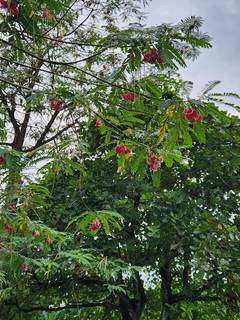
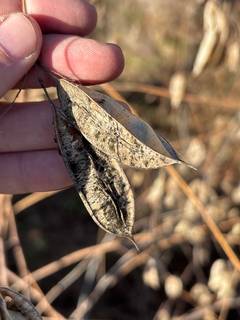
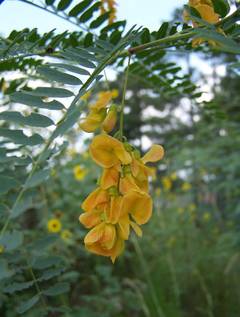
Sesbania is a genus of about 60 species of fast-growing annuals, shrubs, and small trees in the pea family (Fabaceae), spread across tropical and subtropical wetlands worldwide. Most species reach 3-20 ft (0.9-6 m) in a single season, with soft, often short-lived woody stems. The leaves are pinnately compound, 4-12 in (10-30 cm) long, with many small paired leaflets that fold at night. Pea-type flowers hang in loose clusters and range from yellow through orange to deep red, 0.5-2 in (1.5-5 cm) long depending on species, the larger-flowered kinds drawing birds. Flowers are followed by long, slender, segmented pods 4-12 in (10-30 cm) long. The roots fix nitrogen and tolerate flooding, with some species forming stem nodules as well, so they colonise waterlogged and disturbed ground quickly. The genus occurs across Africa, Asia, Australia, and the Americas. Seeds of several species contain saponins and other compounds toxic to livestock and people if eaten. S. punicea is grown as an ornamental but has become an invasive weed along waterways in the southern United States and South Africa.
Native Range
The genus is pantropical, native across the warmer parts of Africa, Asia, Australia, and the Americas. Species grow along rivers, in seasonal wetlands, floodplains, and irrigated land, favouring wet or periodically flooded soils.Suggested Uses
Grown for green manure, soil improvement, and erosion control on wet ground, and S. grandiflora is cultivated for its edible flowers and as fodder. Ornamental use of red-flowered species occurs in frost-free gardens, away from waterways where seedlings can escape.How to Identify
Appearance
Size & Dimensions
Height3' - 20'
Width/Spread3' - 10'
Bloom Information
Flowering occurs through the warm season, from summer into autumn in temperate-margin climates and over longer periods in the tropics. Loose clusters of yellow to red pea flowers open along the upper stems. Long segmented pods follow and ripen within weeks.
Detailed Descriptions
Flower Description
yellow, orange, or redFoliage Description
greenGrowing Conditions
Sun Requirements
Requires 6-12 hours of direct sunlight daily
• Full Sun: 6+ hours of direct sunlight
• Partial Shade: 3-6 hours of direct sunlight
• Full Shade: Less than 3 hours of direct sunlight
Care & Maintenance
Care Guide
Plants grow in full sun and tolerate wet, heavy, and periodically flooded soils that many legumes cannot handle. Growth is rapid in warm weather with ample moisture, and nitrogen-fixing roots let them grow well in poor ground. Most species are frost-tender and are killed by hard freezes, behaving as annuals at the cool edge of their range. Watering needs are high, matching their wetland origins. Plants are short-lived, often declining after one or two seasons. Self-seeding is prolific in some species and leads to weedy spread near water.Pruning
Plants are often cut back or coppiced to renew growth, as the soft wood resprouts readily from the base. Spent stems and pods are removed to reduce self-seeding where spread is a concern.Pruning Schedule
Prune: March
early spring