Overview
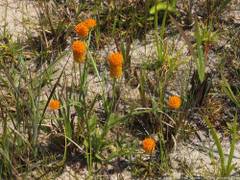
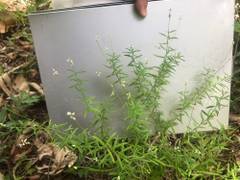
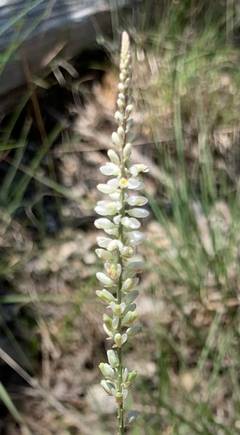
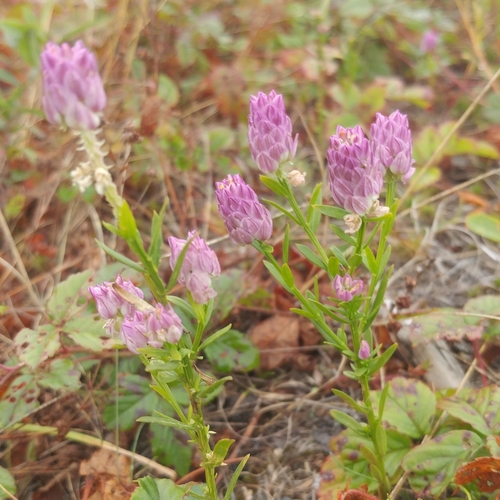
Senega sanguinea is an annual herb reaching 6-15 inches (15-38 cm) tall, with slender, branched, upright stems. Leaves are narrow and linear to oblong, 0.5-1.5 inches (1.3-4 cm) long, alternate, and scattered along the stems. Small flowers are packed into dense, cylindrical to rounded heads 0.4-0.75 inch (1-2 cm) long at the stem tips; the heads range from rose-pink and reddish to greenish-white, with the color carried mostly by two petal-like sepals. Bloom runs from June through October. As each head elongates, the lower flowers drop and small fruits form while the tip keeps flowering. The plant completes its cycle in one season and dies after setting seed. Seeds drop near the parent and germinate the following spring. Plants are slender and easily hidden among taller grasses, and bloom is reduced on dry, compacted soil.
Native Range
Native to central and eastern North America from Quebec and Ontario south to Florida and west to Minnesota and Texas. Grows in moist to dry open ground including meadows, old fields, prairie remnants, roadsides, and the edges of marshes and bogs on sandy or loamy soils.Suggested Uses
Used in native meadow and prairie plantings, restored grasslands, and pollinator seed mixes, broadcast or spaced 6-10 inches (15-25 cm) apart. Supports small native bees during summer bloom. The slender habit and single-season life make it a minor element among taller meadow plants.How to Identify
Appearance
Size & Dimensions
Height6" - 1'3"
Width/Spread3" - 8"
Bloom Information
Detailed Descriptions
Flower Description
Rose-pink to greenish-whiteFoliage Description
GreenGrowing Conditions
Sun Requirements
Requires 5-9 hours of direct sunlight daily
• Full Sun: 6+ hours of direct sunlight
• Partial Shade: 3-6 hours of direct sunlight
• Full Shade: Less than 3 hours of direct sunlight
Water & Climate
Water Needs
Care & Maintenance
Care Guide
Grow in full sun to light shade in moist, sandy or loamy soil of low to moderate fertility. Sow seed in fall or early spring; seedlings appear with spring warmth and grow through summer. Water during dry spells, since bloom and size decline on dry, compacted ground. The plant needs no fertilizer and grows poorly where taller plants shade it out. Plants die after setting seed and return from self-sown seed the next year.Pruning
No pruning is needed for this annual. Spent plants can be left in place to drop seed or pulled after seeding. Clearing competing taller vegetation helps seedlings establish in the following season.Toxicity
Non-toxicPlanting Guide
Planting Methods & Timing
Planting Method
direct sow
Direct Sow Timing
Fall or early spring
Days to Maturity
70–110 days
Plant Spacing
8 inches