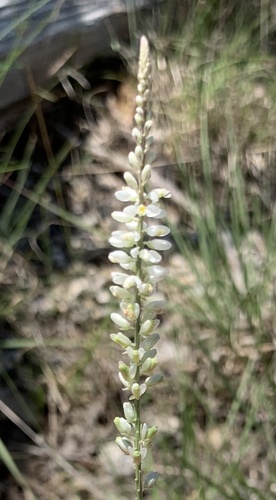
Senega, Genus, alba, Species,
- Genus & species
white milkwort
Overview
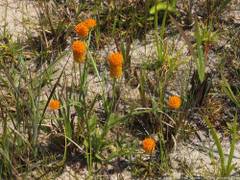
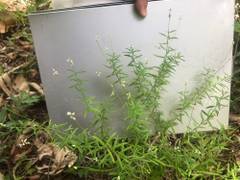
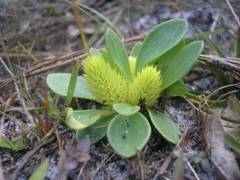
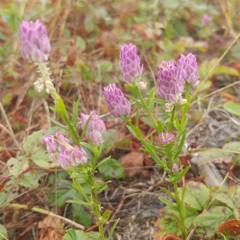
Senega alba is a slender herbaceous perennial in the milkwort family, sending up several wiry, erect stems 4-16 inches (10-40 cm) tall from a woody root crown. The stems carry narrow, linear leaves up to 1.5 inches (4 cm) long, alternate or sometimes in loose whorls along the lower stem. Small white flowers, each about 0.1 inch (2-3 mm) long, are packed into dense, tapering, spike-like racemes 1-3 inches (2.5-7.5 cm) long at the stem tips. Each milkwort flower has two petal-like wing sepals enclosing the small true petals. Bloom runs from late spring into mid-summer. The species grows on dry prairies, rocky and gravelly slopes, and open plains across central and western North America, often on calcareous soils. It tolerates drought and poor, stony ground from a deep root but is slow to establish and does not transplant well. Seeds form in small two-chambered capsules. The flowers are visited by small native bees.
Native Range
Senega alba is native to central and western North America, from the prairie provinces of Canada south through the Great Plains to Texas and northern Mexico, and west into the Rocky Mountain foothills. It grows on dry shortgrass and mixedgrass prairie, rocky slopes, and gravelly open ground, often over limestone.Suggested Uses
Used in prairie restorations, native plant gardens, and dry rock or gravel gardens within its range. The slender habit suits informal plantings among grasses and other prairie forbs. It establishes on dry, stony ground of low fertility.How to Identify
Appearance
Size & Dimensions
Height4" - 1'4"
Width/Spread4" - 10"
Bloom Information
Detailed Descriptions
Foliage Description
greenGrowing Conditions
Sun Requirements
Requires 6-12 hours of direct sunlight daily
• Full Sun: 6+ hours of direct sunlight
• Partial Shade: 3-6 hours of direct sunlight
• Full Shade: Less than 3 hours of direct sunlight
Care & Maintenance
Care Guide
Grows in full sun with six or more hours of direct light. Sharp drainage suits it, and dry, rocky, sandy, or calcareous soils of low fertility are tolerated, while wet or rich ground is not. Once established the deep root makes the plant drought-tolerant, and supplemental water is seldom needed. Establishment from seed is slow, and the deep root makes division and transplanting difficult. Plants are set young into their permanent position. Native prairie soils need no fertilizer.Pruning
Pruning is minimal. Spent stems can be cut back after seed set or left standing through winter. Dead growth is removed in late winter before new shoots emerge.Pruning Schedule
Prune: February–March
winter