Rosa, Genus, 'Knock Out', Cultivar,
- Genus
- Cultivar
Knock Out rose
Garden origin, raised in Wisconsin, United States
Overview
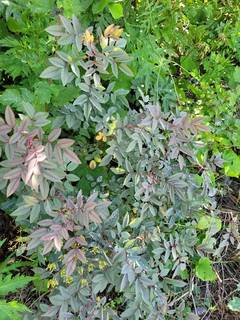
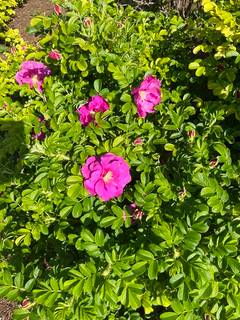
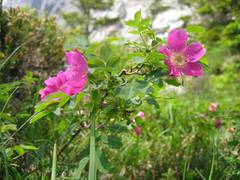
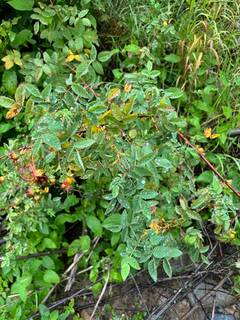
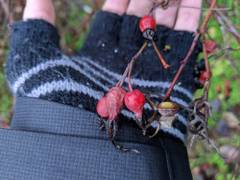
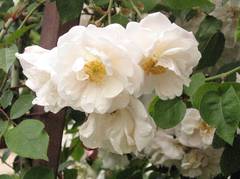
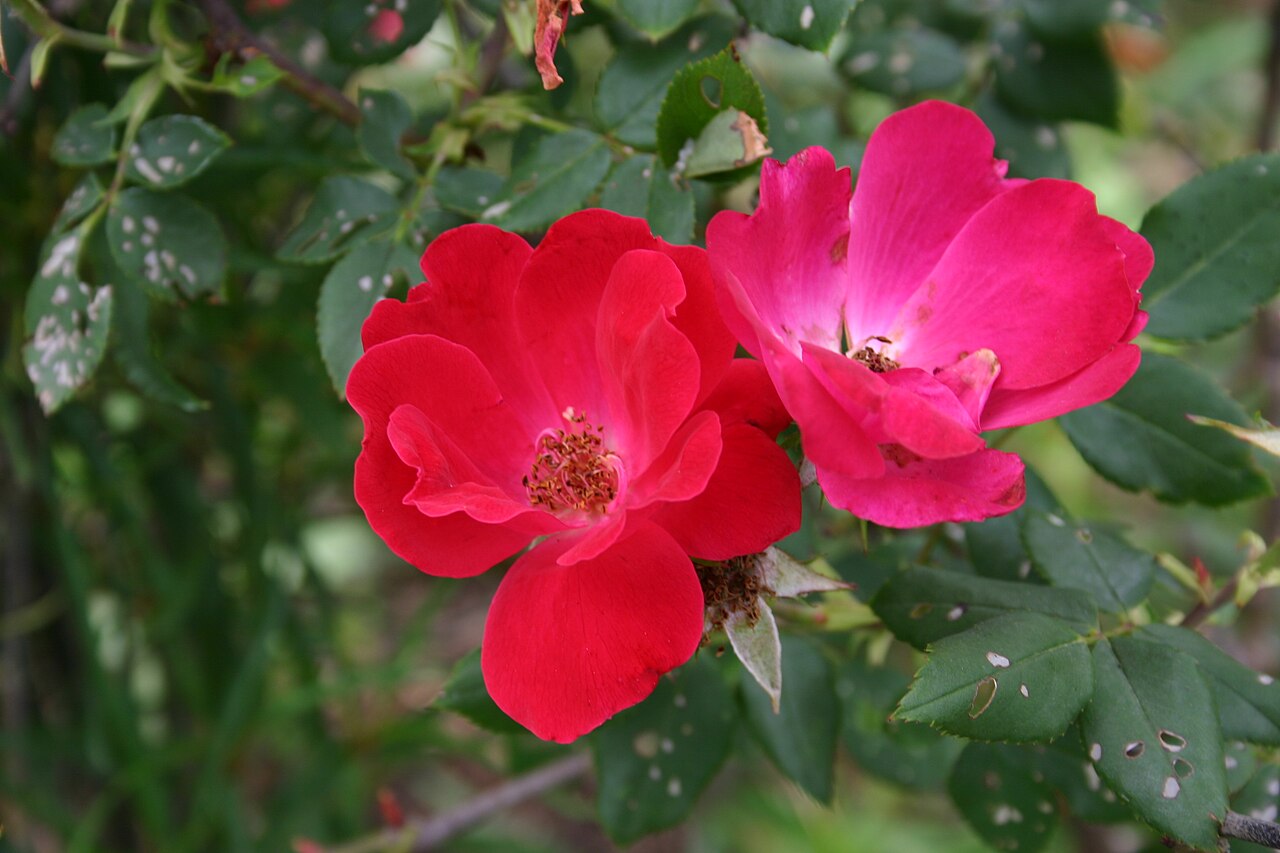
Rosa 'Knock Out' is a deciduous shrub rose forming a rounded, densely twiggy plant 3-5 feet (90-150 cm) tall and 3-5 feet (90-150 cm) wide, reaching the upper end of that range in zones 8-9 where growth is not cut back hard. Flowers are 3-3.5 inches (8-9 cm) across with 5-11 petals in cherry-red to deep pink, carried in clusters of 3-15 at the shoot tips and opening in flushes every five to six weeks from late spring until frost. Spent petals drop cleanly rather than hanging on as brown remains. Foliage is dark green and semi-glossy, with mahogany-red new growth and burgundy tones in autumn, and the canes carry scattered curved prickles. Small orange-red hips form on the last flush and hold into winter. The cultivar carries high resistance to black spot, so the defoliation that older hybrid teas suffer in humid summers is largely absent. It has no resistance to rose rosette disease, spread by eriophyid mites, which has killed large numbers of these plants in mass landscape plantings across the eastern and central United States. Japanese beetles feed on the open flowers from June to August. Hardy in USDA zones 5-11.
Native Range
Rosa 'Knock Out' has no wild range. It was raised by William Radler in Wisconsin from a breeding line selected for black spot resistance, patented in 1999, and released in 2000 by Star Roses and Plants under the Knock Out trademark with the cultivar name Radrazz. Its parentage traces to garden hybrids of Rosa rather than to any single wild species.Suggested Uses
Used in mass plantings along drives and parking areas, in mixed shrub borders, as a low informal hedge at 3-4 foot (90-120 cm) spacing, and in containers of 10 gallons (38 L) or larger. Blocks of a single rose cultivar planted close together raise the rate at which rose rosette disease moves through the planting, while interplanting with non-rose shrubs slows that transfer. Cut stems 12-18 inches (30-45 cm) long hold four to six days in water.How to Identify
Appearance
Size & Dimensions
Height3' - 5'
Width/Spread3' - 5'
Bloom Information
The first flush opens in mid to late May in zones 6-7 and in early June in zone 5, each flush lasting three to four weeks with a gap of about two weeks between them. Flowering repeats on new growth to the first hard frost, giving 20-26 weeks of bloom in zone 7 and 16-18 weeks in zone 5. The cycle repeats without deadheading, since new shoots break below spent clusters on their own. Bees collect pollen from the exposed stamens; the flowers hold little nectar.
Detailed Descriptions
Flower Description
Cherry-red to deep pinkFoliage Description
Dark green and semi-glossy, mahogany-red on new growth, burgundy in autumnGrowing Conditions
Sun Requirements
Requires 6-12 hours of direct sunlight daily
• Full Sun: 6+ hours of direct sunlight
• Partial Shade: 3-6 hours of direct sunlight
• Full Shade: Less than 3 hours of direct sunlight
Care & Maintenance
Care Guide
Six or more hours of direct sun carries full flowering; below that the shrub stretches, flushes thin out, and black spot appears despite the cultivar resistance. The plant grows in soils from clay to sand at pH 5.5-7.0 where water drains within a day, and it tolerates urban conditions and salt spray at the edge of paving. Established plants run two to three weeks between waterings, while roughly 1 inch (2.5 cm) per week delivered at the root zone sustains flush size through summer; overhead watering wets the foliage and raises disease pressure. A single application of balanced slow-release fertiliser in early spring covers the season, and feeding after early August pushes soft growth that frost damages. Plants showing rose rosette disease, recognised by red witches broom growth, thickened canes, and excess prickles, are dug out with their roots, as no treatment exists. Spacing at 4-5 feet (1.2-1.5 m) keeps air moving and slows mite transfer between shrubs.Pruning
Canes are cut back by one-third to one-half of their height in late winter or early spring before bud break, which holds the shrub near 3-4 feet (90-120 cm) and clears dead and crossing wood. Cutting the whole plant to 12-18 inches (30-45 cm) every third or fourth spring renews old canes and produces heavier flushes that season. Light shaping through summer takes out any single shoot running beyond the outline. Cutting after mid-September leaves soft growth heading into winter.Pruning Schedule
Prune: February–March
early spring
Container Growing
Suitable for container growing
Minimum container size: 10 gallons