Rosa, Genus, 'Intrigue', Cultivar,
- Genus
- Cultivar
intrigue rose
Cultivar origin (Warriner, 1982); Rosa genus distributed across Northern Hemisphere
Overview
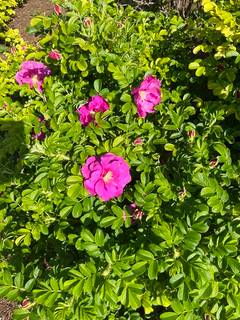
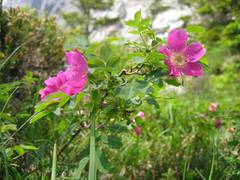
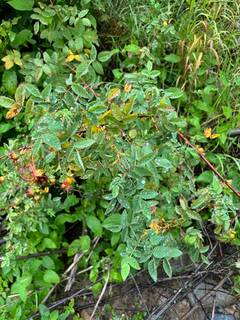
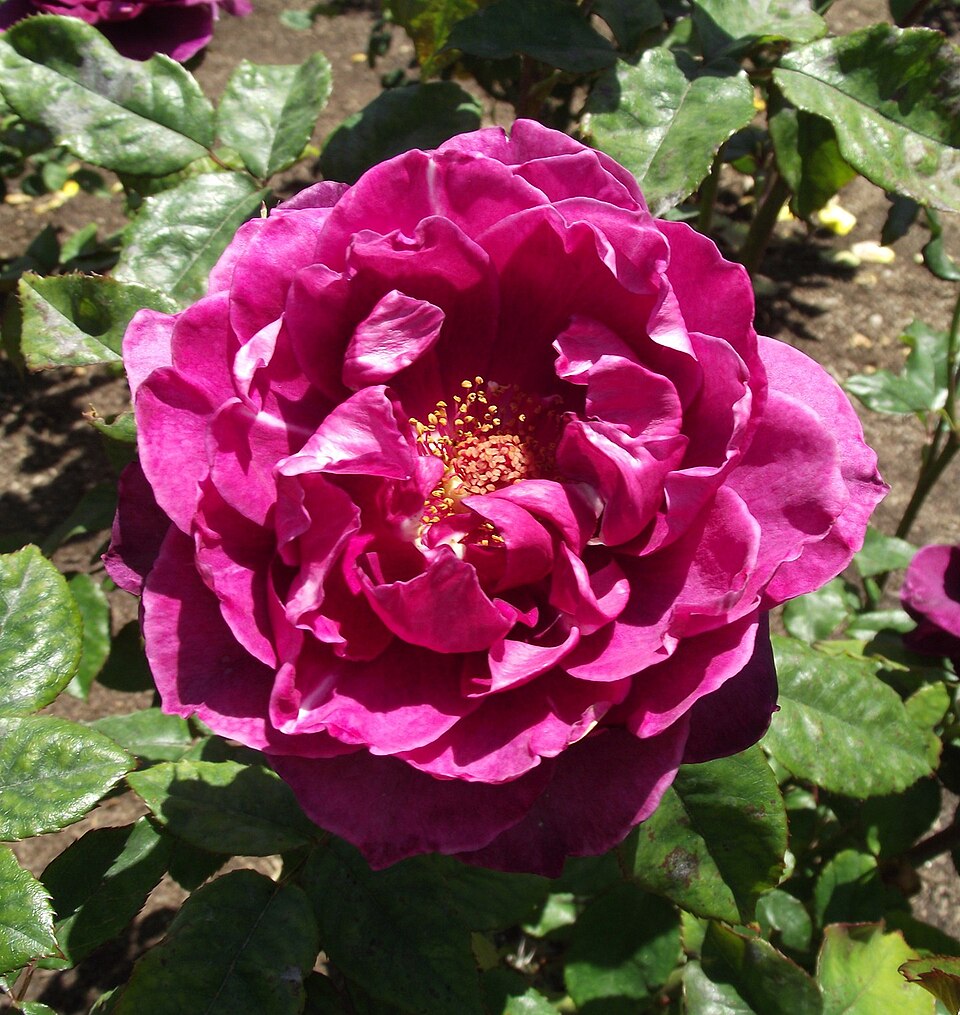
Rosa 'Intrigue' is a floribunda rose, growing 36–48 inches (90–120 cm) tall and 24–36 inches (60–90 cm) wide. Dark plum-purple to magenta double flowers 3–3.5 inches (7–9 cm) in clusters of 3–7, with a strong old-rose fragrance with citrus undertones. The dark purple color is affected by temperature: cooler weather produces the deepest plum-purple tones; hot weather shifts the color toward lighter magenta-lavender. Floribunda class — produces flowers in clusters rather than the single stems of hybrid tea roses. Reblooms in repeated flushes from late spring through fall with deadheading. Introduced by William Warriner in 1982. Dark green semi-glossy foliage. Susceptible to black spot (Diplocarpon rosae) — a fungal leaf disease causing black lesions and defoliation, particularly in humid conditions with poor air circulation. Powdery mildew in stagnant humid air. Japanese beetle feeds on flowers and foliage. Thrips damage flower buds. Non-toxic. Zones 5–9. Full sun (6+ hours) for maximum flowering and reduced disease. Well-draining loamy soil. Slightly acidic (pH 6.0–6.5). Consistent moisture at the root zone — avoid overhead watering, which promotes black spot. Growth rate is moderate. Containers of 5+ gallons (20+ liters).
Native Range
The Rosa genus is distributed across the Northern Hemisphere. Cultivar introduced by William Warriner (Jackson & Perkins) in 1982.Suggested Uses
Grown in borders, cutting gardens, and containers of 5+ gallons (20+ liters) in full sun. Space 24–36 inches (60–90 cm) apart. The strong fragrance suits positions near seating areas and paths. Black spot management required. Non-toxic.How to Identify
Appearance
Size & Dimensions
Height3' - 4'
Width/Spread2' - 3'
Bloom Information
Detailed Descriptions
Flower Description
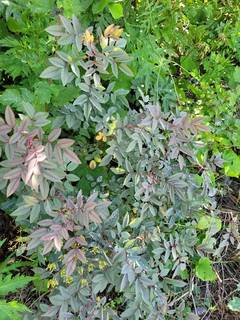
Dark plum-purple to magenta, fading to lavenderFoliage Description
Dark green, glossy, semi-glossyGrowing Conditions
Sun Requirements
Requires 6-10 hours of direct sunlight daily
• Full Sun: 6+ hours of direct sunlight
• Partial Shade: 3-6 hours of direct sunlight
• Full Shade: Less than 3 hours of direct sunlight
Care & Maintenance
Care Guide
Full sun (6+ hours). Well-draining loamy soil pH 6.0–6.5. Avoid overhead watering (promotes black spot). Deadhead for continuous rebloom. Black spot susceptible — improve air circulation. Powdery mildew. Japanese beetle and thrips. Non-toxic. Zones 5–9.Pruning
Prune in late winter to 12–18 inches (30–45 cm). Remove dead, damaged, and crossing canes. Open the center for air circulation (reduces black spot). Deadhead to the first five-leaflet leaf below the spent flower for rebloom.Pruning Schedule
Prune: February–March
winter
Container Growing
Suitable for container growing
Minimum container size: 5 gallons