Rosa, Genus, 'Hansa', Cultivar,
- Genus
- Cultivar
hansa rose
Garden hybrid origin (Schaum & Van Tol, Netherlands 1905; Rugosa hybrid; deepest colored—double reddish-purple; suckering; salt tolerant; z2; large hips)
Overview
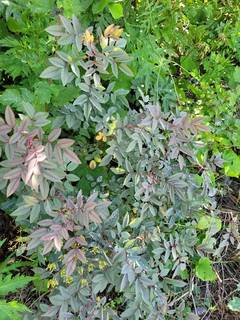
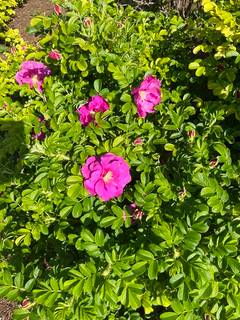
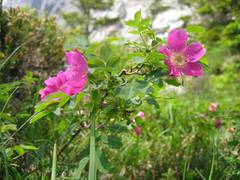
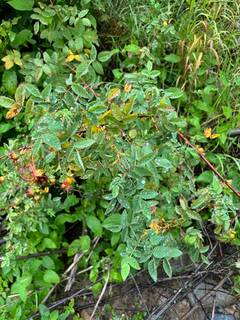
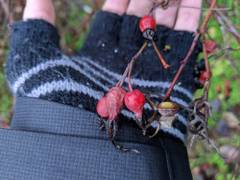
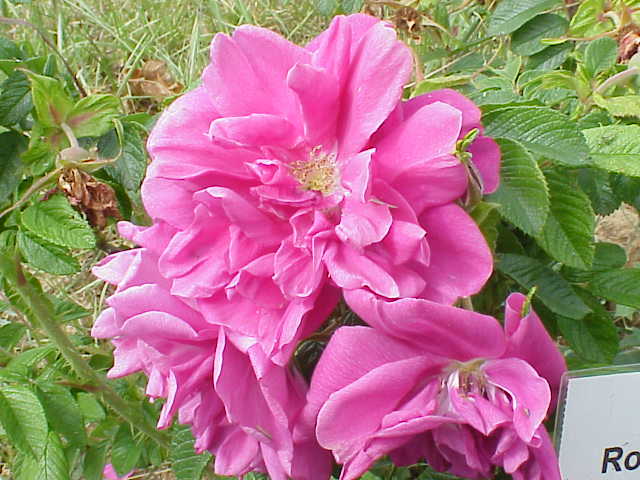
Rosa 'Hansa' is a deciduous shrub rose reaching 4-6 feet (1.2-1.8 m) tall with a spread of 4-6 feet (1.2-1.8 m) and a vigorous, upright, dense, suckering habit. A Rugosa hybrid (Schaum & Van Tol, Netherlands, 1905), it produces double to semi-double flowers 3-3.5 inches (8-9 cm) wide in deep reddish-purple to magenta-violet—the richest, deepest color in the Rugosa class. The flowers appear repeatedly from June through frost. The deeply veined, wrinkled (rugose), dark green leaves 3-5 inches (8-13 cm) long turn golden-yellow to orange in autumn. Large orange-red hips ripen in late summer and persist. The thick, very thorny stems are typical of Rugosas. Growth rate is fast. Hardy to zone 2. Tolerates salt spray, sandy soils, poor conditions, and coastal exposure. Suckers freely to form dense thickets—useful for hedging but may spread beyond boundaries.
Native Range
Rosa 'Hansa' is a Rugosa hybrid of garden origin, bred by Schaum & Van Tol, Netherlands, 1905. R. rugosa parentage—native to coastal E Asia.Suggested Uses
Planted as a hedge, screen, or mass planting at 3-4 foot (0.9-1.2 m) spacing. Deepest colored Rugosa—double reddish-purple. Large orange-red hips. Autumn foliage golden-yellow. Salt tolerant. Zone 2. Strong clove fragrance. Suckers freely—may spread. Very thorny. Not suitable for small borders or where spread must be controlled.How to Identify
Appearance
Size & Dimensions
Height4' - 6'
Width/Spread4' - 6'
Bloom Information
Detailed Descriptions
Flower Description
Deep reddish-purple to magenta-violet; double to semi-double 3-3.5 inches; Jun-frost; deepest Rugosa; strong clove fragranceFoliage Description
Dark green deeply veined rugose (wrinkled) 3-5 inches; golden-yellow to orange autumnGrowing Conditions
Sun Requirements
Requires 6-10 hours of direct sunlight daily
• Full Sun: 6+ hours of direct sunlight
• Partial Shade: 3-6 hours of direct sunlight
• Full Shade: Less than 3 hours of direct sunlight
Care & Maintenance
Care Guide
Plant in full sun in well-drained soil (pH 5.5-7.5). Hardy to zone 2. Tolerates salt spray, poor soils, sandy soils, coastal exposure. Suckers freely—useful for hedging but may spread. Do not use chemical sprays—Rugosa roses are sensitive. Very thorny canes.Pruning
Prune in late winter to early spring. Remove one-third of oldest canes. Manage suckers—remove those spreading beyond desired area. Can be hedged. The vigorous suckering makes this difficult to contain in small borders.Pruning Schedule
Prune: February–March
early spring