Image 1 of 5
1 / 5
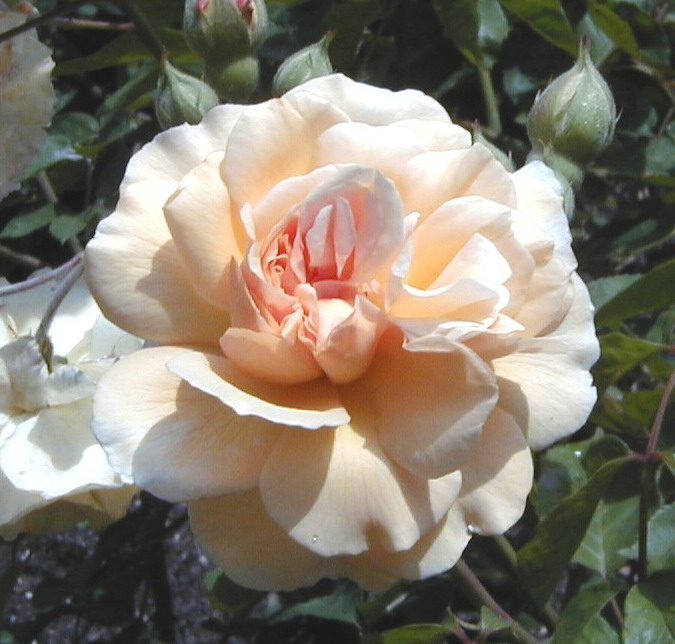
© No machine-readable author provided. Cillas assumed (based on copyright claims)., some rights reserved (CC-BY-SA) · Wikimedia Commons
Rosa, Genus, 'Buff Beauty', Cultivar,
- Genus
- Cultivar
buff beauty rose
Garden hybrid origin (Bentall, England 1939; Hybrid Musk; soft buff-apricot shifts with temperature; arching fountain; tea-musk fragrance; shade tolerant)
Overview
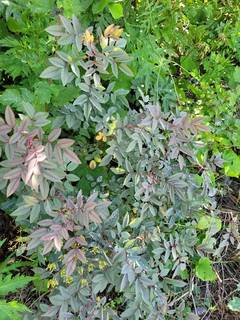
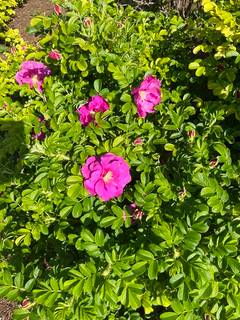
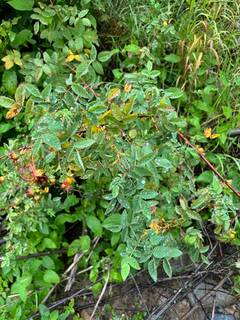
Rosa 'Buff Beauty' is a deciduous shrub rose reaching 5-6 feet (1.5-1.8 m) tall with a spread of 5-6 feet (1.5-1.8 m) and a graceful, arching, mounding habit with long, flexible canes that create a wide fountain shape. A Hybrid Musk rose (Bentall, 1939), it produces large clusters of medium-sized, double to fully double flowers 2.5-3 inches (6-8 cm) wide in soft buff-apricot to warm creamy-yellow—the warm tones deepen in cooler weather and fade to paler cream in heat. The flowers appear repeatedly from June through frost. The glossy, dark green to bronze-tinged leaves show moderate disease resistance. Growth rate is moderate to fast. Hardy to zone 6. A Hybrid Musk in the Pemberton/Bentall tradition, valued for the warm buff color that shifts with temperature. Strong tea and musk fragrance.
Native Range
Rosa 'Buff Beauty' is a hybrid of garden origin, bred by Bentall, England, 1939. Hybrid Musk class.Suggested Uses
Planted as a specimen, in borders, or trained on low fences at 5-6 foot (1.5-1.8 m) spacing. Soft buff-apricot—color shifts with temperature. Arching fountain habit. Strong tea-musk fragrance. Tolerates partial shade. Some blackspot in humidity. Wide spread—needs space. Not suitable for small spaces or formal hedging.How to Identify
Appearance
Size & Dimensions
Height5' - 6'
Width/Spread5' - 6'
Bloom Information
Detailed Descriptions
Flower Description
Soft buff-apricot to warm creamy-yellow; double to fully double 2.5-3 inches; clusters; color shifts with temperature; Jun-frostFoliage Description
Glossy dark green to bronze-tinged; moderate disease resistance; deciduousGrowing Conditions
Sun Requirements
Requires 4-10 hours of direct sunlight daily
• Full Sun: 6+ hours of direct sunlight
• Partial Shade: 3-6 hours of direct sunlight
• Full Shade: Less than 3 hours of direct sunlight
Care & Maintenance
Care Guide
Plant in full sun to partial shade in well-drained, fertile soil (pH 6.0-7.0). Hardy to zone 6. The arching canes need space—allow for the wide fountain habit. Tolerates more shade than most roses—Hybrid Musk trait. Moderate disease resistance—some blackspot susceptibility in humid conditions. Feed regularly.Pruning
Prune in late winter to early spring. The arching habit is part of the form—avoid heavy shaping. Remove one-third of oldest canes at the base. Tip back remaining canes lightly. The flexible canes can be trained as a short climber.Pruning Schedule
Prune: February–March
early spring