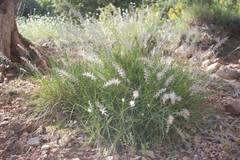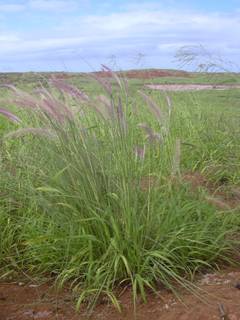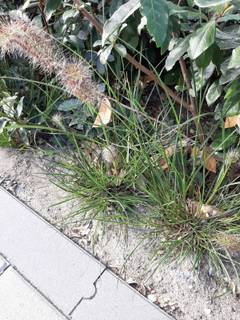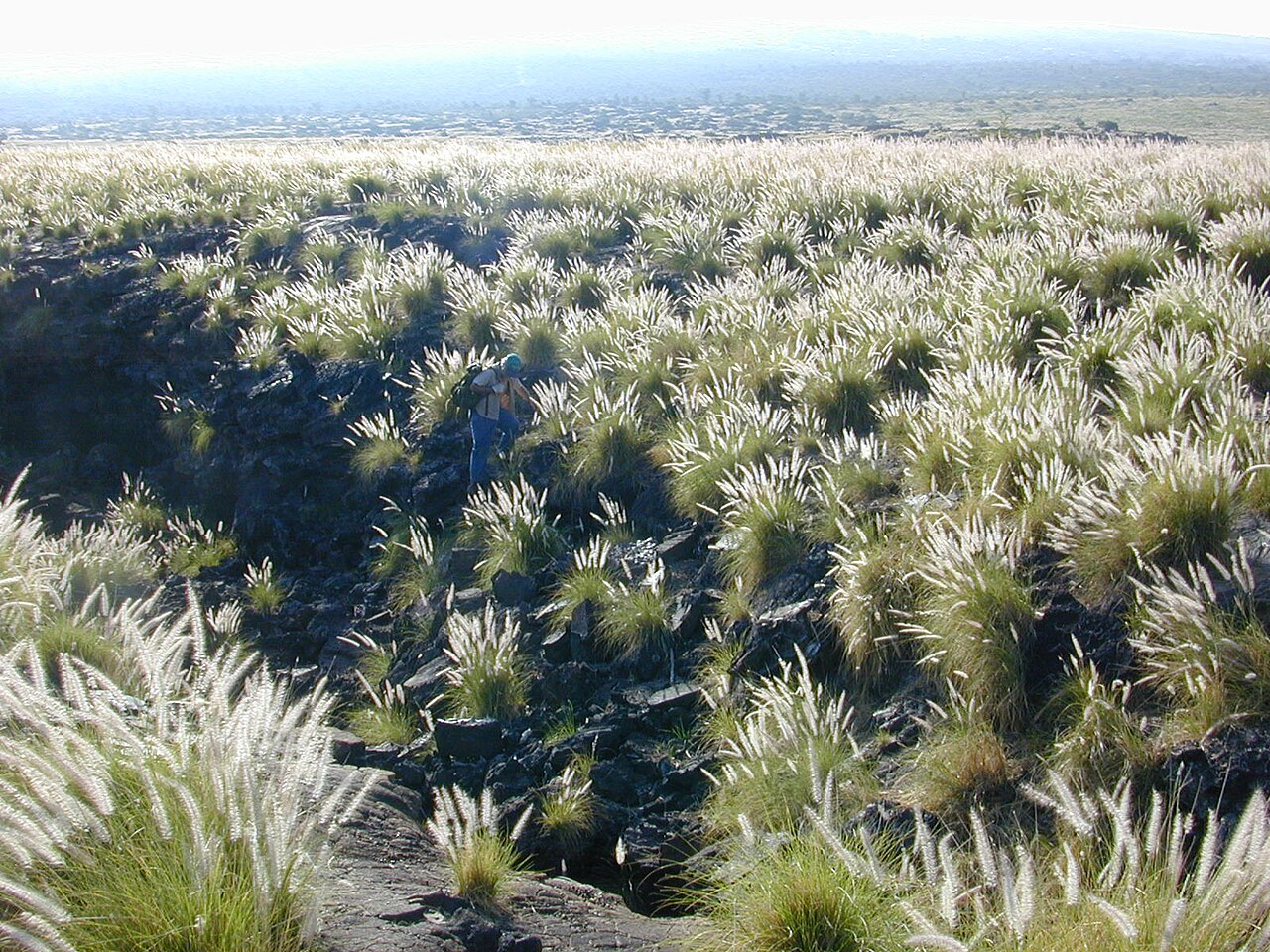
Pennisetum, Genus, setaceum, Species, 'Rubrum', Cultivar,
- Genus & species
- Cultivar
purple fountain grass
Northern Africa and the Arabian Peninsula (species type)
Overview
Pennisetum setaceum 'Rubrum' is a tender warm-season ornamental grass forming an upright clumping mound 3-5 feet (0.9-1.5 m) tall and 2-3 feet (0.6-0.9 m) wide. Linear arching leaf blades 12-30 inches (30-75 cm) long and 0.25-0.5 inch (0.6-1.3 cm) wide emerge deep burgundy-purple in spring and intensify to wine-red through summer. Foliage color fades to bronze in fall. Bottlebrush foxtail inflorescences 4-12 inches (10-30 cm) long appear from June through October on stems rising 6-18 inches (15-45 cm) above the foliage; spikelets are pink-purple with bristles 0.5-1 inch (1.3-2.5 cm) long. The cultivar is sterile and produces no viable seed, unlike the species type P. setaceum which is regulated as invasive in California, Hawaii, Arizona, and Florida. Plants are damaged at 25°F (-4°C) and do not survive frost. Crown rot develops in waterlogged soils within 2-3 weeks; rust (Puccinia species) appears as orange-red leaf spots in humid conditions with poor air movement.
Native Range
The species Pennisetum setaceum is native to northern Africa, including Egypt, Algeria, Morocco, and the Arabian Peninsula, where it grows on dry rocky slopes and in disturbed grasslands at 500-6,000 feet (150-1,800 m) elevation. The cultivar 'Rubrum' was selected from this species and is propagated only by division.Suggested Uses
Used as a vertical accent in mixed borders, container plantings, and meadow-style gardens at 24-36 inch (60-90 cm) spacing. Grown in containers of at least 5 gallons (19 L) as a temperate annual or zones 9-11 perennial; container plants can be overwintered indoors at 50-60°F (10-16°C). Used along driveways and walkways where plumes catch low-angle sunlight in late summer and fall.How to Identify
Appearance
Size & Dimensions
Height3' - 5'
Width/Spread2' - 3'
Bloom Information
Pink-purple foxtail inflorescences 4-12 inches (10-30 cm) long appear from June through October in zones 9-11 and from July through September as a temperate annual. Each inflorescence persists 3-5 weeks, fading from pink to tan as it ages. New inflorescences emerge continuously through the season. Bloom slows below 65°F (18°C) and ceases at the first frost.
Detailed Descriptions
Flower Description
Pink to purpleFoliage Description
Deep burgundy-purple, fading to bronze in fallGrowing Conditions
Sun Requirements
Requires 6-10 hours of direct sunlight daily
• Full Sun: 6+ hours of direct sunlight
• Partial Shade: 3-6 hours of direct sunlight
• Full Shade: Less than 3 hours of direct sunlight
Care & Maintenance
Care Guide
Water deeply once weekly during the first growing season; established plants tolerate 2-3 weeks without rain in zones 9-11. Apply balanced slow-release fertilizer once in spring; high nitrogen produces lax growth that flops in heavy rain. Crown rot develops within 2-3 weeks in waterlogged soils, particularly in heavy clay. Rust (Puccinia species) appears as orange-red leaf spots in humid conditions with poor air circulation. In zones 4-8, plants are replaced annually; in zones 9-11, division every 3-4 years renews vigor as the center of the clump dies out. Foliage clean-up after frost dieback is the main maintenance task.Pruning
Cut foliage to 4-6 inches (10-15 cm) above ground in late winter or early spring before new growth emerges; in zones 4-8, plants are pulled and discarded after frost. Spent inflorescences can be removed as they fade or left through winter for visual interest. No structural pruning is required during the growing season.Pruning Schedule
Prune: February–March
winterearly spring
Container Growing
Suitable for container growing
Minimum container size: 5 gallons