Pennisetum, Genus, setaceum, Species,
- Genus & species
fountain grass
East Africa, Arabian Peninsula, southwestern Asia
Overview
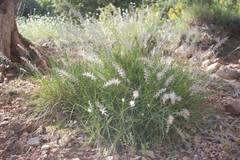
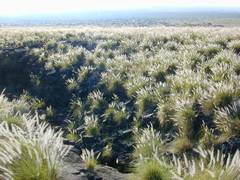
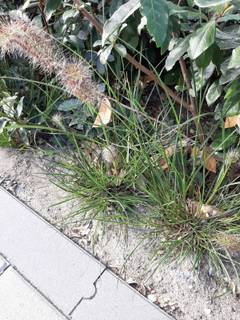
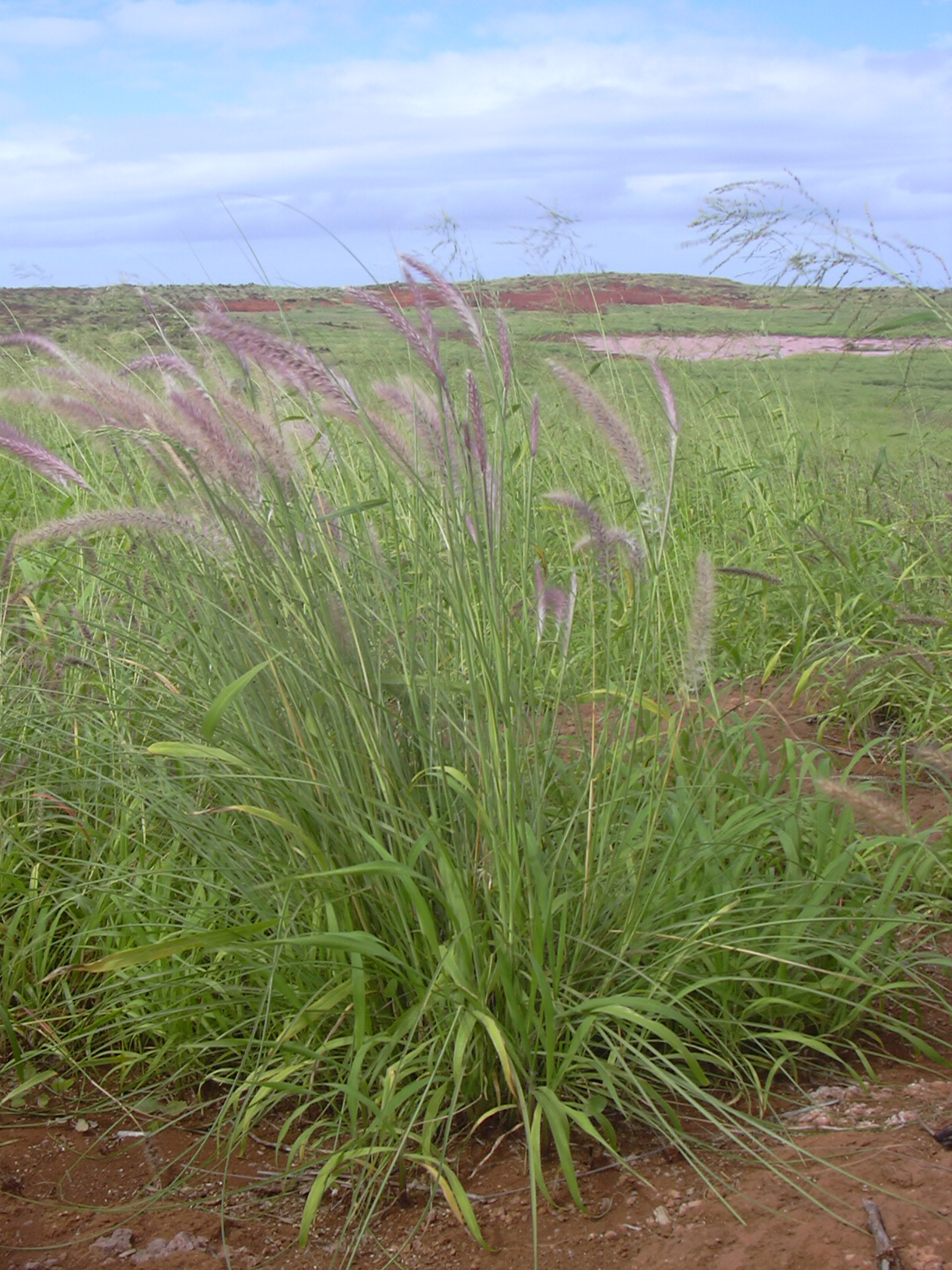
Pennisetum setaceum (syn. Cenchrus setaceus) is a warm-season, clump-forming perennial grass in the Poaceae family, growing 24–48 inches (60–120 cm) tall and 24–36 inches (60–90 cm) wide in a dense, arching, fountain-like mound. Leaf blades are narrow, 0.1–0.15 inch (2–4 mm) wide, bright green, rough-textured, and arch outward from the clump centre. The inflorescence is a cylindrical, bristly, bottlebrush-like spike 6–15 inches (15–38 cm) long, pinkish-purple to tan, produced on arching stems above the foliage from midsummer through autumn. Native to open, rocky habitats in East Africa, the Middle East, and southwestern Asia, the species is listed as invasive in Hawaii, California, Arizona, and many tropical and subtropical regions worldwide; seed is wind-dispersed, and the species colonises disturbed ground, roadsides, and dry slopes, displacing native vegetation. In Hawaii alone the species has occupied more than 500,000 acres and increases fire frequency in dry ecosystems. The cultivar P. setaceum 'Rubrum' (purple fountain grass) carries dark burgundy-purple foliage and deep rose-pink spikes, and is sterile or near-sterile in most climates, lowering invasion risk relative to the green-leaved species type. In the Pacific Northwest, plants are killed below 20°F (-7°C) and are grown as annuals or overwintered indoors.
Native Range
Pennisetum setaceum is native to East Africa (Ethiopia, Eritrea, Kenya, Tanzania), the Arabian Peninsula, and southwestern Asia. It has naturalised widely in tropical and subtropical regions worldwide, including parts of the Mediterranean, southern Africa, Australia, Hawaii, and the southwestern United States.Suggested Uses
Used as an ornamental grass in borders, containers, and mass plantings for the arching flower spikes and fountain-like habit. The cultivar 'Rubrum' (purple foliage) is widely grown in annual container combinations and municipal seasonal plantings. In the Pacific Northwest, it is grown as a warm-season annual accent in 5-gallon (19 L) or larger containers and in warm border positions. The green-leaved species type is regulated as invasive in Hawaii, California, Arizona, and other tropical and subtropical regions.How to Identify
Appearance
Size & Dimensions
Height2' - 4'
Width/Spread2' - 3'
Bloom Information
Bottlebrush flower spikes emerge from July through October, arching above the foliage on slender stems. Each spike is 6–15 inches (15–38 cm) long and shifts from pinkish-purple to tan as the seed matures. Flowers are wind-pollinated, and the species type produces wind-dispersed seed. The cultivar 'Rubrum' is sterile or near-sterile and rarely sets viable seed.
Detailed Descriptions
Flower Description
Pinkish-purple to tanFoliage Description
Bright green (species); dark burgundy-purple ('Rubrum')Growing Conditions
Sun Requirements
Requires 6-12 hours of direct sunlight daily
• Full Sun: 6+ hours of direct sunlight
• Partial Shade: 3-6 hours of direct sunlight
• Full Shade: Less than 3 hours of direct sunlight
Care & Maintenance
Care Guide
Site in full sun in any well-drained soil with a pH of 5.5–7.5. Tolerates drought, heat, lean soil, and wind once established. Space plants 24–36 inches (60–90 cm) apart for mass plantings. In USDA zones 9–10 the species is perennial and is regulated as invasive in several states and territories including Hawaii, California, and Arizona. In zones 7–8, plants are root-hardy with winter mulch but top growth dies back. In USDA zone 8 of the Pacific Northwest, the species is grown as a warm-season annual or in containers overwintered above 32°F (0°C). The cultivar 'Rubrum' is sterile or near-sterile and is typically chosen where the green species type is regulated.Pruning
Where plants overwinter, cut dead foliage back to 4–6 inches (10–15 cm) in late winter before new growth emerges. Where used as an annual, remove the entire clump after frost-killed foliage browns. No further pruning is required during the growing season.Pruning Schedule
Prune: February–March
early spring
Container Growing
Suitable for container growing
Minimum container size: 5 gallons