Pennisetum, Genus, spp., Multiple species,
- Genus
- Multiple species
fountain grass
Africa, Asia, and the Americas (chiefly Africa)
Overview
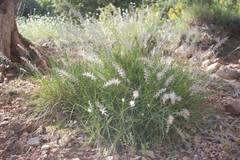
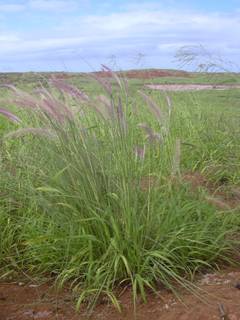
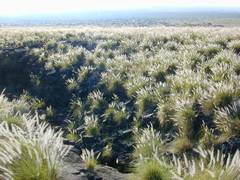
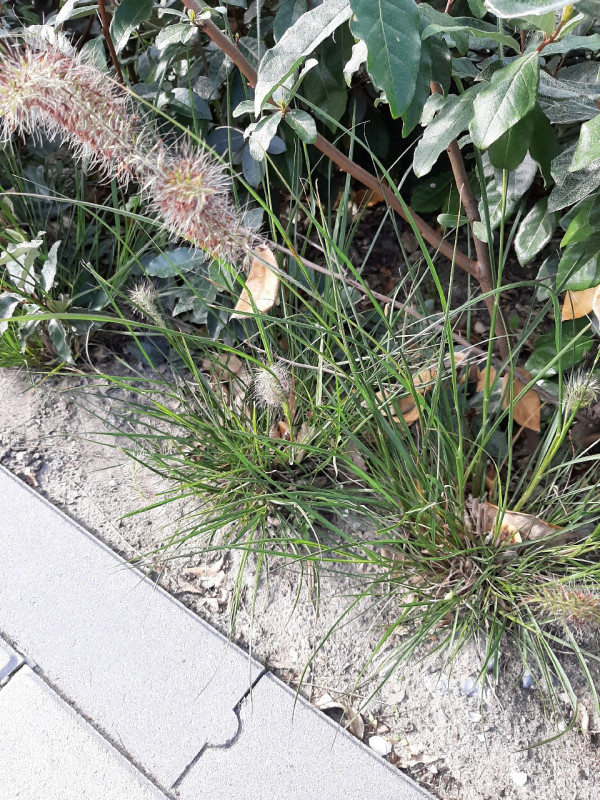
Pennisetum is a genus of around 80 annual and perennial grasses in the grass family (Poaceae), grown for their arching foliage and soft, bottlebrush flower spikes. Plants form dense, fountain-like clumps 1-5 ft (0.3-1.5 m) tall and 1-4 ft (0.3-1.2 m) wide, with narrow, often bright-green to burgundy leaves. From summer into autumn, bristly cylindrical flower spikes 2-12 in (5-30 cm) long rise above or arch among the foliage in shades of cream, pink, purple, and near-black, the bristles catching light and dew. Hardy species such as P. alopecuroides persist for years, while tender kinds such as the purple-leaved P. setaceum are grown as annuals outside frost-free climates. Several species, including P. setaceum, self-seed aggressively and are listed as invasive weeds in California, Hawaii, Australia, and other warm regions. Foliage and seed heads turn straw-tan and stand through much of winter.
Native Range
Pennisetum is native to warm-temperate and tropical regions of Africa, Asia, and the Americas, with the greatest diversity in Africa. Species grow in savanna, grassland, open woodland, and disturbed ground. Some are now placed by botanists in the related genus Cenchrus.Suggested Uses
Pennisetum is used in mixed borders, mass plantings, gravel and prairie gardens, and containers, and as a cut or dried flower. Plants are spaced 18-36 in (45-90 cm) apart depending on size. Tender purple-leaved kinds are grown as seasonal accents in beds and pots.How to Identify
Appearance
Size & Dimensions
Height1' - 5'
Width/Spread1' - 4'
Bloom Information
Flowering occurs from midsummer into autumn, generally July to October, with timing varying by species. The fuzzy spikes hold their color for many weeks and fade to tan as the seeds ripen. In hardy species the dried heads stand into winter before shattering.
Detailed Descriptions
Flower Description
Cream, pink, purple, to near-blackFoliage Description
Green to burgundyGrowing Conditions
Sun Requirements
Requires 6-10 hours of direct sunlight daily
• Full Sun: 6+ hours of direct sunlight
• Partial Shade: 3-6 hours of direct sunlight
• Full Shade: Less than 3 hours of direct sunlight
Water & Climate
Water Needs
Drought Tolerance
Drought tolerant when established
Care & Maintenance
Care Guide
Pennisetum grows in full sun in average, well-drained soil across a wide pH of 5.5-7.5, and tolerates heat and short drought once established. Flowering is sparse and clumps flop in too much shade or overly rich, wet soil. Hardy species such as P. alopecuroides are reliable in USDA zones 5-9, while tender species are root-hardy only in zones 8-11 and grown as annuals elsewhere. Where species self-seed, seed heads are removed before they shatter to limit unwanted spread. Clumps are cut back in late winter and divided every few years as centers thin. Foliar rust can mark leaves in damp, crowded conditions.Pruning
Pennisetum is cut back to a few inches above the ground in late winter or early spring, before new growth begins. The faded foliage and seed heads are otherwise left standing for winter form. Overgrown clumps are lifted and divided at cutback time.Container Growing
Suitable for container growing
Minimum container size: 3 gallons