Pennisetum, Genus, orientale, Species,
- Genus & species
oriental fountain grass
Central Asia, the Caucasus region, and northwestern India
Overview
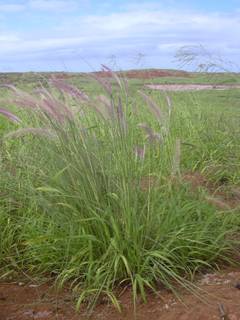
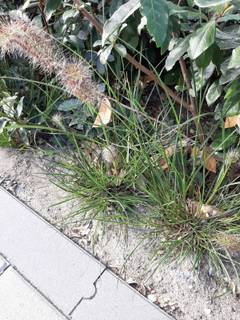
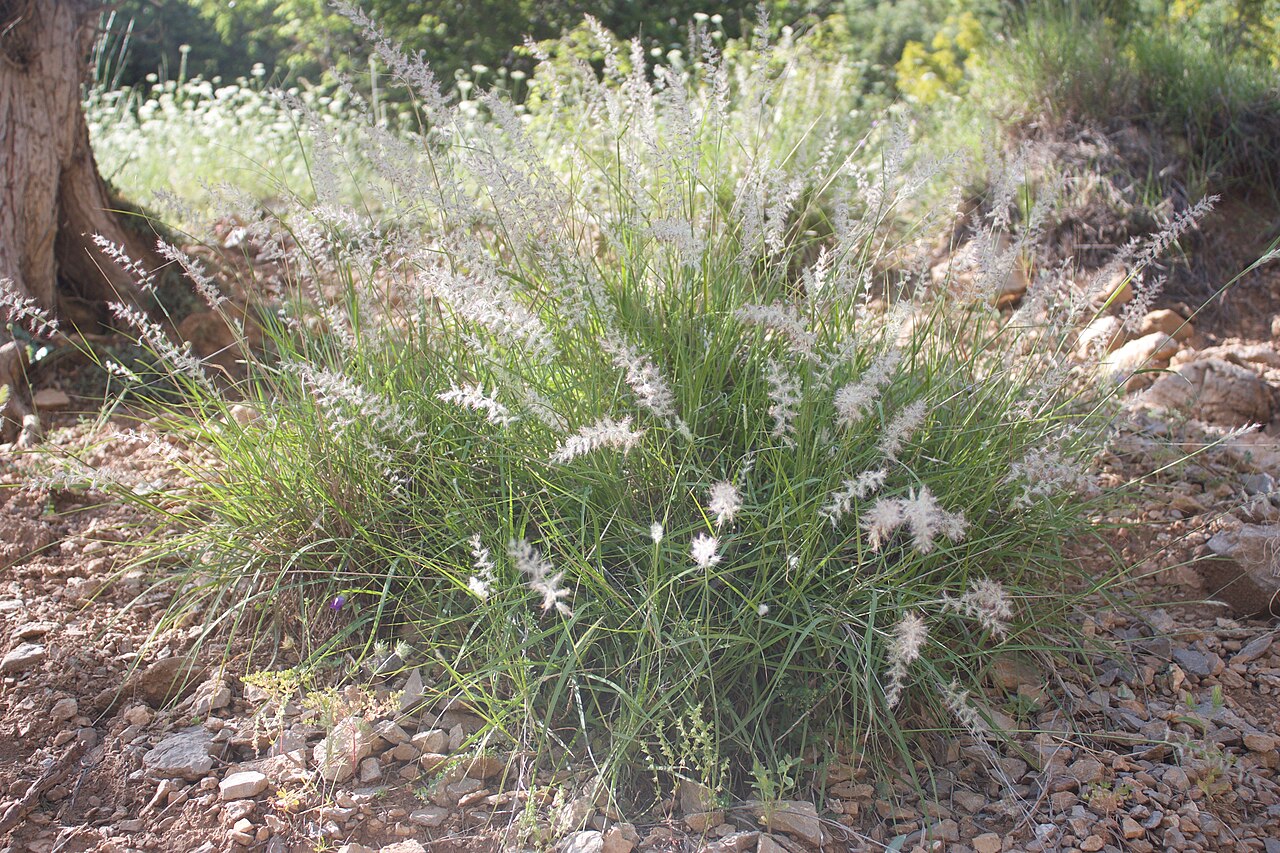
Pennisetum orientale is a deciduous clump-forming ornamental grass reaching 18–30 inches (45–75 cm) tall and 18–24 inches (45–60 cm) wide, with a compact mounding-to-fountain-shaped habit. The species carries narrow gray-green to blue-green leaf blades 0.1–0.25 inch (3–6 mm) wide and 10–18 inches (25–45 cm) long, producing a narrower leaf texture than P. alopecuroides at 0.25–0.4 inch (6–10 mm) wide. Flower spikes are soft fluffy cylindrical bottlebrush shapes 2–4 inches (5–10 cm) long, pinkish-mauve with conspicuous long bristles, carried on arching stems above the foliage from June through September over a 10–14 week window. Spikes age from fresh pinkish-mauve to tan across the bloom period and hold structure into autumn. Autumn foliage turns golden-yellow in October. Growth rate is moderate; the clump reaches full mature size in 2 growing seasons. The species handles drier conditions and alkaline soils better than P. alopecuroides, which suits it to gravel gardens and low-water Mediterranean-climate plantings. Hardy to USDA zone 6 (to –10°F / –23°C), which is 1 zone warmer than P. alopecuroides at zone 5. Not known to be toxic to pets or humans.
Native Range
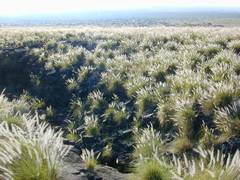
Pennisetum orientale is native to central Asia, the Caucasus region, and northwestern India, occurring on rocky slopes, dry meadows, and open scrub at 3,000–8,000 feet (900–2,400 m) elevation.Suggested Uses
Used in perennial borders, gravel gardens, Mediterranean-climate plantings, low-water xeriscape positions, and containers at 18–24 inch (45–60 cm) spacing. The 10–14 week June-to-September bloom window runs 4–8 weeks longer than the August-to-September bloom of P. alopecuroides 'Hameln' and 2 months earlier, giving the species a use case in plantings where summer flowering from grasses is wanted. Drought and alkaline soil tolerance fits the species to positions that fail for most ornamental grasses. Compared with P. alopecuroides 'Hameln', the species sits 1 zone warmer (USDA 6 versus 5), so colder-climate gardens should choose 'Hameln' or the cultivar 'Karley Rose' at zone 5. The plant does not grow well in shade, wet soils, or climates below USDA zone 6.How to Identify
Appearance
Size & Dimensions
Height1'6" - 2'6"
Width/Spread1'6" - 2'
Bloom Information
Soft fluffy cylindrical bottlebrush spikes 2–4 inches (5–10 cm) long in pinkish-mauve with conspicuous long bristles appear from June through September over a 10–14 week window. Spikes age from fresh pinkish-mauve to tan across the bloom period and hold structure into autumn.
Detailed Descriptions
Flower Description
Soft pinkish-mauve with conspicuous long bristles; fluffy cylindrical bottlebrush spikes 2-4 inches; June-September aging tanFoliage Description
Gray-green to blue-green; narrow 0.1-0.25 inch by 10-18 inches long; archingGrowing Conditions
Sun Requirements
Requires 6-10 hours of direct sunlight daily
• Full Sun: 6+ hours of direct sunlight
• Partial Shade: 3-6 hours of direct sunlight
• Full Shade: Less than 3 hours of direct sunlight
Care & Maintenance
Care Guide
Grow in full sun with 6 or more hours of direct light in well-drained lean-to-average loam, sand, or chalk at pH 6.0–8.0. The species tolerates dry, alkaline, and poor soils that suppress growth in most ornamental grasses, making it suitable for gravel gardens, xeriscape plantings, and chalk-soil positions where richer-soil grasses underperform. Full sun is needed for reliable flowering; partial shade reduces spike production by 30–50% and loosens the compact clump habit. Water deeply through the first growing season to establish, then rely on natural rainfall. No fertilization is needed. Cut back all foliage to 2–3 inches (5–8 cm) above ground in late February through March before new growth emerges. Hardy to USDA zone 6 (to –10°F / –23°C).Pruning
Cut back all foliage to 2–3 inches (5–8 cm) above ground in late February through March before new growth emerges. Leave spikes and foliage standing through winter for structure and to shelter overwintering beneficial insects.Pruning Schedule
Prune: February–March
early spring
Container Growing
Suitable for container growing
Minimum container size: 3 gallons