Pseudotsuga, Genus, menziesii, Species, 'Graceful Grace', Cultivar,
- Genus & species
- Cultivar
graceful grace douglas fir
Species native to western North America (British Columbia to central Mexico; Cascades, Coast Ranges, Sierra Nevada, Rocky Mountains); cultivar is a compact weeping selection
Overview
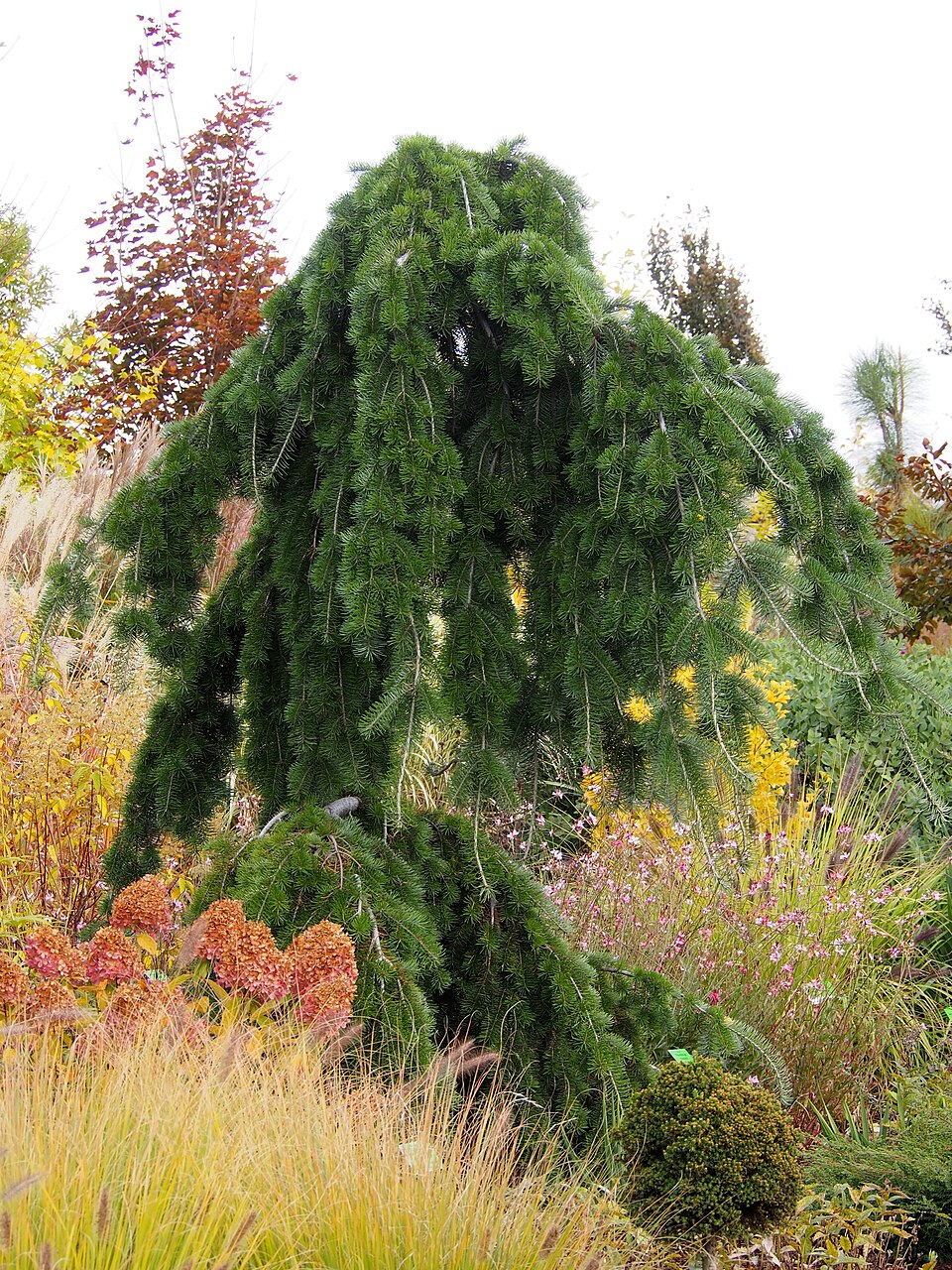
Pseudotsuga menziesii 'Graceful Grace' is an evergreen conifer reaching 8–15 feet (2.4–4.6 m) tall and 4–8 feet (1.2–2.4 m) wide, with a narrow weeping habit and pendulous branches cascading downward from a central leader. The cultivar is a compact weeping selection of Douglas fir. Soft flat linear needles are 0.8–1.2 inches (2–3 cm) long, blue-green to dark green, spirally arranged, and carry the characteristic fruity-citrus fragrance of Douglas fir foliage when crushed. Pendant branches drape closely along the trunk, producing a narrow columnar-to-cascading silhouette. Small pendant cones 2–3 inches (5–8 cm) long with three-pronged bracts extending past the scales (the so-called 'mouse-tail' feature of Douglas fir cones) can appear on mature specimens. Growth rate is slow to moderate. Hardy in USDA zones 4–8. The cultivar is a garden-scale weeping form of the Pacific Northwest's dominant forest tree, which reaches 200+ feet (60+ m) in its wild form. Without staking during the first 5–8 years, 'Graceful Grace' may remain prostrate rather than developing upright height; site selection should accommodate the eventual cascading width as well as the trained height.
Native Range
The species Pseudotsuga menziesii is native to western North America, from British Columbia south through the Cascades, Coast Ranges, Sierra Nevada, and Rocky Mountains to central Mexico. 'Graceful Grace' is a compact weeping cultivar.Suggested Uses
Planted as a specimen in mixed borders, rock gardens, slope plantings, or alongside walls at 4–6 foot (1.2–1.8 m) spacing in USDA zones 4–8, where a weeping form of a Pacific Northwest native conifer fits a garden-scale footprint. The cascading silhouette and fruity-citrus crush fragrance combine with other Northwest-native companions such as Mahonia aquifolium and Vaccinium ovatum in regional-native plantings. Container culture in 10-gallon (38 L) or larger pots suits the first decade. Hot dry continental sites, alkaline soils, and positions without room for the 4–8 foot (1.2–2.4 m) cascading width are the main planting limitations.How to Identify
Appearance
Size & Dimensions
Height8' - 15'
Width/Spread4' - 8'
Bloom Information
Produces male pollen strobili in April and May. Female cones mature on the tree to 2–3 inches (5–8 cm) long, pendant, with three-pronged bracts extending past the cone scales (the 'mouse-tail' feature characteristic of Douglas fir). The cultivar carries weeping evergreen foliage year-round.
Detailed Descriptions
Flower Description
Male pollen strobili April–May; female cones pendant 2–3 inches (5–8 cm) with three-pronged bracts extending past the scales ('mouse-tail' feature of Douglas fir cones)Foliage Description
Blue-green to dark green; soft flat linear needles 0.8–1.2 inches (2–3 cm) spirally arranged; fruity-citrus crush fragranceGrowing Conditions
Sun Requirements
Requires 6-10 hours of direct sunlight daily
• Full Sun: 6+ hours of direct sunlight
• Partial Shade: 3-6 hours of direct sunlight
• Full Shade: Less than 3 hours of direct sunlight
Care & Maintenance
Care Guide
Plant in full sun in moist, well-drained acidic to neutral loam, sandy, or silty soil at pH 5.0–7.0. Hardy in USDA zones 4–8. Consistent soil moisture during the first 5–8 establishment years supports the slow-to-moderate growth rate; drought stress causes premature needle drop and thinning of the cascading canopy. The cultivar requires staking to an upright support during its first 5–8 years to establish a central leader at the desired height; unstaked plants remain prostrate and spread horizontally rather than cascading vertically. Drought tolerance is moderate once established. Alkaline soils and hot dry continental positions fall outside the species' adapted range.Pruning
Routine pruning is not required. Stake the young plant to an upright support for the first 5–8 years to set the central leader at the desired height before letting branches weep; remove the stake after the leader has lignified. The cascading form develops on its own once the leader has reached target height. Remove dead or damaged branches in late winter.Container Growing
Suitable for container growing
Minimum container size: 10 gallons