Pseudotsuga, Genus, spp., Multiple species,
- Genus
- Multiple species
Douglas firs
Overview
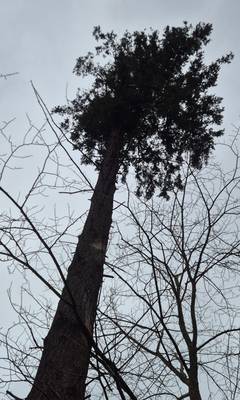
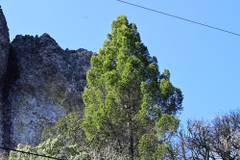
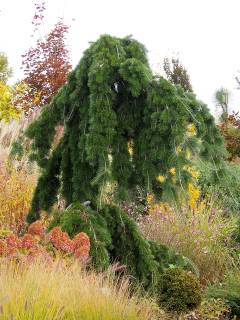
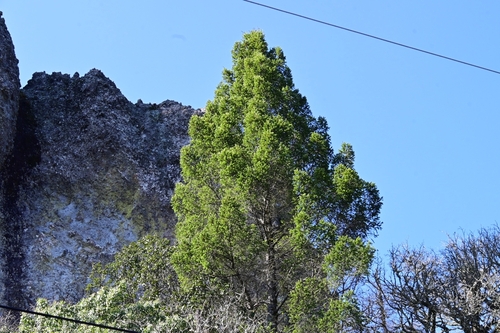
Pseudotsuga is a genus of evergreen conifers in the pine family (Pinaceae), comprising roughly four to six species native to western North America and East Asia. The North American P. menziesii reaches 60–100 m (200–330 ft) tall, while Asian species such as P. japonica stay smaller at 15–30 m (50–100 ft). Trees are single-stemmed with a straight trunk, thick corky furrowed bark on old North American specimens, and a conical to irregular crown. The soft, flattened needles are 2–4 cm (0.8–1.6 in) long, spirally arranged but appearing two-ranked, dark green to blue-green with two pale stomatal bands beneath, and leave a smooth oval scar when shed. Pollen and seed cones occur on the same tree; the pendent woody seed cones are 5–11 cm (2–4.5 in) long and carry three-pointed bracts that extend beyond the scales. Most species grow rapidly on deep, moist soils and are long-lived, with P. menziesii exceeding 500 years and occasionally 1,000. Cold and heat tolerance differ between species, so genus-wide performance varies, and the coastal form of P. menziesii is less cold-hardy than the interior Rocky Mountain form. Shallow, wide roots make young trees prone to windthrow on exposed sites.
Native Range
The genus is disjunct: P. menziesii ranges across western North America from British Columbia south through the Rocky Mountains and Pacific coast into Mexico, while P. japonica and P. sinensis occur in Japan, China, and Taiwan. It grows in montane and coastal coniferous forests from sea level to about 3,300 m (10,800 ft) in the southern Rockies.Suggested Uses
Planted as a specimen, shade, and screening tree in large gardens, parks, and shelterbelts. Grown commercially for timber and cut as a Christmas tree. Too large at maturity for small urban lots.How to Identify
Appearance
Size & Dimensions
Height50' - 330'
Width/Spread15' - 30'
Colors
Foliage Colors
Fall Foliage Colors
Bloom Information
Pseudotsuga bears cones rather than flowers. Pollen is released in spring, generally April to May depending on elevation. The wind-pollinated seed cones mature in a single season, ripening and shedding seed from late summer into autumn.
Detailed Descriptions
Foliage Description
dark green to blue-greenGrowing Conditions
Sun Requirements
Requires 6-12 hours of direct sunlight daily
• Full Sun: 6+ hours of direct sunlight
• Partial Shade: 3-6 hours of direct sunlight
• Full Shade: Less than 3 hours of direct sunlight
Care & Maintenance
Care Guide
Grow Pseudotsuga in deep, moist, well-drained acidic to neutral loam in full sun. It takes a range of soils but declines in waterlogged or chalky ground and in prolonged drought. Soil pH from about 5.0 to 7.0 suits most species. Young trees establish quickly with steady moisture and do better with shelter on windy sites because of their shallow roots. Cold hardiness varies by provenance, with interior P. menziesii hardy to USDA zone 4 and coastal forms to about zone 6. Established trees need little supplemental feeding.Pruning
Pseudotsuga needs minimal pruning and forms a symmetrical crown on its own. Remove dead, diseased, or crossing branches in late winter. Topping or heading cuts destroy the leader and the conical form, producing weak multiple leaders. Lower limbs can be raised over several seasons for clearance.Pruning Schedule
Prune: February–March
winter