Prostanthera, Genus, ovalifolia, Species,
- Genus & species
Oval-leaf mint bush
Overview
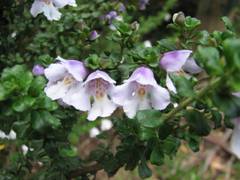
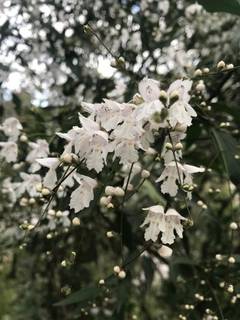
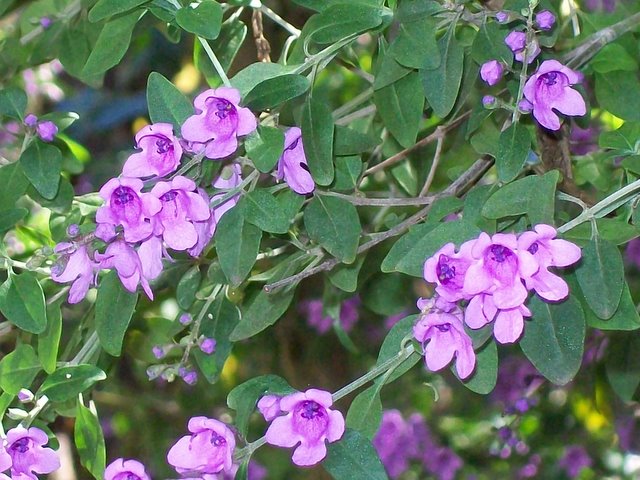
Prostanthera ovalifolia is an evergreen shrub reaching 3-10 feet (1-3 m) tall and 3-8 feet (1-2.4 m) wide, with erect stems that are square in cross section and covered in short hairs. Leaves are opposite, oval to elliptic, 0.4-1 inch (10-25 mm) long and 0.2-0.6 inch (5-15 mm) wide, dark green, and dotted with oil glands that release a mint scent when crushed. Flowers are two-lipped, 0.4-0.5 inch (10-12 mm) long, purple to mauve with darker spotting in the throat, carried in leafy sprays at the ends of the shoots. Flowering covers most of the outer canopy for 4-6 weeks in spring, after which the shoots extend 6-12 inches (15-30 cm) past the spent flowers. Young plants grow 12-24 inches (30-60 cm) per year. Plants on their own roots live 5-10 years and can die within 2-3 weeks once root rot from Phytophthora cinnamomi reaches the crown, most often after summer rain on heavy soil. Plants grafted onto Westringia fruticosa rootstock hold for 12-15 years in the same conditions. Stems cut back into leafless wood more than two years old produce no new shoots.
Native Range
Native to eastern Australia, in New South Wales and southern Queensland, from the coast west to the Great Dividing Range. Grows in dry sclerophyll forest and woodland on sandstone and shale, mostly on slopes and ridges from 300 to 3,300 feet (100-1,000 m). Plants sit in the shrub layer beneath eucalypts, in country receiving 25-50 inches (600-1,250 mm) of rain per year.Suggested Uses
Planted at 4-6 foot (1.2-1.8 m) spacing in mixed native borders, informal screens, and as an understory shrub beneath open-canopy trees in Australian gardens and in USDA zones 9-10. Grown in containers of 10 gallons (38 L) or larger in free-draining mix, where plants hold their form for 4-6 years. A life span of 5-10 years on own roots limits use in permanent structural plantings unless grafted stock is planted.How to Identify
Appearance
Size & Dimensions
Height3' - 10'
Width/Spread3' - 8'
Colors
Bloom Information
Flowering runs 4-6 weeks in spring, August to November in eastern Australia and March to May in USDA zones 9-10 of the Northern Hemisphere. Buds form on wood made the previous summer, so shoots cut after midsummer carry few flowers the following spring. Individual flowers hold 5-7 days. Scattered flowers appear again on strong shoots in autumn in frost-free coastal gardens.
Detailed Descriptions
Flower Description
Purple to mauveFoliage Description
Dark greenGrowing Conditions
Sun Requirements
Requires 4-8 hours of direct sunlight daily
• Full Sun: 6+ hours of direct sunlight
• Partial Shade: 3-6 hours of direct sunlight
• Full Shade: Less than 3 hours of direct sunlight
Care & Maintenance
Care Guide
Water weekly through the first two summers and every 2-3 weeks once established; leaves wilt and shoot tips die back after 10-14 days of dry soil at temperatures above 86F (30C). Free-draining soil at pH 5.5-7.0 under 2-3 inches (5-8 cm) of coarse mulch holds the root zone cool, and root rot from Phytophthora cinnamomi kills plants within 2-3 weeks in soil that stays wet above 68F (20C). Shade for 2-4 hours in the afternoon extends leaf life in hot inland climates, while plants in full shade carry 50-70 percent fewer flowers. Phosphorus at up to 20 ppm is tolerated, unlike in Grevillea and Banksia, so general garden fertilizer at 1 ounce per square yard (30 g per square meter) after flowering is workable. Plants on their own roots decline after 5-10 years, and grafted stock on Westringia fruticosa carries plantings past that span. Scale insects and mealybugs colonize the stem bases of plants grown in still air.Pruning
Shoots are cut back by one third immediately after flowering, removing 6-12 inches (15-30 cm) from each flowering stem while leaves remain below the cut. Tip pruning of the outer 2-3 inches (5-8 cm) two or three times through summer thickens the canopy and increases the wood that flowers the following spring. Cuts into leafless wood more than two years old produce no regrowth, and the stub dies back to the nearest living shoot. Pruning after midsummer takes off the wood that carries the next spring flowers.Pruning Schedule
Prune: May–June
late spring
Container Growing
Suitable for container growing
Minimum container size: 10 gallons