Shrubs
Prostanthera, Genus, rotundifolia, Species,
- Genus & species
Round-leaf mint bush
Overview
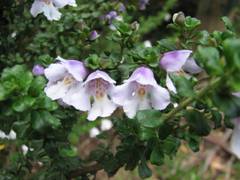
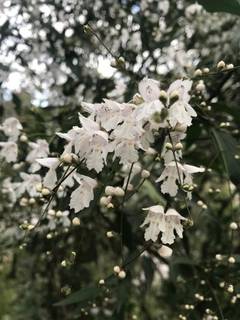
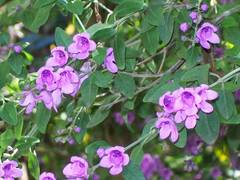
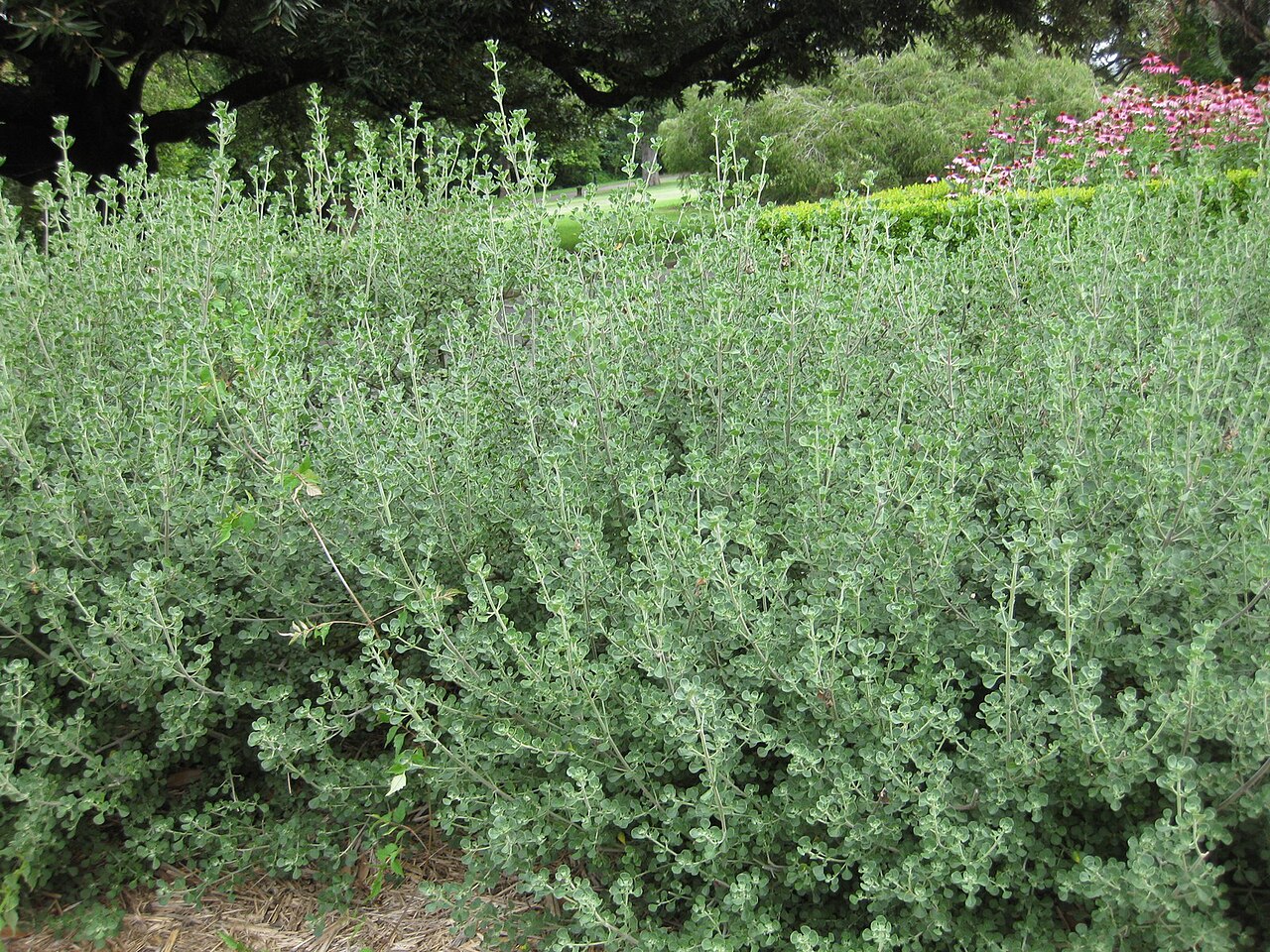
Prostanthera rotundifolia is an evergreen shrub, 3–8 feet (0.9–2.4 m) tall and 3–6 feet (0.9–1.8 m) wide, with an upright to rounded habit and slender, hairy stems. Leaves are opposite, round to broadly obovate, 0.2–0.6 inch (5–15 mm) long, dark green, with a minty aroma when crushed. Flowers are bell-shaped, 0.4–0.6 inch (10–15 mm) long, mauve to purple with darker spots in the throat, and borne singly in the upper leaf axils so that the branch tips appear densely covered in spring. The calyx is two-lipped and enlarges in fruit. Growth is moderate at 8–16 inches (20–40 cm) per year. Plants are short-lived, usually declining after 5–10 years, and are sensitive to wet soil and humid heat.
Native Range
Native to southeastern Australia, including New South Wales, Victoria, Tasmania, and South Australia, growing in dry sclerophyll forest, heath, and rocky slopes.Suggested Uses
Used in cottage-style borders, rock gardens, and containers, spaced 3–4 feet (0.9–1.2 m) apart. Grown as a low informal hedge in mild climates.How to Identify
Appearance
Size & Dimensions
Height3' - 8'
Width/Spread3' - 6'
Colors
Bloom Information
Blooms from September to November, with peak flowering in October in the southern hemisphere. Flowers are borne singly in leaf axils and cover the upper branches. Individual flowers last 1–2 weeks, and bees and other insects visit them.
Detailed Descriptions
Flower Description
Mauve to purpleFoliage Description
Dark greenGrowing Conditions
Sun Requirements
Requires 4-8 hours of direct sunlight daily
• Full Sun: 6+ hours of direct sunlight
• Partial Shade: 3-6 hours of direct sunlight
• Full Shade: Less than 3 hours of direct sunlight
Care & Maintenance
Care Guide
Grows in full sun to part shade (4–8 hours of sun) and well-drained soil with a pH of 5.5–7.5. Hardy to about 23°F (-5°C), equivalent to USDA zones 8–10. Established plants tolerate short dry periods and are watered every 1–2 weeks in summer. Waterlogged soil causes root rot. Leaves benefit from mulch of 2 inches (5 cm) to moderate root temperature. Fertilizer is applied sparingly, using low-phosphorus products.Pruning
Tip pruning immediately after flowering, removing about one-third of the new growth, maintains a compact form. Cuts are made into leafy wood, since old leafless stems seldom resprout. Annual pruning delays the decline that occurs in older plants.Pruning Schedule
Prune: November–December
late spring
Container Growing
Suitable for container growing
Minimum container size: 5 gallons