Polypodium, Genus, scouleri, Species,
- Genus & species
Scouler's polypody
Pacific coast of North America: Alaska to southern California
Overview
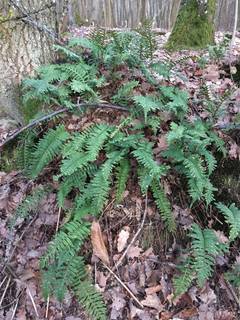
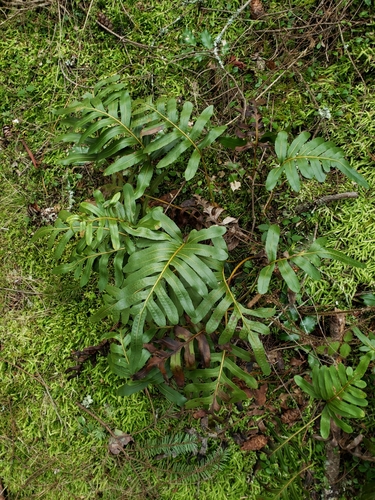
Polypodium scouleri is an evergreen fern with leathery, dark green fronds 4-12 inches (10-30 cm) long and 2-4 inches (5-10 cm) wide, arising from a creeping, scaly rhizome 0.2-0.4 inches (5-10 mm) thick. Fronds are once-pinnately divided into 5-15 pairs of rounded, blunt-tipped segments per side. Sori are large, round to oval, 0.1-0.2 inches (3-5 mm) across, arranged in a single row on each side of the segment midrib, ripening from green to orange-brown by late summer. The rhizome creeps along bare rock, decaying logs, and the bark of mossy Acer macrophyllum or Picea sitchensis trunks at low to mid elevations. Fronds persist 12-18 months, with new fronds emerging in late winter and spring. Growth is slow; a single rhizome typically advances 1-2 inches (2.5-5 cm) per year and patches expand to 12-18 inches (30-45 cm) across after 5-8 years. Tolerates summer dryness by leaf curl rather than dieback in coastal zones, but goes summer-deciduous on exposed inland sites with extended drought. Sensitive to soil disturbance; rhizome fragments do not regenerate readily once detached from the substrate.
Native Range
Native to the Pacific coast of North America from southeastern Alaska south to Santa Barbara County, California, and on coastal islands including Haida Gwaii and the Channel Islands. Found in coastal rainforests, on rocky bluffs, in tree canopies as an epiphyte, and on shaded boulders within 30 miles (50 km) of marine influence.Suggested Uses
Grown on rock walls, atop boulders, on decaying logs, and in shaded woodland gardens west of the Cascades and Coast Ranges. Spaced 12-18 inches (30-45 cm) apart on rock or log substrates; closer spacing leads to rhizome competition and patchy growth. Not adapted to interior gardens with hot dry summers or to standard mineral soil garden beds, where it typically declines within 1-2 seasons.How to Identify
Appearance
Size & Dimensions
Height4" - 1'
Width/Spread1' - 1'6"
Colors
Foliage Colors
Fall Foliage Colors
Bloom Information
Spore-bearing rather than flowering. Sori develop on the underside of mature fronds in spring and ripen from green to orange-brown by late summer; spores release from August through October. Sterile and fertile fronds are similar in shape; fertile fronds tend to be slightly larger and stand more upright than sterile fronds.
Detailed Descriptions
Foliage Description
Dark greenGrowing Conditions
Sun Requirements
Tolerates up to 4 hours of direct sunlight daily
• Full Sun: 6+ hours of direct sunlight
• Partial Shade: 3-6 hours of direct sunlight
• Full Shade: Less than 3 hours of direct sunlight
Care & Maintenance
Care Guide
Establish on a moss-topped rock, decaying log, or in a duff-rich pocket between rocks; soil-grown plants in standard garden beds rarely persist beyond 1-2 years. Maintain consistent moisture during establishment (first 2 growing seasons), then reduce supplemental water to occasional summer irrigation in dry spells. Frond margins curl inward during drought and recover within hours of rain. Slug damage on emerging spring fronds is the most common pest issue in coastal gardens. Fronds tatter under direct afternoon sun; place in part shade to full shade with no more than 2-3 hours of morning sun. Replace duff or leaf mold around the rhizome annually to maintain humidity at the rhizome surface.Pruning
Remove tattered or browned fronds at the base in late winter, just before new fiddleheads emerge. Removal of healthy fronds in spring reduces photosynthetic surface during the most active growth period and slows rhizome expansion. Established plants in shaded sites may go 2-3 years without any frond removal.Pruning Schedule
Prune: February–March
winterearly spring
Container Growing
Suitable for container growing
Minimum container size: 2 gallons