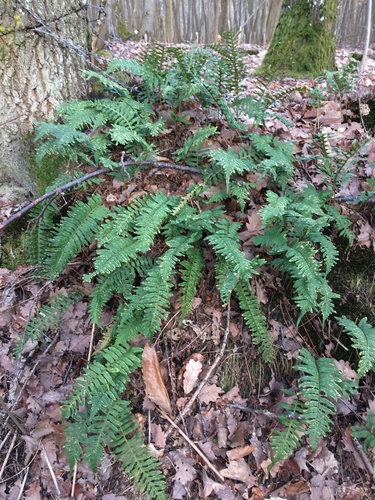
Polypodium, Genus, interjectum, Species,
- Genus & species
intermediate polypody
Overview
Polypodium interjectum is an evergreen fern spreading by a creeping, scaly rhizome. The fronds stand 4-16 inches (10-40 cm) tall and are once-divided (pinnate), leathery, and ovate-lanceolate, broadest below the middle, a feature separating it from P. vulgare, whose fronds have nearly parallel sides. Each frond carries 10-25 pairs of blunt-tipped segments. Round to oval sori sit in a single row each side of the segment midrib on the underside, ripening from yellow to orange-brown. It grows on rock ledges, old walls, banks, and mossy tree trunks, mainly in mild, humid districts. The rhizome creeps along the surface, knitting plants into loose colonies over several years. P. interjectum hybridises with P. vulgare to form the sterile P. mantoniae. It spreads slowly and is intolerant of prolonged drought, which scorches the fronds and checks growth.
Native Range
Native to western and central Europe, extending from the British Isles south to the Mediterranean and east into central Europe. It occurs most often in mild, oceanic coastal districts.Suggested Uses
Grown in shaded rock gardens, on walls and stumpery features, and among mossy logs in woodland borders. It also roots in shallow, free-draining containers and troughs. The evergreen fronds hold through winter where it is hardy.How to Identify
Appearance
Size & Dimensions
Height4" - 1'4"
Width/Spread8" - 2'
Bloom Information
As a fern, Polypodium interjectum produces no flowers. Spores ripen in sori on the frond undersides from late summer into winter, about August to February, later than the related P. vulgare.
Detailed Descriptions
Foliage Description
GreenGrowing Conditions
Sun Requirements
Requires 1-4 hours of direct sunlight daily
• Full Sun: 6+ hours of direct sunlight
• Partial Shade: 3-6 hours of direct sunlight
• Full Shade: Less than 3 hours of direct sunlight
Care & Maintenance
Care Guide
Polypodium interjectum grows in partial to full shade, though it tolerates some sun where the air stays humid. It needs steady moisture and a free-draining, humus-rich or rocky rooting medium at a soil pH of about 5.0-7.5, and it grows readily on mossy walls and ledges where little soil is present. The creeping rhizome sits at the surface rather than buried; deep planting can cause it to rot. Growth is slow, and a new colony may take 2-3 years to cover its space. Prolonged drought scorches the fronds, so a sheltered, humid spot suits it. Hardy to about USDA zone 6, it needs no feeding in its natural rocky niche.Pruning
Old or weather-damaged fronds can be removed in early spring before the new fronds unfurl. No other pruning is needed, and the evergreen fronds are otherwise left in place through winter.Container Growing
Suitable for container growing
Minimum container size: 2 gallons


