Polypodium, Genus, glycyrrhiza, Species,
- Genus & species
licorice fern
Pacific coastal North America: Alaska south through British Columbia, Washington, and Oregon to California; epiphytic on mossy big-leaf maple bark, mossy rocks, cliff faces, and fallen logs in cool moist coastal and low-elevation forests
Overview
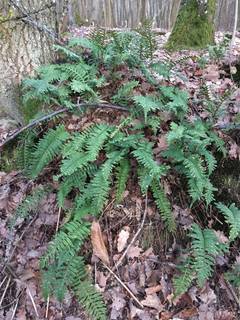
Polypodium glycyrrhiza is a low-growing, rhizomatous, semi-evergreen to summer-deciduous fern in the family Polypodiaceae. It is native to the coastal Pacific Northwest from Alaska south through British Columbia, Washington, and Oregon to California, where it grows epiphytically on the mossy bark of big-leaf maple (Acer macrophyllum), on mossy rock outcrops, on cliff faces, and occasionally on fallen logs. Plants reach 6–20 inches (15–50 cm) tall and 12–24 inches (30–60 cm) wide. Fronds are pinnatifid, divided into 10–20 pairs of rounded, oblong pinnae that remain connected at the base. Round, orange-tan sori without indusia are produced on the underside of the pinnae and are the family character of Polypodiaceae. The species follows a reversed seasonal pattern in the Pacific Northwest: fronds emerge with the autumn rains, remain green through winter, and die back during the summer drought, the opposite of most Pacific Northwest ferns. The genus name Polypodium translates as many feet, referring to the branching rhizomes; the specific epithet glycyrrhiza translates as sweet root and refers to the licorice-flavored rhizomes, which were chewed by Indigenous peoples of the Pacific Northwest for the sweet taste and as a cough remedy. Limitation: requires cool, moist, shaded conditions and a mossy substrate; declines in hot, dry, sunny, or alkaline sites and rarely persists in mineral garden soil.
Native Range
Native to the Pacific Northwest from Alaska south through British Columbia, Washington, and Oregon to California, growing epiphytically on mossy bark, mossy rocks, and cliff faces in cool, moist coastal and low-elevation forests.Suggested Uses
Used on mossy rocks, mossy logs, and at the base of large-bark trees in Pacific Northwest shade and woodland gardens. Combines with Gymnocarpium disjunctum, Maianthemum dilatatum, and Oxalis oregana in shaded woodland plantings. The dried rhizomes have a long history of use by Indigenous peoples of the Pacific Northwest as a flavoring and remedy.How to Identify
Appearance
Size & Dimensions
Height6" - 1'8"
Width/Spread1' - 2'
Bloom Information
Ferns do not flower. Spores are produced in round, orange-tan sori without indusia on the underside of the frond pinnae and mature through winter and spring. Fronds emerge with the autumn rains (October through November), remain green through winter, and die back during the summer drought (June through August).
Detailed Descriptions
Foliage Description
medium to dark green; pinnatifid (deeply lobed) fronds with 10-20 pairs of rounded oblong pinnae connected at the base; fronds emerge with autumn rains, remain green through winter, and die back during summer droughtGrowing Conditions
Sun Requirements
Tolerates up to 3 hours of direct sunlight daily
• Full Sun: 6+ hours of direct sunlight
• Partial Shade: 3-6 hours of direct sunlight
• Full Shade: Less than 3 hours of direct sunlight
Care & Maintenance
Care Guide
Site in partial to full shade with 0–3 hours of direct sun per day in well-drained to average, humus-rich, acidic soil with a pH of 4.5–6.5. The species grows naturally in moss mats on big-leaf maple bark and on mossy rocks rather than in mineral soil. In garden settings, planting on mossy logs, mossy boulders, or at the base of large deciduous trees with mossy bark replicates the natural substrate. Air circulation should be unrestricted and the site shaded; the species declines in hot, dry, or sunny conditions. Hardy in USDA zones 5–9. Summer dormancy with brown desiccated fronds is part of the natural cycle and supplemental water during summer is not required.Pruning
Cut old, yellowing fronds in late summer before new fronds emerge in fall. No other maintenance is required. Brown, desiccated summer fronds are part of the natural dormancy cycle and can be left in place.Pruning Schedule
Prune: August–September
summer
Container Growing
Suitable for container growing
Minimum container size: 2 gallons