Image 1 of 4
1 / 4
Plant Reference
Pittosporum, Genus, tobira, Species,
- Genus & species
Japanese pittosporum
Japan (southern Honshu, Shikoku, Kyushu), China, and Korea; coastal forests and rocky slopes
Overview
Pittosporum tobira is Japanese pittosporum (Japanese mock orange), a mounding evergreen shrub growing 6-12 feet (1.8-3.6 m) tall and 8-15 feet (2.4-4.5 m) wide. White flowers aging to creamy-yellow, 0.5 inch (1.3 cm), in dense terminal clusters 2-3 inches (5-7 cm) in April-May (4 weeks). Strongly fragrant (sweet, orange-blossom scent). Glossy dark green obovate leathery leaves 2-4 inches (5-10 cm) whorled in rosettes at stem tips. Woody capsules with orange-red sticky seeds in fall. In Pittosporaceae. Tobira = Japanese name. Pittosporum = pitch seed (the sticky seeds). Native to Japan, China, and Korea. Tolerates salt spray, wind, drought, heat, humidity, pollution, and wide pH range (5.5-8.0). Wider than tall — requires lateral space. Hardy to about 15°F (-9°C) — zone 8. This limited cold hardiness is the primary climatic restriction. Deer-resistant. Non-toxic. Zones 8-10. Full sun to partial shade. Growth rate is moderate.
Native Range
Native to Japan (southern Honshu, Shikoku, Kyushu), China, and Korea. Found in coastal forests and rocky slopes.Suggested Uses
Grown as an evergreen hedge, screen, foundation planting, and in containers of at least 7 gallons (26 L), spaced 8-15 feet (2.4-4.5 m). Salt- and pollution-tolerant. Orange-blossom fragrance. Non-toxic. Zones 8-10.How to Identify
Appearance
Size & Dimensions
Height6' - 12'
Width/Spread8' - 15'
Bloom Information
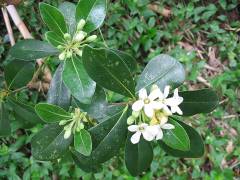
Mid to late spring (April-May). White flowers aging to creamy-yellow, 0.5 inch (1.3 cm), 5-petaled, in dense terminal clusters 2-3 inches (5-7 cm). Strongly fragrant (orange-blossom). 4 weeks. Bee- and butterfly-visited. Woody capsules with orange-red sticky seeds follow in fall.
Detailed Descriptions
Flower Description
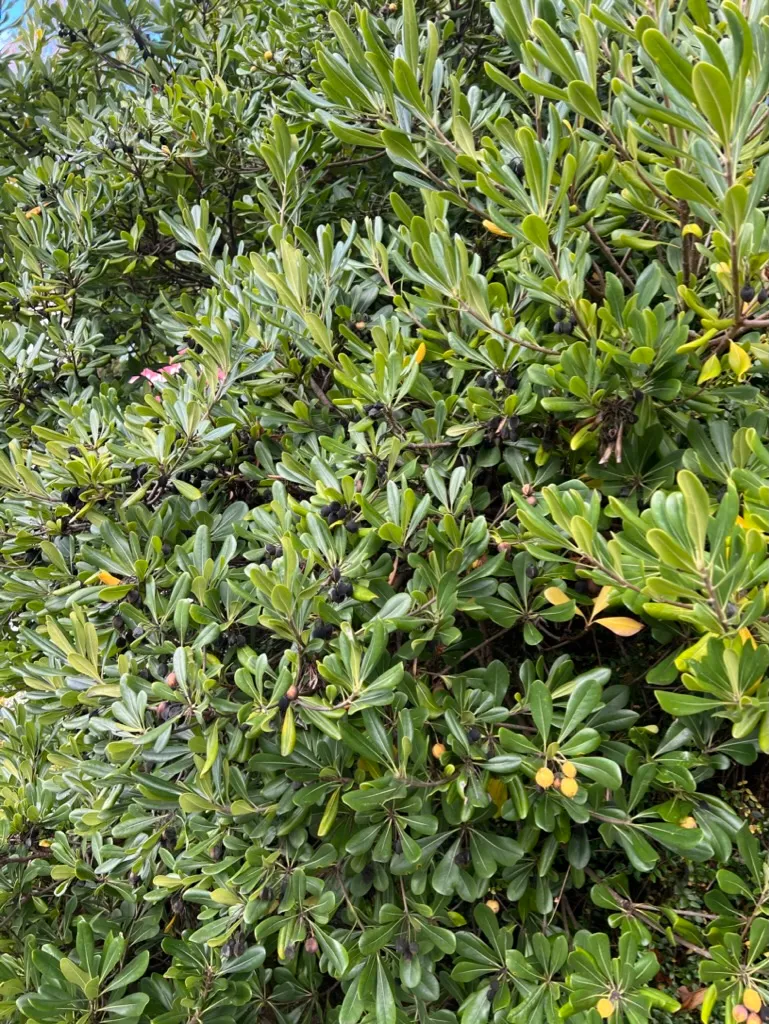
White aging to creamy-yellow, 0.5 inch (1.3 cm), 5-petaled, in dense terminal clusters 2-3 inches (5-7 cm); April-May; strongly fragrant (sweet, orange-blossom scent — the common name 'mock orange' refers to this scent); followed by woody capsules 0.5 inch (1.3 cm) that split to reveal orange-red sticky seeds in fallFoliage Description
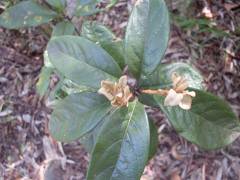
Glossy dark green, obovate, 2-4 inches (5-10 cm), leathery, with slightly revolute (rolled-under) margins; whorled in rosettes at the stem tips; evergreen year-roundGrowing Conditions
Sun Requirements
Requires 4-10 hours of direct sunlight daily
• Full Sun: 6+ hours of direct sunlight
• Partial Shade: 3-6 hours of direct sunlight
• Full Shade: Less than 3 hours of direct sunlight
Care & Maintenance
Care Guide
Full sun to partial shade (4-10 hours). Well-drained soil pH 5.5-8.0. Tolerates salt spray, wind, drought, heat, humidity, and pollution. Hardy to 15°F (-9°C) — zone 8. Wider than tall — allow 8-15 feet (2.4-4.5 m) lateral space. Prune after flowering (May-June). Non-toxic. Deer-resistant. Zones 8-10.Pruning
Prune after flowering (May-June) to shape. Tolerates formal hedging and hard renovation pruning. The natural wider-than-tall mounding form requires minimal shaping in informal settings.Pruning Schedule
Prune: May–June
late springsummer
Container Growing
Suitable for container growing
Minimum container size: 7 gallons