Image 1 of 4
1 / 4
Plant Reference
Pittosporum, Genus, tenuifolium, Species,
- Genus & species
pittosporum tenuifolium
New Zealand (North and South Islands)
Overview
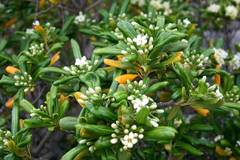
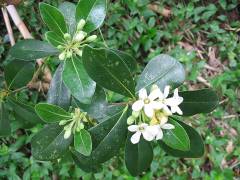
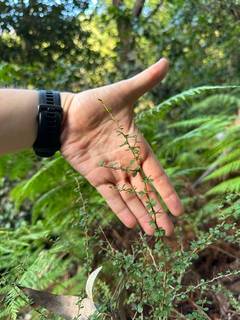
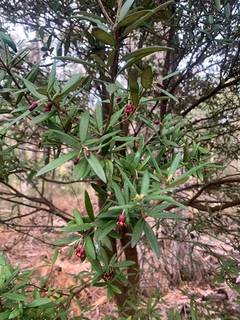
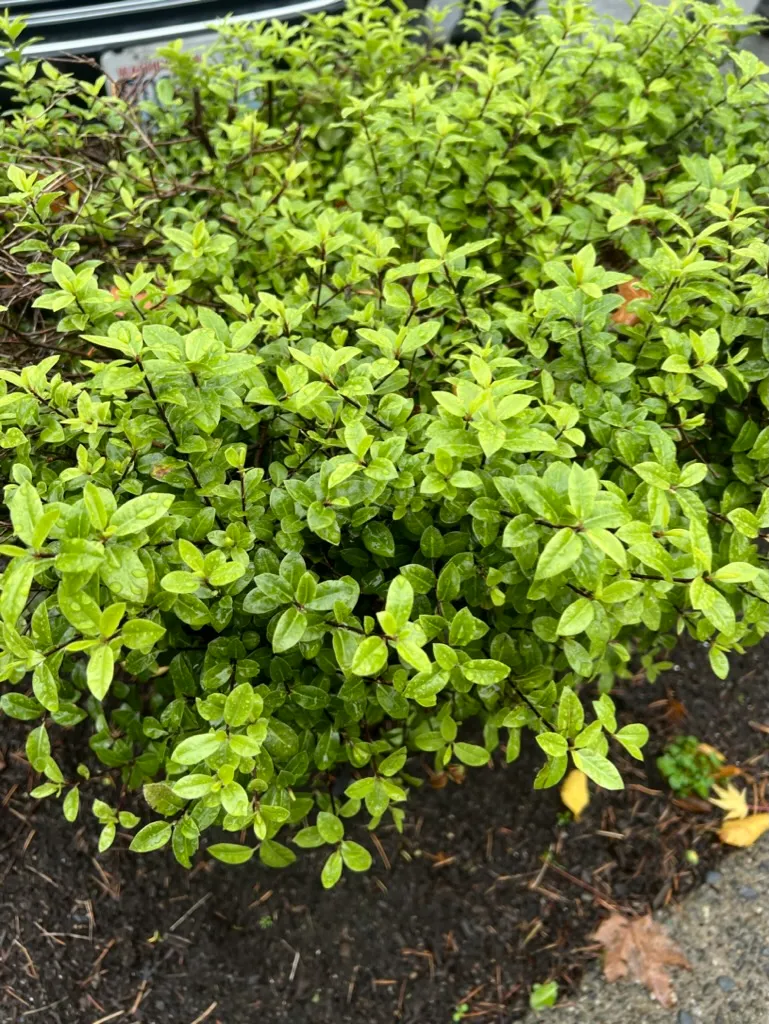
Pittosporum tenuifolium is kohuhu (black matipo), an evergreen shrub or small tree from New Zealand growing 180–300 inches (450–750 cm / 15–25 feet) tall and 96–180 inches (240–450 cm / 8–15 feet) wide. Small pale green to mid-green oval leaves 1–2 inches (2.5–5 cm) with wavy (undulate) margins on near-black stems — the dark stem/light leaf contrast is the species identifier. The species name 'tenuifolium' means 'thin-leaved.' Tiny dark chocolate-purple flowers 0.3 inch (8 mm) in late spring — inconspicuous visually but with a strong honey scent detectable at 10–15 feet (3–4.5 m), most noticeable in the evening. In the family Pittosporaceae. The genus name means 'pitch seed' — the seeds are coated in a resinous sticky substance. The foliage is used extensively in the floral industry as filler and greenery (the small leaves and dark stems are valued as a neutral backdrop). Many cultivars: 'Tom Thumb' (dwarf 36 inches / 90 cm, purple foliage), 'Silver Sheen' (silver-gray leaves), 'Golf Ball' (dense natural globe), 'Irene Paterson' (cream-white-speckled leaves). Tolerates coastal salt spray, wind, and clipping. Damaged below 20°F (−7°C). Native to New Zealand (North and South Islands). Drought-tolerant once established. Non-toxic. Deer-resistant. Zones 8–10. Growth rate is moderate to fast.
Native Range
Native to New Zealand (North and South Islands), growing in coastal and lowland forest and scrub.Suggested Uses
Grown as hedging, screening, and specimens in zones 8–10. The dark-stemmed light-leaved foliage and the honey-scented flowers are the features. 'Tom Thumb' for dwarf purple foliage. Tolerates coastal conditions. Non-toxic. Deer-resistant.How to Identify
Appearance
Size & Dimensions
Height15' - 25'
Width/Spread8' - 15'
Bloom Information
Late spring (May), lasting 1–2 weeks. Tiny dark chocolate-purple flowers — inconspicuous visually but strongly honey-scented (detectable at 10–15 feet / 3–4.5 m, strongest in evening). The evergreen foliage — not the flowers — is the year-round feature.
Detailed Descriptions
Flower Description
Dark chocolate-purple, tiny, 0.3 inch (8 mm), inconspicuous but strongly honey-scentedFoliage Description
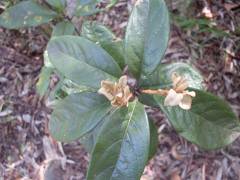
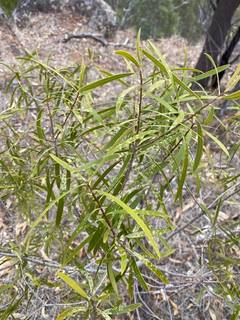
Pale green to mid-green, small, oval, 1-2 inches (2.5-5 cm), with wavy (undulate) margins on dark near-black stems; cultivars include purple, variegated, silver, and gold-leaved formsGrowing Conditions
Sun Requirements
Requires 5-10 hours of direct sunlight daily
• Full Sun: 6+ hours of direct sunlight
• Partial Shade: 3-6 hours of direct sunlight
• Full Shade: Less than 3 hours of direct sunlight
Care & Maintenance
Care Guide
Full sun to partial shade. Tolerates coastal salt spray, wind, and clipping. Damaged below 20°F (−7°C). Drought-tolerant once established. Many cultivars with varied foliage colors. Non-toxic. Deer-resistant. Zones 8–10.Pruning
Tolerates repeated clipping for formal hedging. Prune for shape after flowering in early summer. 'Golf Ball' forms a dense natural globe without pruning. Remove frost-damaged growth in spring.Pruning Schedule
Prune: June
summer
Container Growing
Suitable for container growing
Minimum container size: 10 gallons