Pittosporum, Genus, angustifolium, Species,
- Genus & species
native apricot
Overview
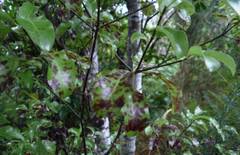
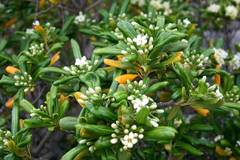
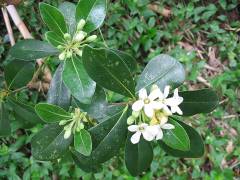
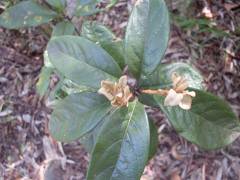
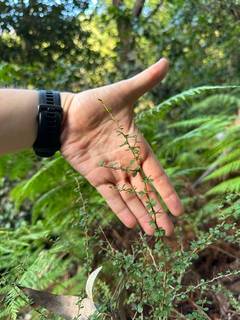
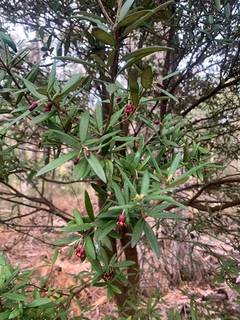
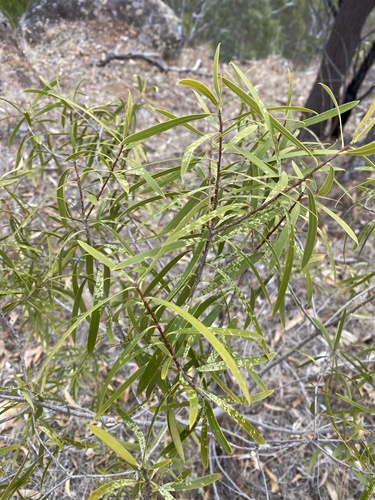
Pittosporum angustifolium is an evergreen large shrub or small tree reaching 10-33 feet (3-10 m) tall and 8-20 feet (2.5-6 m) wide, often with a weeping form and slender pendulous branches. Leaves are alternate, narrow and lance-shaped, 1.5-4 inches (4-10 cm) long and 0.2-0.5 inch (5-12 mm) wide, bright green, tapering to a point. Cream to pale yellow bell-shaped flowers about 0.4 inch (10 mm) long appear singly or in small clusters in the leaf axils, mainly late winter to spring, and carry a sweet scent. The fruit is a rounded woody capsule 0.4-0.8 inch (10-20 mm) across, ripening from green to orange-yellow and splitting to expose sticky red seeds held in resin. Growth is slow to moderate; trees take 5-8 years to reach flowering size and can live for several decades. Deep roots make established plants drought tolerant. The species grows in a wide range of soils but is slow to recover from severe frost while young and may shed leaves under prolonged drought.
Native Range
Native to mainland Australia, occurring across all mainland states in arid and semi-arid inland regions. Grows in open woodland, on plains, rocky rises, and along watercourses in varied soils, from near sea level to about 2,600 feet (800 m).Suggested Uses
Planted as a small shade or specimen tree, an informal screen, and a windbreak in dry-climate and native gardens, spaced 10-16 feet (3-5 m) apart. Suited to low-water and revegetation plantings on inland soils. The weeping form and slow growth mean young plantings are slow to fill space.How to Identify
Appearance
Size & Dimensions
Height10' - 33'
Width/Spread8' - 20'
Bloom Information
Flowers mainly from late winter to spring, July to October in its native range, with sporadic flowering after rain at other times. Individual flowers last about 1-2 weeks; the main flush extends 4-6 weeks. Fruit ripens through summer and persists on the branches into autumn.
Detailed Descriptions
Flower Description
Cream to pale yellowFoliage Description
Bright greenGrowing Conditions
Sun Requirements
Requires 6-10 hours of direct sunlight daily
• Full Sun: 6+ hours of direct sunlight
• Partial Shade: 3-6 hours of direct sunlight
• Full Shade: Less than 3 hours of direct sunlight
Care & Maintenance
Care Guide
Grows in full sun to part shade in most well-drained soils, including sandy, loamy, and rocky types. Water through the first one to two growing seasons; established plants are deeply rooted and tolerate long dry periods. Excess summer water in poorly drained soil can cause root rot. Frost below about 25 F (-4 C) can damage young plants, which harden with age. Few pests affect it, though sap-sucking insects sometimes gather on new growth. It reshoots after pruning and can be shaped as a screen or small tree.Pruning
Prune in late winter to early spring to shape the canopy, raise the crown, or maintain a screen. The species tolerates hard pruning and reshoots from older wood. Dead or crossing branches can be removed as needed; no routine pruning is required for flowering or fruiting.Pruning Schedule
Prune: July–August
winterearly spring