Pinus, Genus, sylvestris, Species, 'Watereri', Cultivar,
- Genus & species
- Cultivar
waterer scots pine
Species native across Europe and Asia (Scotland and Scandinavia to the Pacific coast, south to Spain, Turkey, and the Caucasus); cultivar selected at Knap Hill Nursery, Surrey, England, in the 1860s
Overview
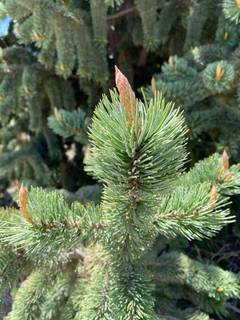
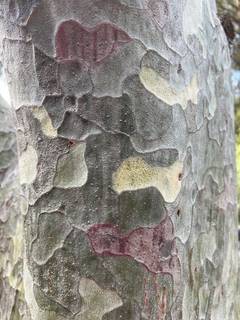
Pinus sylvestris 'Watereri' is an evergreen conifer reaching 8–15 feet (2.4–4.6 m) tall and 8–12 feet (2.4–3.7 m) wide, with a dense, broadly rounded to dome-shaped habit. The cultivar is a slow-growing compact selection of Scots pine. Needles measure 1.5–3 inches (4–8 cm) long, are blue-green to steel-blue, twisted, and are held in fascicles of 2; blue coloring is more intense than in the type species. Upper trunk and upper branches develop the reddish-orange to coppery-brown bark characteristic of Pinus sylvestris, even at this smaller mature size. Small ovoid cones are 1–2 inches (2.5–5 cm) long and gray-brown at maturity. Growth rate is slow at approximately 3–6 inches (8–15 cm) per year. Hardy in USDA zones 3–8. Selected at Knap Hill Nursery in Surrey, England, by Anthony Waterer in the 1860s; the compact dome habit makes the cultivar suited to gardens where the 40–80 foot (12–24 m) mature height of the type species would exceed the space. The slow growth rate means heading cuts or mechanical damage take multiple growing seasons to refill.
Native Range
The species Pinus sylvestris is native to Europe and Asia, from Scotland and Scandinavia across Russia to the Pacific coast, and south to Spain, Turkey, and the Caucasus — the broadest natural range of any pine species. 'Watereri' was selected at Knap Hill Nursery in Surrey, England, by Anthony Waterer in the 1860s.Suggested Uses
Planted as a specimen, in mixed-conifer borders, rock gardens, or containers of 15 gallons (57 L) or larger at 6–10 foot (1.8–3 m) spacing in USDA zones 3–8. The blue-green foliage and reddish-orange upper bark combine in a form small enough for typical suburban garden scale, where the type species at 40–80 feet (12–24 m) would not fit. The cultivar is not suited to positions that need rapid screening or tall vertical form, and sites with no full sun reduce needle color intensity.How to Identify
Appearance
Size & Dimensions
Height8' - 15'
Width/Spread8' - 12'
Bloom Information
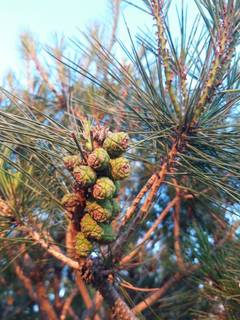
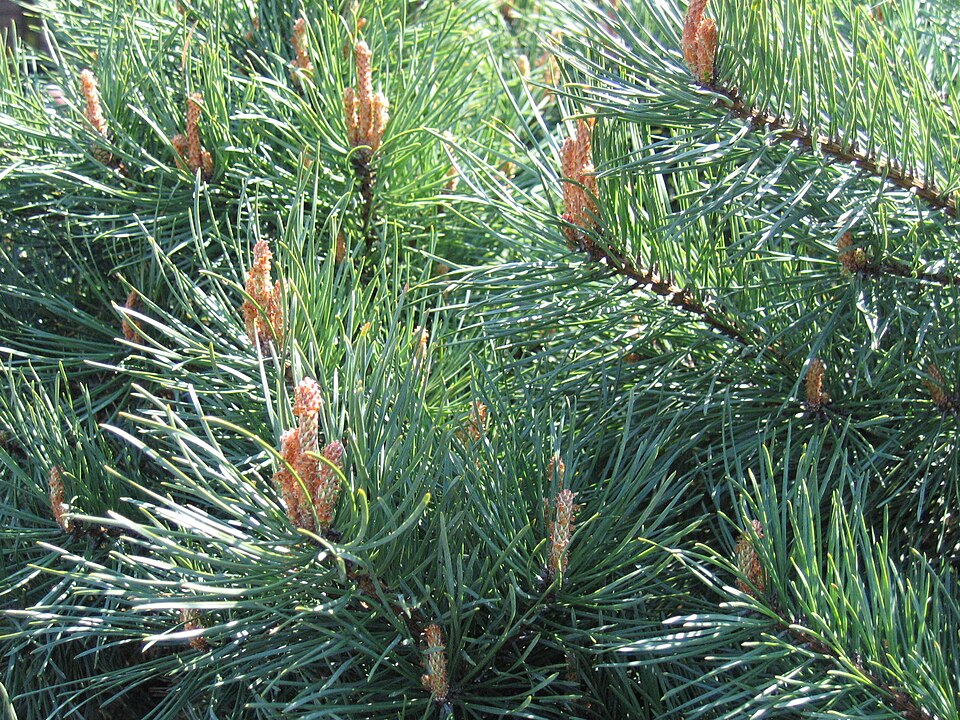
Produces male pollen strobili in May. Female cones mature in 2 years to 1–2 inches (2.5–5 cm) long, ovoid, gray-brown. Pollination events last 2 weeks.
Detailed Descriptions
Flower Description
Male pollen strobili May; female cones small ovoid 1–2 inches (2.5–5 cm) gray-brown; 2-year maturationFoliage Description
Blue-green to steel-blue; twisted needles 1.5–3 inches (4–8 cm) in fascicles of 2; blue coloring more intense than the type speciesGrowing Conditions
Sun Requirements
Requires 6-12 hours of direct sunlight daily
• Full Sun: 6+ hours of direct sunlight
• Partial Shade: 3-6 hours of direct sunlight
• Full Shade: Less than 3 hours of direct sunlight
Care & Maintenance
Care Guide
Plant in full sun in well-drained loam, sandy, clay, or chalky soil at pH 4.5–7.5. Hardy in USDA zones 3–8. The species tolerates a broad range of soil types including alkaline chalk soils where many other conifers decline. Drought tolerance is moderate-to-high once established. Growth of 3–6 inches (8–15 cm) per year means heading cuts or accidental damage refill slowly, so the compact dome form is preserved by avoiding shearing and major pruning cuts.Pruning
Routine pruning is not used. Optional candle pruning in late spring — pinching or cutting half of each new shoot ('candle') before needles harden — can increase branching density without shortening the plant. The dome shape develops without intervention; heading cuts through the established wood refill slowly at the 3–6 inch per year growth rate.Pruning Schedule
Prune: May–June
late spring
Container Growing
Suitable for container growing
Minimum container size: 15 gallons