Image 1 of 5
1 / 5
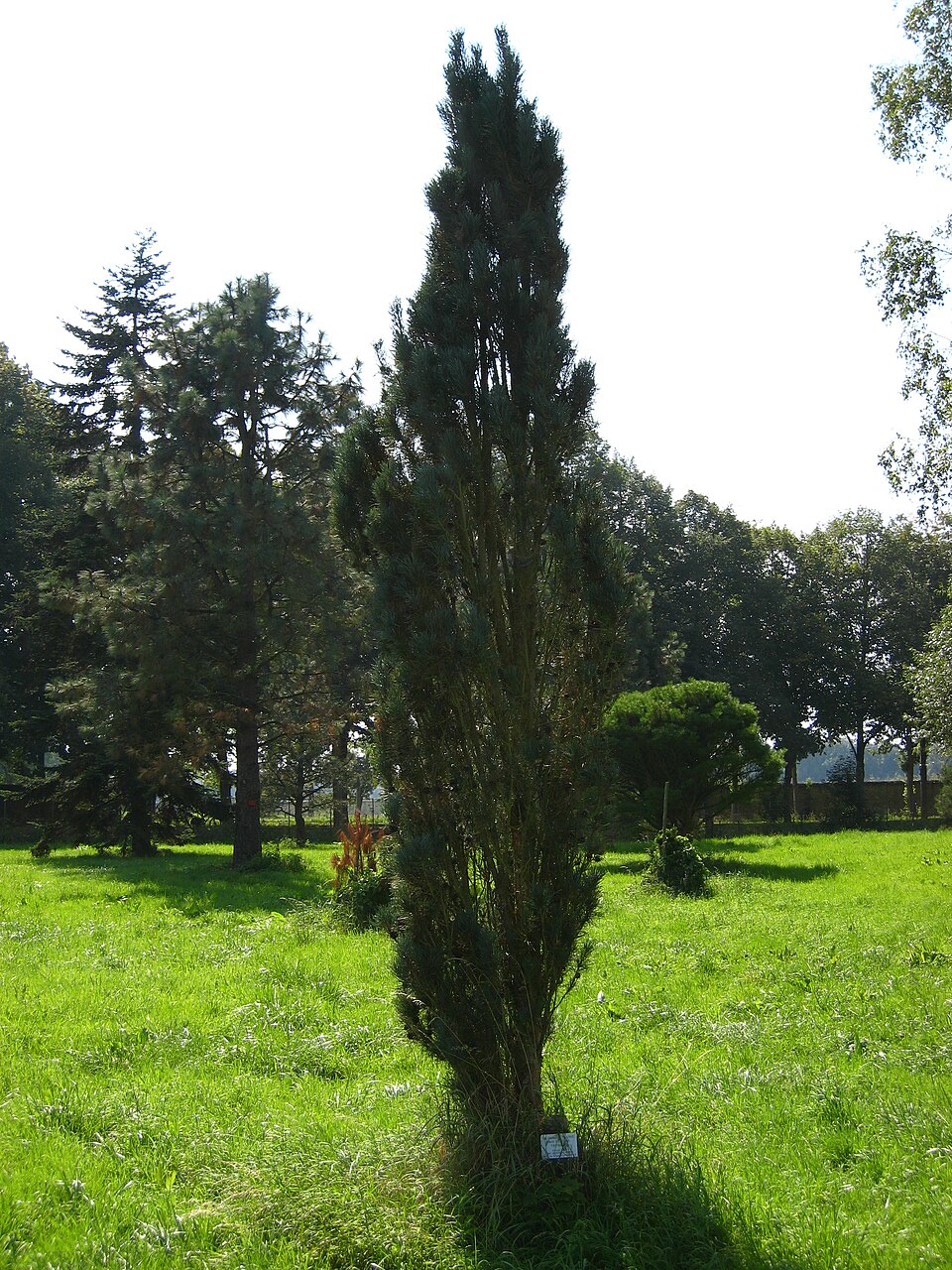
© This photo has been taken by Matthieu Sontag (User:Mirgolth) and released under the licenses stated below. You are free to use it for any purpose as long as you credit me as author, Wikimedia Commons as site and follow the terms of the licenses. Could you be kind enough to leave me a message on this page to inform me about your use of this picture., some rights reserved (CC-BY-SA) · Wikimedia Commons
Pinus, Genus, sylvestris, Species, 'Fastigiata', Cultivar,
- Genus & species
- Cultivar
columnar scots pine
Cultivar of European origin; species native from Scotland east to Sea of Okhotsk
Overview
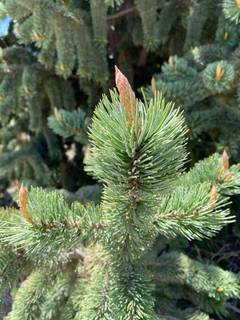
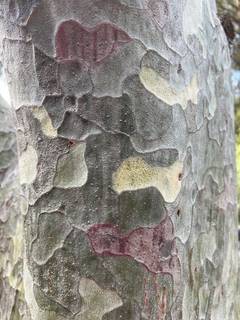
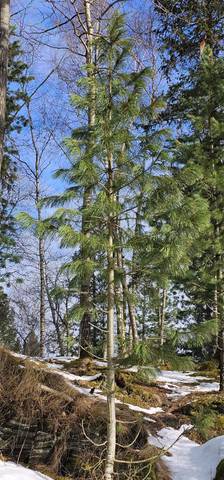
Pinus sylvestris 'Fastigiata' is a narrowly columnar cultivar of Scots pine with strongly upright branching. Trees reach 20–30 feet (6–9 m) tall and 4–6 feet (1.2–1.8 m) wide at maturity; growth rate is 8–12 inches (20–30 cm) per year. The crown is tightly fastigiate with branches angling steeply upward from the trunk, maintaining the narrow columnar silhouette throughout the tree's life. Needles are in bundles of two, 1.5–3 inches (4–7.5 cm) long, stiff, twisted, blue-green to gray-green. Upper trunk and branch bark exfoliates to reveal orange-red to cinnamon-salmon beneath, the characteristic feature of P. sylvestris. Cones are ovoid, 1.5–3 inches (4–7.5 cm) long, dull gray-brown. The columnar form is maintained naturally without pruning. Diplodia tip blight is the most significant disease concern; disease pressure is generally lower in Pacific Northwest conditions than in the Midwest and Northeast.
Native Range
The species Pinus sylvestris is native from Scotland east across Eurasia to the Sea of Okhotsk. The cultivar 'Fastigiata' was selected in European horticulture for its narrow columnar form.Suggested Uses
Planted as a vertical accent in residential landscapes, formal gardens, and mixed conifer plantings, spaced 6–8 feet (1.8–2.4 m) from adjacent plants. The 4–6 foot (1.2–1.8 m) spread fits narrow sites between structures, along drives, and in confined garden beds. Groupings of 3–5 trees at 6-foot (1.8 m) spacing create a screen or grove with minimal horizontal footprint. The orange-red upper bark is visible year-round and most prominent in winter.How to Identify
Appearance
Size & Dimensions
Height20' - 30'
Width/Spread4' - 6'
Colors
Bloom Information
Detailed Descriptions
Flower Description
yellow (male strobili)Foliage Description
blue-green to gray-greenGrowing Conditions
Sun Requirements
Requires 6-12 hours of direct sunlight daily
• Full Sun: 6+ hours of direct sunlight
• Partial Shade: 3-6 hours of direct sunlight
• Full Shade: Less than 3 hours of direct sunlight