Pinus, Genus, sabiniana, Species,
- Genus & species
digger pine
California Central Valley foothills (Shasta County to Tehachapi Mountains); 500–4,000 ft (150–1,200 m); dry hot foothill woodlands often with blue oak
Overview
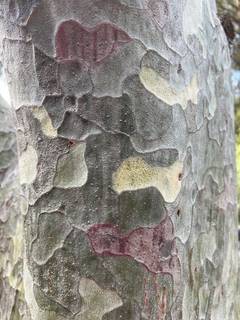
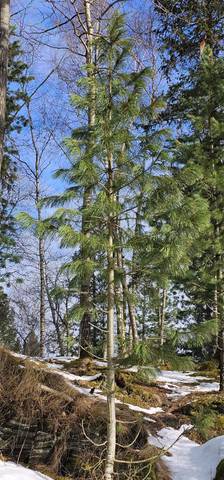
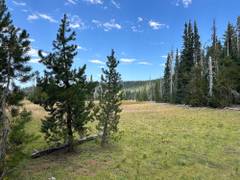
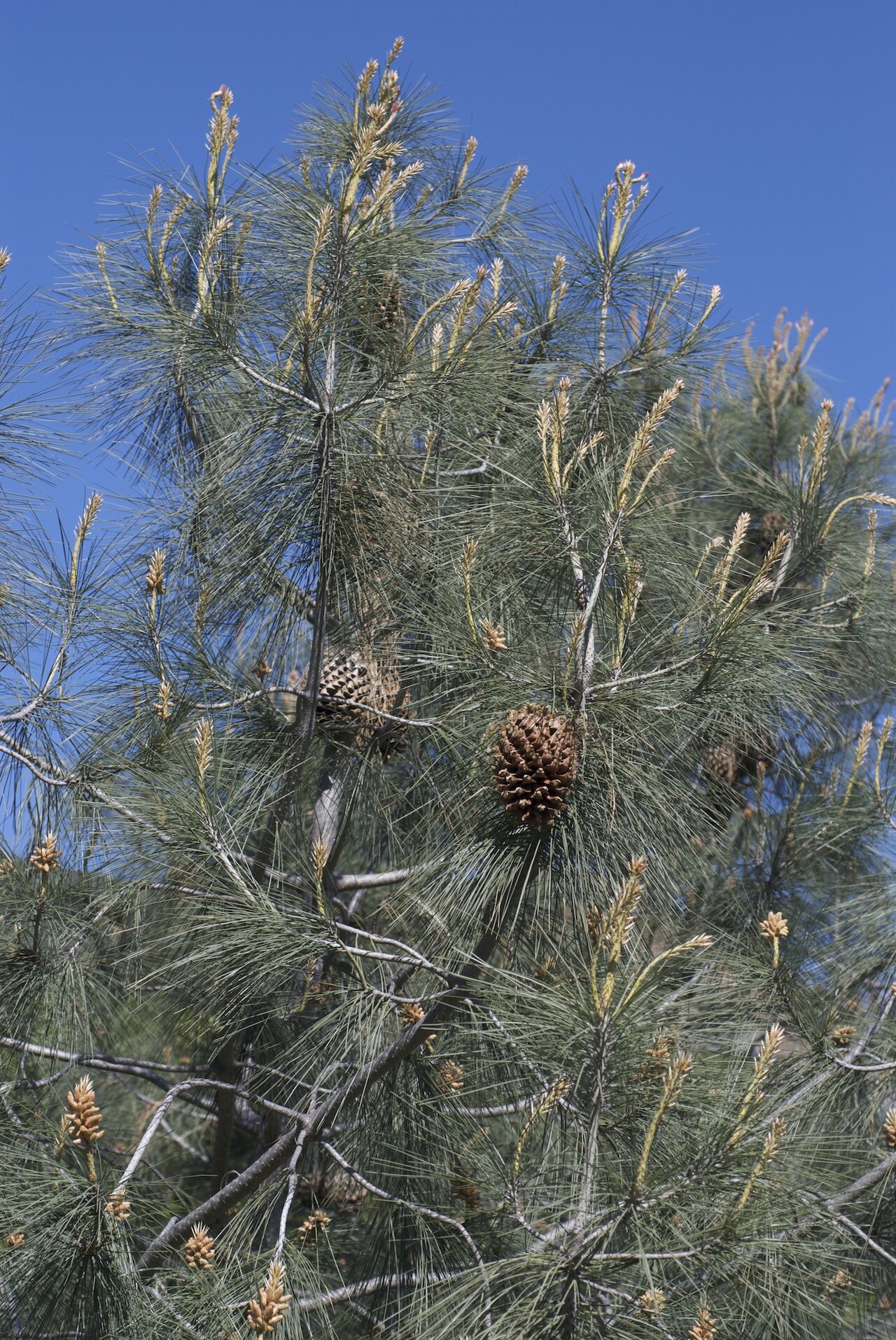
Pinus sabiniana is an evergreen conifer reaching 40–80 feet (12–24 m) tall and 25–40 feet (7.6–12 m) wide, with an open, airy, often forked or multi-stemmed crown. Branch spacing is so wide that the canopy casts almost no shade, allowing understory species to grow beneath. The species is a three-needle pine; needles measure 8–12 inches (20–30 cm) long, are gray-green to blue-gray, drooping and flexible, and are held in fascicles of 3. Cones are broadly ovoid, 6–10 inches (15–25 cm) long, with thick woody scales tipped by stout hooked claws, and weigh 1–3 pounds (0.5–1.4 kg) — second in mass only to Pinus coulteri — with large edible seeds. Bark is thick, dark gray-brown to reddish-brown, furrowed into irregular plates. Growth rate is moderate. Hardy in USDA zones 7–10. The species is preferentially called Gray Pine or Ghost Pine in contemporary usage; the older common name 'Digger Pine' references a slur against Indigenous Californians and is no longer used by land-management agencies or botanical gardens. Falling cones are heavy enough to injure people or vehicles below, so positioning away from paths, seating, and driveways is needed.
Native Range
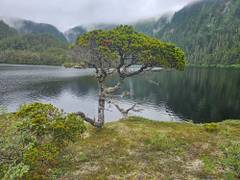
Pinus sabiniana is native to the foothills surrounding California's Central Valley, from Shasta County south to the Tehachapi Mountains, at 500–4,000 feet (150–1,200 m) in dry, hot foothill woodlands, often in association with blue oak (Quercus douglasii).Suggested Uses
Planted as a specimen in large dry landscapes, foothill-ecology gardens, and California native restoration plantings at 25–35 foot (7.6–10.7 m) spacing in USDA zones 7–10. The open crown admits light to the ground and pairs with sun-tolerant understory species such as Quercus douglasii, Arctostaphylos species, and California native grasses in restoration-adjacent plantings. Drought tolerance is high, and the large seeds are traditional food for Indigenous Californian communities as well as a wildlife resource. The species is not a screening tree because the crown is so open, small gardens do not accommodate the 40–80 foot (12–24 m) mature height, and the 1–3 pound (0.5–1.4 kg) cones make overhead positions over walkways or seating hazardous.How to Identify
Appearance
Size & Dimensions
Height40' - 80'
Width/Spread25' - 40'
Bloom Information
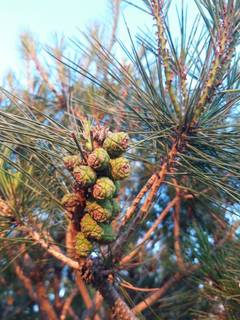
Produces male pollen strobili in March and April. Female cones mature in 2 years to 6–10 inches (15–25 cm) long, broadly ovoid, 1–3 pounds (0.5–1.4 kg), with stout hooked claws on the outer scales and large edible seeds. Pollination events last 2 weeks.
Detailed Descriptions
Flower Description
Male pollen strobili March–April; female cones 6–10 inches (15–25 cm) broadly ovoid, 1–3 lb (0.5–1.4 kg), with stout hooked claws; large edible seeds; 2-year maturationFoliage Description
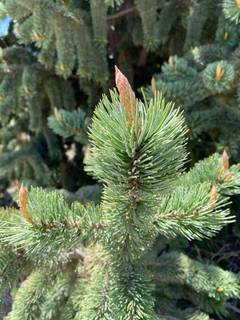
Gray-green to blue-gray; long drooping flexible needles 8–12 inches (20–30 cm) in fascicles of 3Growing Conditions
Sun Requirements
Requires 6-12 hours of direct sunlight daily
• Full Sun: 6+ hours of direct sunlight
• Partial Shade: 3-6 hours of direct sunlight
• Full Shade: Less than 3 hours of direct sunlight