Pinus, Genus, pumila, Species,
- Genus & species
dwarf Siberian pine
Northeast Asia (Japan alpine zones, Korea, Manchuria, Siberia, Kamchatka, Kuril Islands; alpine and subarctic krummholz above timberline; naturally prostrate habit in the wild)
Overview
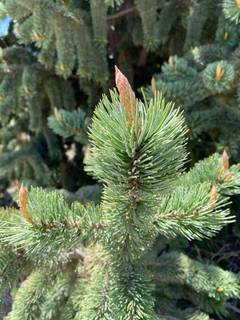
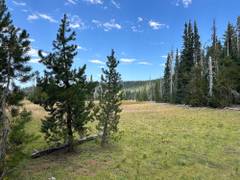
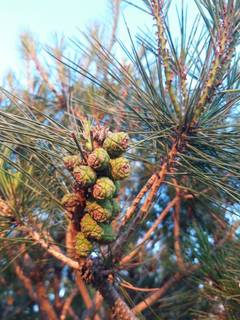
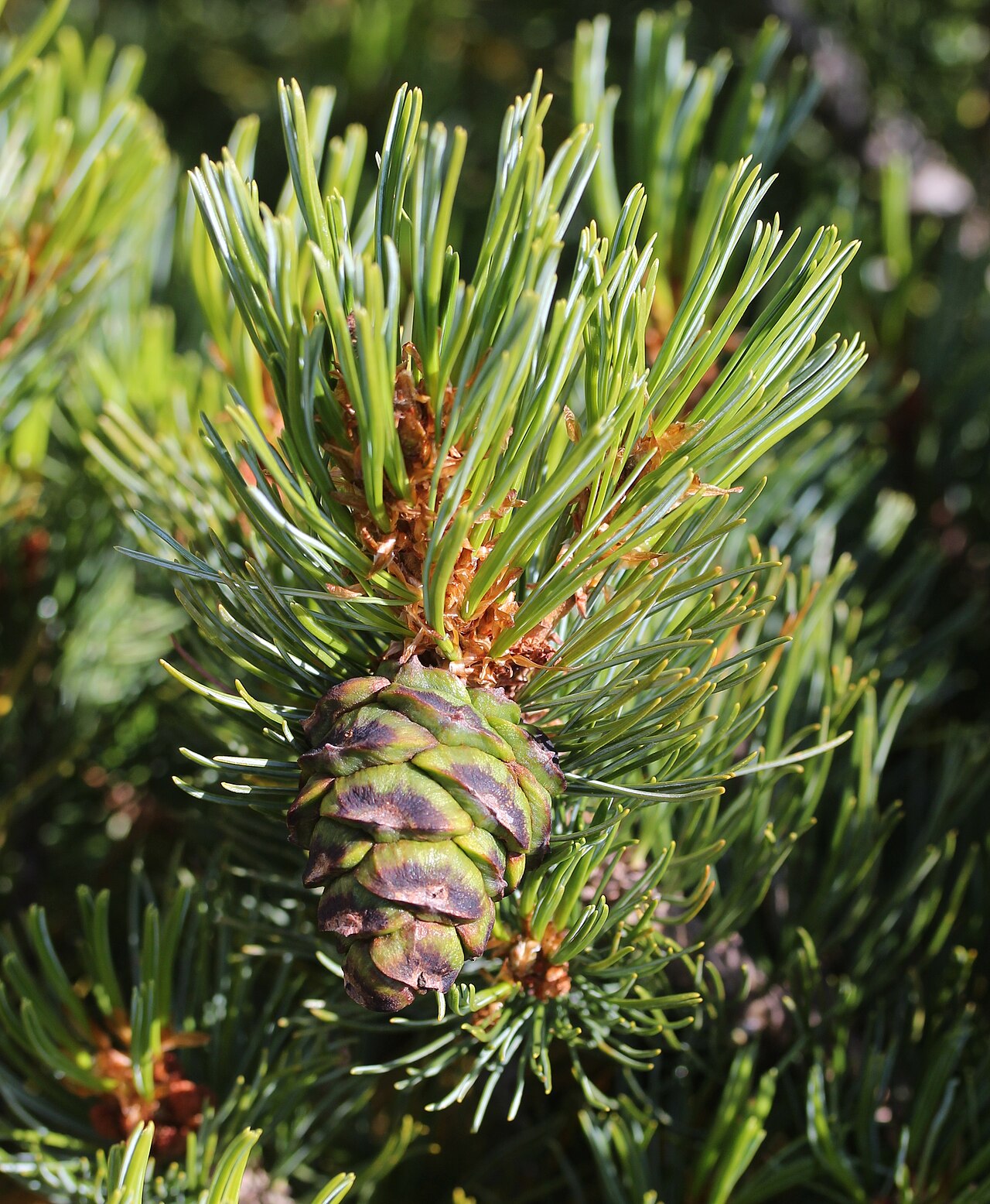
Pinus pumila is an evergreen conifer in the pine family (Pinaceae) reaching 3–10 feet (0.9–3 m) tall with a spread of 6–15 feet (1.8–4.6 m), carrying a prostrate to low-mounding widely-spreading habit. The species grows as a naturally dwarf ground-hugging shrub across its subarctic native range rather than as an upright tree — the prostrate form is the species wild-type habit rather than a cultivated dwarf selection. This five-needle pine (subgenus Strobus) carries needles 1.5–3 inches (4–8 cm) long, blue-green in color with prominent white stomatal lines on the inner faces that build a silvery bicolored canopy effect, held in fascicles of 5 with curved and somewhat twisted individual needles. Cones run small at 1–2 inches (2.5–5 cm) long, ovoid in outline, purple to reddish-brown in color, holding small edible seeds. Growth rate runs slow. Hardy to zone 2 — the species carries cold tolerance into subarctic temperature ranges where most conifers fail. Native to northeast Asian alpine and subarctic habitat zones. The naturally prostrate spreading habit separates the species from dwarf cultivars derived from upright pine species.
Native Range
Pinus pumila is native to northeast Asia, where wild populations range across Japan (in alpine habitat zones), Korea, Manchuria, Siberia, Kamchatka, and the Kuril Islands. The species grows at alpine elevations above the timberline and in subarctic krummholz vegetation communities, typically above 6,000 feet (1,800 m) elevation in Japan and at lower elevations moving northward through the range.Suggested Uses
Grown as a ground cover planting, in rock gardens, or on sloped plantings at 6–10 foot (1.8–3 m) spacing. The species is a naturally prostrate five-needle pine rather than a cultivated dwarf selection, which gives it genetic stability that dwarf cultivars of upright species do not carry. Silvery blue-green needles hold ornamental value year-round across the canopy. Cold hardiness at zone 2 extends the species into growing zones where most conifers fail. Slow growth rate means patience across the maturation window. Hot humid climate zones and garden settings requiring rapid coverage are both unsuitable given the cultural profile.How to Identify
Appearance
Size & Dimensions
Height3' - 10'
Width/Spread6' - 15'
Bloom Information
Male strobili release pollen during June and July. Female cones mature across a 2-year development cycle to 1–2 inches (2.5–5 cm) long, ovoid in outline, purple to reddish-brown in color, holding small edible seeds.
Detailed Descriptions
Flower Description
Male strobili during June and July; female cones small ovoid 1-2 inches long purple to reddish-brown with small edible seedsFoliage Description
Blue-green with prominent white stomatal lines on inner needle faces; silvery bicolored canopy; curved needles 1.5-3 inches long in fascicles of 5Growing Conditions
Sun Requirements
Requires 6-12 hours of direct sunlight daily
• Full Sun: 6+ hours of direct sunlight
• Partial Shade: 3-6 hours of direct sunlight
• Full Shade: Less than 3 hours of direct sunlight
Care & Maintenance
Care Guide
Grows in full sun in well-drained acidic to neutral soil at pH 4.5–7.0, tolerating sand, loam, and rocky substrates. Hardy to zone 2 — cold tolerance extends into subarctic temperature ranges across the native habitat profile. Sharp drainage runs within the cultural tolerance requirement and matters for reliable performance across the species. Cool summer temperatures suit the cultural profile — hot humid climate zones may cause stress, decline, and reduced vigor across established specimens. Growth rate runs slow across the full growth cycle.Pruning
Pruning runs unnecessary across the life of the shrub. The natural prostrate to low-mounding growth form is the species habit character, and structural intervention damages the natural silhouette.Container Growing
Suitable for container growing
Minimum container size: 10 gallons