Pinus, Genus, parviflora, Species, 'Glauca', Cultivar,
- Genus & species
- Cultivar
blue Japanese white pine
Species native to Japan and Korea; cultivar of garden origin raised in European and Japanese nursery trade from selected silver-blue-foliaged seedlings of the species type
Overview
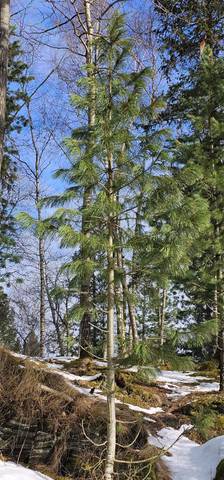
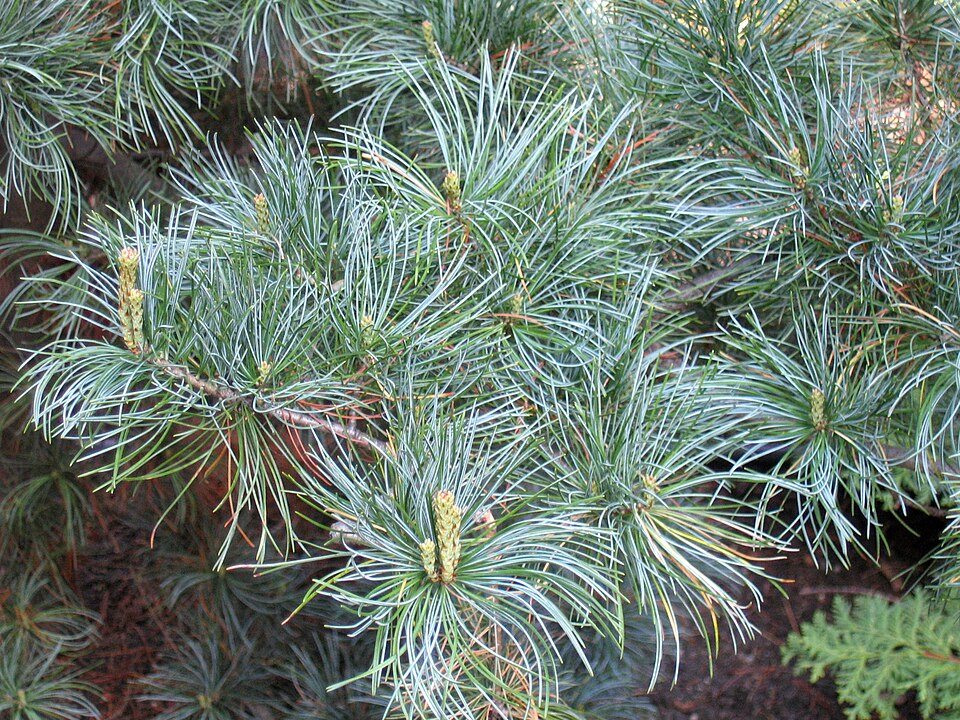
Pinus parviflora 'Glauca' is a silver-blue-foliaged selection of Japanese white pine, a wide-spreading evergreen coniferous tree in the pine family Pinaceae growing 20-40 feet (6-12 m) tall and 15-25 feet (4.6-7.6 m) wide in cultivation — somewhat smaller than the species type and with a more compact irregular crown. The cultivar epithet 'Glauca' is from Latin glaucus meaning blue-gray or silvery-blue and records the selection's defining foliage character: silver-blue to blue-gray needles with more saturated blue tones than the blue-green species type. Needles are carried in fascicles of five (the 5-needle count places the species in subgenus Strobus), 1.5-2.5 inches (4-6 cm) long, slightly twisted along the axis, silver-blue with conspicuous white stomatal lines on the inner adaxial surfaces that intensify the overall silver-blue appearance, and clustered in dense tufts at the branch tips. The cultivar retains the species' wide-spreading crown with horizontal layered branches, the ornamental erect cone orientation (cones held upright on the branches rather than hanging pendant as on P. strobus and P. monticola), and the same hardiness through USDA zones 4 through 8. Most nursery specimens of 'Glauca' are grafted onto P. thunbergii (Japanese black pine) rootstock because of graft compatibility, drought tolerance, and nursery scale production — the graft union at the soil line is a long-term consideration for landscape plantings, particularly in the coldest parts of the zone 4 range where graft-union cold injury can occur. Ornamental erect purple-brown cones 2-4 inches (5-10 cm) are clustered on the upper branches in fall and winter and persist on the tree across successive seasons, combining with the silver-blue foliage to produce the cultivar's year-round color display. Limitation: the cultivar is susceptible to white pine blister rust (Cronartium ribicola) in the same manner as other 5-needle pines in the subgenus Strobus, and plantings within 1,000 feet (300 m) of Ribes species (currants and gooseberries, the alternate host) carry the disease-transmission risk. Non-toxic. Deer-resistant.
Native Range
The species type Pinus parviflora is native to Japan (Honshu, Shikoku, and Kyushu) and Korea, growing in montane forests at 300-6,600 feet (90-2,000 m) elevation. The cultivar 'Glauca' is of garden origin raised in European and Japanese nursery trade from selected silver-blue-foliaged seedlings of the species type. The cultivar epithet 'Glauca' is from Latin glaucus meaning blue-gray or silvery-blue.Suggested Uses
Used as a silver-blue specimen tree in Japanese-style gardens, feature accent in mixed conifer plantings for color contrast with green-needled companions, and silver-blue architectural specimen with wide horizontal layered branches at 15-25 foot (4.6-7.6 m) spacing between plants in USDA zones 4 through 8. The saturated silver-blue to blue-gray tufted 5-needle foliage (more blue than the species type), the wide-spreading horizontal layered branching inherited from the species, the ornamental erect purple-brown cones that persist on the upper branches year-round, and the smaller mature stature than the species (20-40 feet vs 25-50 feet) combine to make 'Glauca' a foundation silver-blue conifer for specimen and color-contrast positions in temperate gardens. Narrow planting positions without 15-25 feet of lateral space, sites within 1,000 feet of Ribes plants (blister-rust alternate host), and container cultivation at landscape dimensions are unsuitable.How to Identify
Appearance
Size & Dimensions
Height20' - 40'
Width/Spread15' - 25'
Reproduction
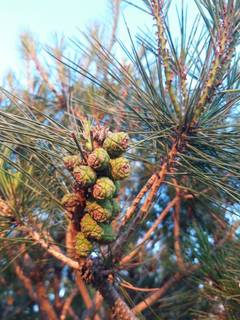
Reddish male pollen cones are clustered at the base of new shoots in May through June across a 2-3 week wind-pollinated release period. Small reddish-purple female seed cones at the branch tips mature over two growing seasons into ornamental erect purple-brown cones 2-4 inches (5-10 cm) long that persist on the upper branches across successive seasons.
Detailed Descriptions
Foliage Description
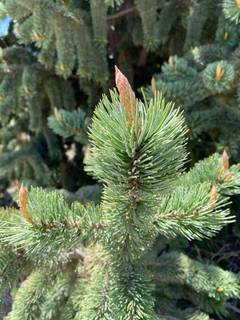
silver-blue to blue-gray with conspicuous white stomatal lines on the inner adaxial surfaces of the needles that intensify the overall silver-blue appearance; needles are carried in fascicles of five, 1.5-2.5 inches (4-6 cm) long, slightly twisted along the axis, and clustered in dense tufts at the branch tips; the silver-blue foliage color is more saturated than the blue-green color of the species type Pinus parviflora and is the cultivar's primary selection character; evergreen year-roundGrowing Conditions
Sun Requirements
Requires 6-12 hours of direct sunlight daily
• Full Sun: 6+ hours of direct sunlight
• Partial Shade: 3-6 hours of direct sunlight
• Full Shade: Less than 3 hours of direct sunlight
Care & Maintenance
Care Guide
Site in full sun with 6-12 hours of direct sun per day in well-drained loamy or sandy soil with an acidic pH of 5.0-6.5. Water weekly during the first two growing seasons to establish the root system; established trees tolerate moderate drought. The cultivar reaches 20-40 feet (6-12 m) tall and 15-25 feet (4.6-7.6 m) wide at maturity and requires the full allowance of lateral space. Most nursery specimens are grafted onto P. thunbergii (Japanese black pine) rootstock — the graft union at the soil line is a long-term consideration, particularly in the coldest parts of the zone 4 range where graft-union cold injury can occur, and the graft is kept at or above the soil surface rather than buried below mulch or soil. The cultivar is susceptible to white pine blister rust (Cronartium ribicola) in the same manner as other 5-needle pines, and plantings within 1,000 feet (300 m) of Ribes species (currants and gooseberries, the alternate host) carry the disease-transmission risk. Non-toxic. Deer-resistant. Hardy in USDA zones 4-8.Pruning
Candle pruning in late spring (May) controls branch length and increases foliage density if desired — the new soft light-green shoots (candles) that emerge at the branch tips in May are pinched by one-third to one-half of their length before the needles expand. The natural wide-spreading horizontal layered branching architecture requires no shaping. Dead or crossing branches are removed at any time. Pruning into old wood without live foliage is not productive because pines do not regenerate from leafless stems.Pruning Schedule
Prune: May
late spring