Image 1 of 2
1 / 2
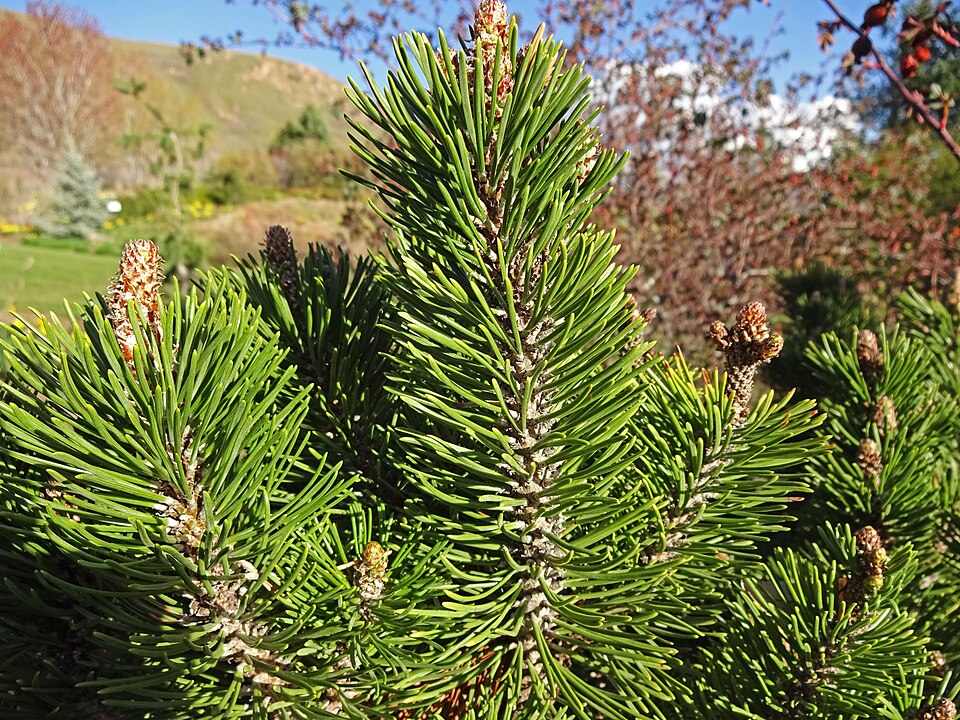
© Andrey Zharkikh from Salt Lake City, USA, some rights reserved (CC-BY) · Wikimedia Commons
Pinus, Genus, mugo, Species, 'Slowmound', Cultivar,
- Genus & species
- Cultivar
dwarf mugo pine
Mountains of central and southern Europe (Pyrenees to Balkans); subalpine and alpine elevations 4,900–8,200 feet (1,500–2,500 m)
Overview
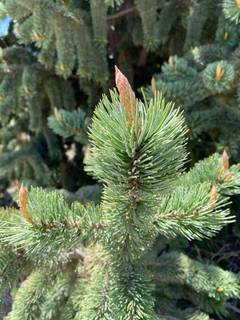
Pinus mugo 'Slowmound' is a compact, mounding, dwarf cultivar of mugo pine selected for its very slow, dense growth habit. Plants reach 2–3 feet (60–90 cm) tall and 3–5 feet (0.9–1.5 m) wide after 10 years; ultimate size over several decades is 3–4 feet (0.9–1.2 m) tall and 5–8 feet (1.5–2.4 m) wide. Annual growth rate is 1–3 inches (2.5–7.5 cm) per year, considerably slower than the species. The habit is broadly mounding, symmetrically domed, densely branched from the base. Needles are in fascicles of 2, dark green, 1–2 inches (2.5–5 cm) long, stiff and slightly twisted, persisting 3–5 years before drop. Male strobili release yellow pollen in April–May; cones are small, ovoid, 1–1.5 inches (2.5–3.8 cm) long, brown, maturing in the second year. The very slow growth rate makes this cultivar suited to small spaces, rock gardens, and confined beds where spread must remain manageable for many years. Like all mugo pines, it is susceptible to pinewood nematode and several fungal blights in humid conditions.
Native Range
Pinus mugo is native to the mountains of central and southern Europe, from the Pyrenees east to the Balkans, at subalpine and alpine elevations of 4,900–8,200 feet (1,500–2,500 m). The cultivar 'Slowmound' is of garden origin. Neither the species nor cultivar is native to the Pacific Northwest.Suggested Uses
Planted in rock gardens, foundation plantings, low-maintenance beds, and container culture where confined, slow-spreading, mounding form is required, spaced 5–7 feet (1.5–2.1 m) apart to allow for mature spread. The symmetrical mounded habit requires no pruning to maintain shape. Suitable for exposed, windy, and cold sites.How to Identify
Appearance
Size & Dimensions
Height2' - 4'
Width/Spread3' - 8'
Colors
Bloom Information
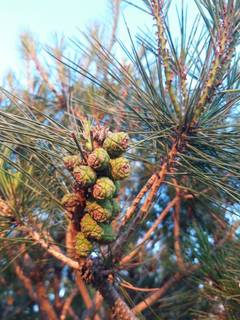
Male strobili are cylindrical, yellow, 0.5–0.75 inch (1.2–2 cm), releasing pollen in April–May. Female conelets develop on new growth; cones mature over two years to 1–1.5 inches (2.5–3.8 cm), ovoid, gray-brown with flat-tipped scales.
Detailed Descriptions
Flower Description
yellow (male strobili)Foliage Description
dark greenGrowing Conditions
Sun Requirements
Requires 5-12 hours of direct sunlight daily
• Full Sun: 6+ hours of direct sunlight
• Partial Shade: 3-6 hours of direct sunlight
• Full Shade: Less than 3 hours of direct sunlight
Care & Maintenance
Care Guide
Plant in full sun; becomes open and less compact in shade. Requires well-drained soil — tolerates poor, rocky, sandy, and alkaline soils; declines in wet or poorly drained positions. Drought-tolerant once established. No pruning required to maintain the natural mounded shape. New candles can be pinched by one-half in late spring to further limit annual growth if desired, but this is generally not necessary for this very slow cultivar. No regular fertilization needed; excessive fertility promotes atypically fast, open growth.Pruning
No pruning required for shape maintenance. New candles (emerging shoots) can be pinched by one-half in late spring before needles fully extend to reduce annual extension. Do not cut into old brown wood — pines do not regenerate from leafless wood. Remove dead or diseased branches at any time.Pruning Schedule
Prune: May
late spring
Container Growing
Suitable for container growing
Minimum container size: 10 gallons