Pieris, Genus, japonica, Species, 'Forest Flame', Cultivar,
- Genus & species
- Cultivar
Japanese andromeda
Hybrid of garden origin (P. japonica × P. formosa var. forrestii)
Overview
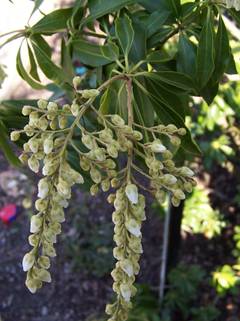
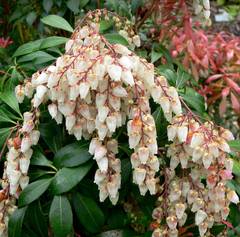
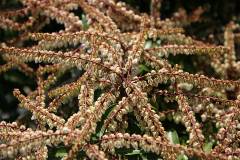
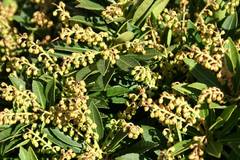
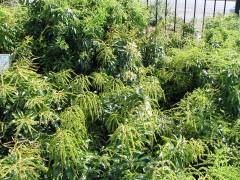
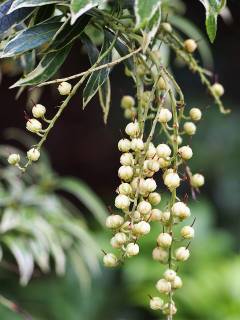
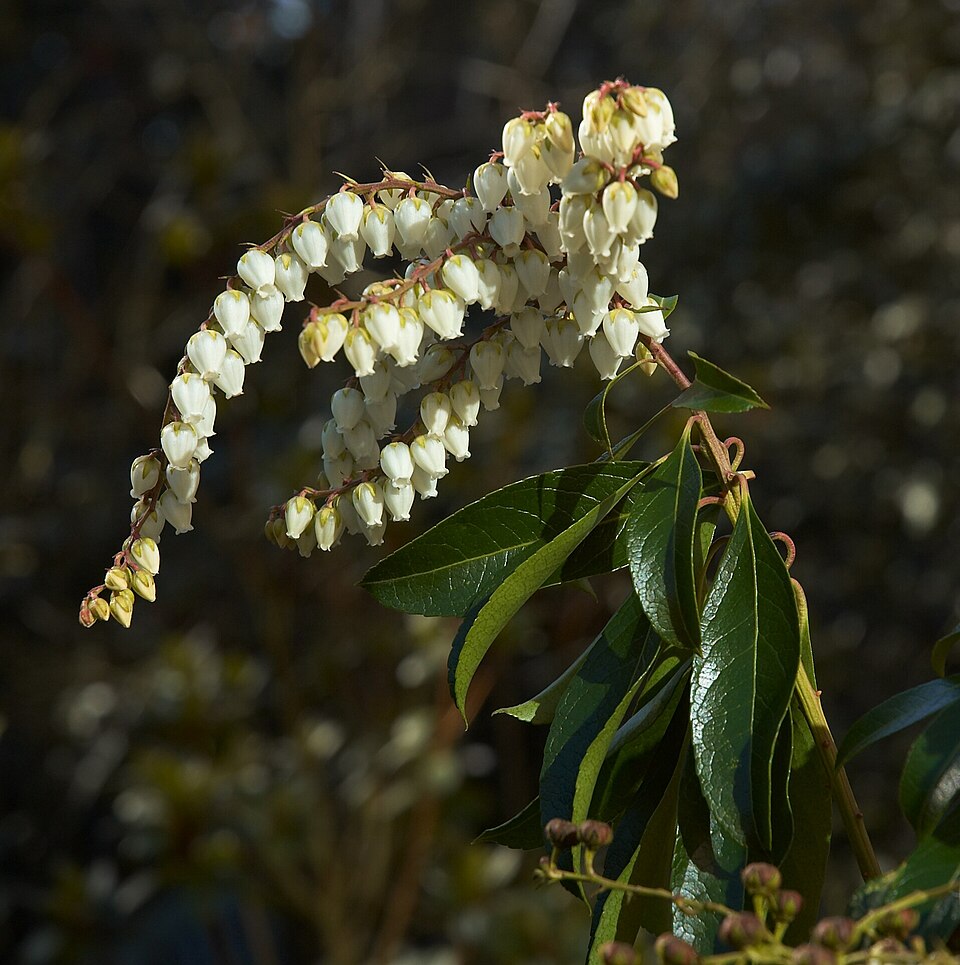
Pieris japonica 'Forest Flame' is a hybrid Japanese andromeda (P. japonica × P. formosa var. forrestii), growing 72–120 inches (180–300 cm) tall and 60–96 inches (150–240 cm) wide. New growth emerges bright red, transitioning through pink, cream, and finally to dark green over 4–6 weeks — the multi-stage color transition is the cultivar feature (the name 'Forest Flame' references the red new growth). White urn-shaped flowers 0.25 inch (6 mm) in pendant racemes 3–6 inches (7–15 cm) in early to mid-spring. The flower buds form in fall and are visible through winter as pendant clusters — a secondary winter feature. Dark green glossy leathery lance-shaped evergreen leaves 2–4 inches (5–10 cm). In the heath family (Ericaceae). Late spring frost damages the tender red new growth — site in a position sheltered from morning sun on frost mornings. Lacebug (Stephanitis takeyai) stipples the leaf undersides (yellow stippling, black frass) — a persistent pest in warm exposed sites; shade reduces lacebug damage. Acidic soil required (pH 4.5–6.0). All parts contain grayanotoxins — toxic to humans and animals (honey made from Pieris flowers is also toxic). Native to Japan (P. japonica) and China/Himalaya (P. formosa). Partial shade. Consistent moisture. Deer-resistant (toxic). Zones 6–9. Growth rate is slow to moderate.
Native Range
Hybrid of garden origin — P. japonica (Japan) × P. formosa var. forrestii (China, Himalaya).Suggested Uses
Grown in shade borders and woodland edges in zones 6–9. Acidic soil required. The red-to-green new growth color transition is the cultivar feature. Shelter from late frost. Lacebug management in exposed sites. All parts toxic. Deer-resistant.How to Identify
Appearance
Size & Dimensions
Height6' - 10'
Width/Spread5' - 8'
Bloom Information
Early to mid-spring (March–April), lasting 2–3 weeks. White urn-shaped flowers in pendant racemes. Flower buds are visible through winter. The red new growth follows immediately after flowering.
Detailed Descriptions
Flower Description
White, urn-shaped, 0.25 inch (6 mm), in pendant racemes 3-6 inches (7-15 cm)Foliage Description
New growth bright red, transitioning through pink, cream, to dark green over 4-6 weeks; glossy, leathery, lance-shaped, 2-4 inches (5-10 cm)Growing Conditions
Sun Requirements
Requires 3-6 hours of direct sunlight daily
• Full Sun: 6+ hours of direct sunlight
• Partial Shade: 3-6 hours of direct sunlight
• Full Shade: Less than 3 hours of direct sunlight
Care & Maintenance
Care Guide
Partial shade. Acidic soil pH 4.5–6.0. Shelter from late frost (damages red new growth). Lacebug in warm exposed sites — shade reduces damage. Consistent moisture. All parts toxic (grayanotoxins). Deer-resistant. Zones 6–9.Pruning
Prune for shape after flowering in spring (May) — before the new growth hardens. Remove spent flower racemes. Tolerates moderate renovation pruning. Do not prune in fall (removes winter flower buds).Pruning Schedule
Prune: May
spring
Container Growing
Suitable for container growing
Minimum container size: 10 gallons