Pieris, Genus, japonica, Species, 'Dorothy Wyckoff', Cultivar,
- Genus & species
- Cultivar
Dorothy Wyckoff pieris
{Pieris japonica} is native to Japan, eastern China, and Taiwan in mountain forests; 'Dorothy Wyckoff' is a cultivar selected for dark winter buds and rich burgundy-red new growth
Overview
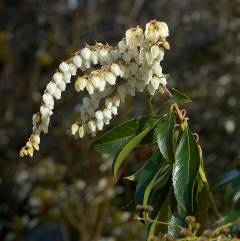
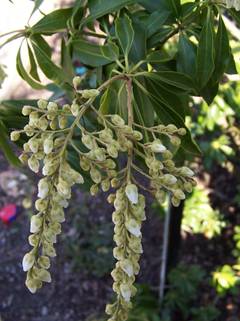
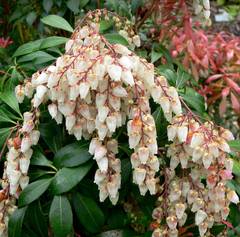
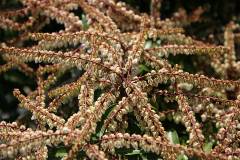
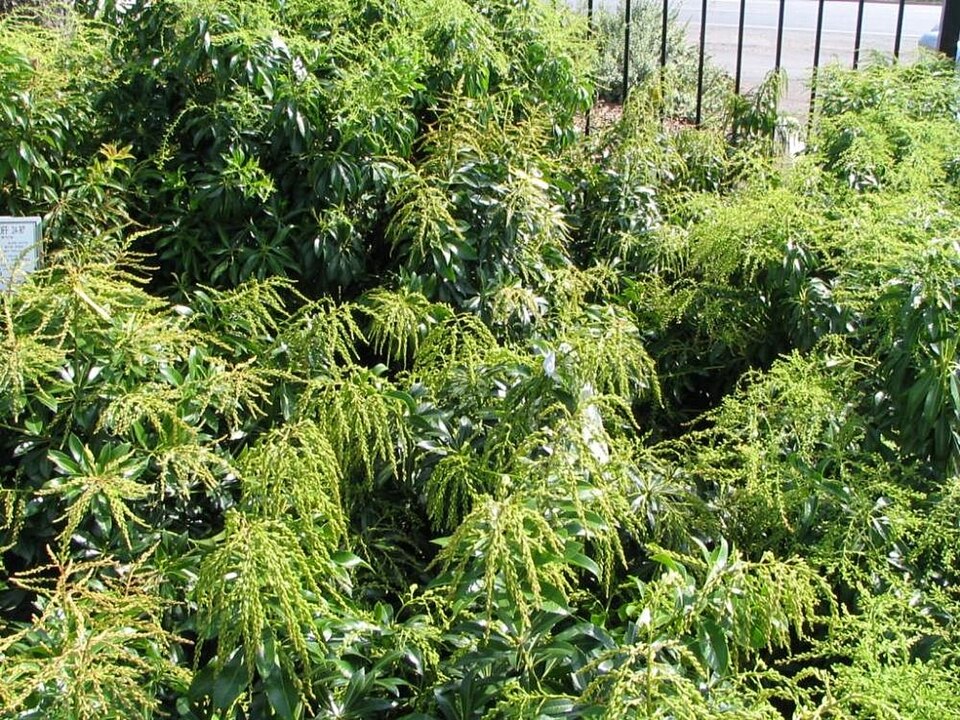
Pieris japonica 'Dorothy Wyckoff' is an evergreen shrub reaching 5-7 feet (1.5-2.1 m) tall with a spread of 4-6 feet (1.2-1.8 m) and an upright, rounded to broadly vase-shaped habit. The cultivar carries three successive color displays through the year. Flower buds form in autumn and darken to deep burgundy-red from November through March, giving a winter ornamental feature before they open. In March-April the buds open to long pendant chains of urn-shaped flowers 3-5 inches (8-13 cm) long in pale pink fading to white; bloom duration is 3-4 weeks. New growth emerges in spring as rich burgundy-red to deep bronze-red before gradually maturing to glossy dark green. Alternate narrowly elliptic leathery leaves are 2-3.5 inches (5-9 cm) long. Growth rate is slow to moderate, 4-8 inches (10-20 cm) per year. Hardy to USDA zone 5 — a zone harder than most P. japonica cultivars. All parts are toxic to pets and humans if ingested.
Native Range
The species Pieris japonica is native to Japan, eastern China, and Taiwan in mountain forests. 'Dorothy Wyckoff' is a cultivar of P. japonica selected for dark winter bud color and rich burgundy-red new growth; it is propagated vegetatively.Suggested Uses
Used as a specimen, mixed border shrub, or woodland garden element in zones 5-8 at 4-5 foot (1.2-1.5 m) spacing. Three successive color displays — burgundy-red winter buds, pink-to-white spring flowers, and burgundy-red to deep bronze-red new growth — give a longer ornamental window than cultivars with a single bloom display. USDA zone 5 hardiness extends the planting range north of most P. japonica cultivars. Acidic soil is essential; the cultivar fails in alkaline soils. The burgundy-red new growth is frost-sensitive and browns in late-spring freezes. All parts are toxic to pets and humans if ingested — not suited to sites with pets or small children who may browse plant material. Also not suited to alkaline soils, full sun in hot climates, or frost pockets where new growth is damaged.How to Identify
Appearance
Size & Dimensions
Height5' - 7'
Width/Spread4' - 6'
Bloom Information
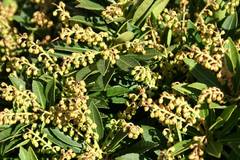
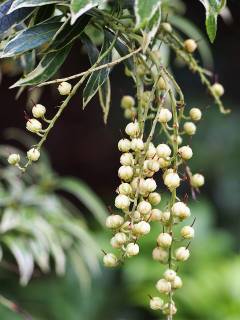
Pendant chains of urn-shaped flowers 3-5 inches (8-13 cm) long, opening pale pink and fading to white, March-April. Bloom duration is 3-4 weeks. Deep burgundy-red flower buds are visible on the shrub from November through March as a winter ornamental feature before opening.
Detailed Descriptions
Flower Description
Pale pink opening and fading to white; pendant urn-shaped flower chains 3-5 inches (8-13 cm) long; March-April; deep burgundy-red flower buds visible November through MarchFoliage Description
Glossy dark green mature leaves; alternate narrowly elliptic leathery 2-3.5 inches (5-9 cm) long; new growth emerges rich burgundy-red to deep bronze-redGrowing Conditions
Sun Requirements
Requires 3-6 hours of direct sunlight daily
• Full Sun: 6+ hours of direct sunlight
• Partial Shade: 3-6 hours of direct sunlight
• Full Shade: Less than 3 hours of direct sunlight
Care & Maintenance
Care Guide
Grows in partial shade in moist, well-drained, acidic soil at pH 4.5-6.0. Hardy to USDA zone 5. Acidic soil is essential — chlorosis develops in alkaline conditions. A sheltered position reduces late-spring frost damage to the emerging burgundy-red new growth. Mulch the root zone 2-3 inches (5-8 cm) deep with pine bark or pine needles to hold moisture and maintain acidity. All parts are toxic to pets and humans if ingested.Pruning
Prune immediately after flowering if any shaping is needed. Remove spent flower chains. The naturally upright rounded form develops without training. Avoid cutting back in late summer or autumn — this removes next year's flower buds.Pruning Schedule
Prune: April–May
late spring