Pieris, Genus, japonica, Species, 'Mountain Fire', Cultivar,
- Genus & species
- Cultivar
pieris mountain fire
East Asia (Japan, Taiwan, eastern China)
Overview
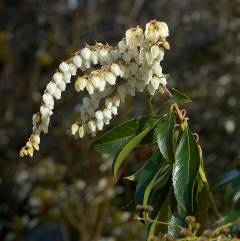
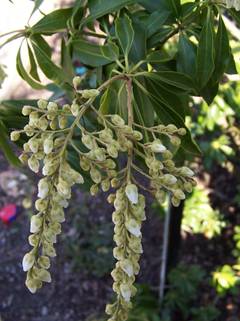
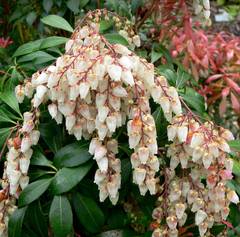
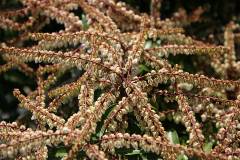
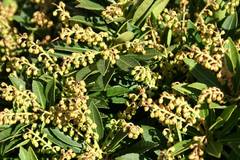
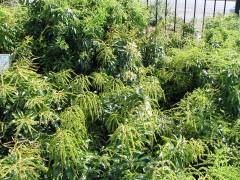
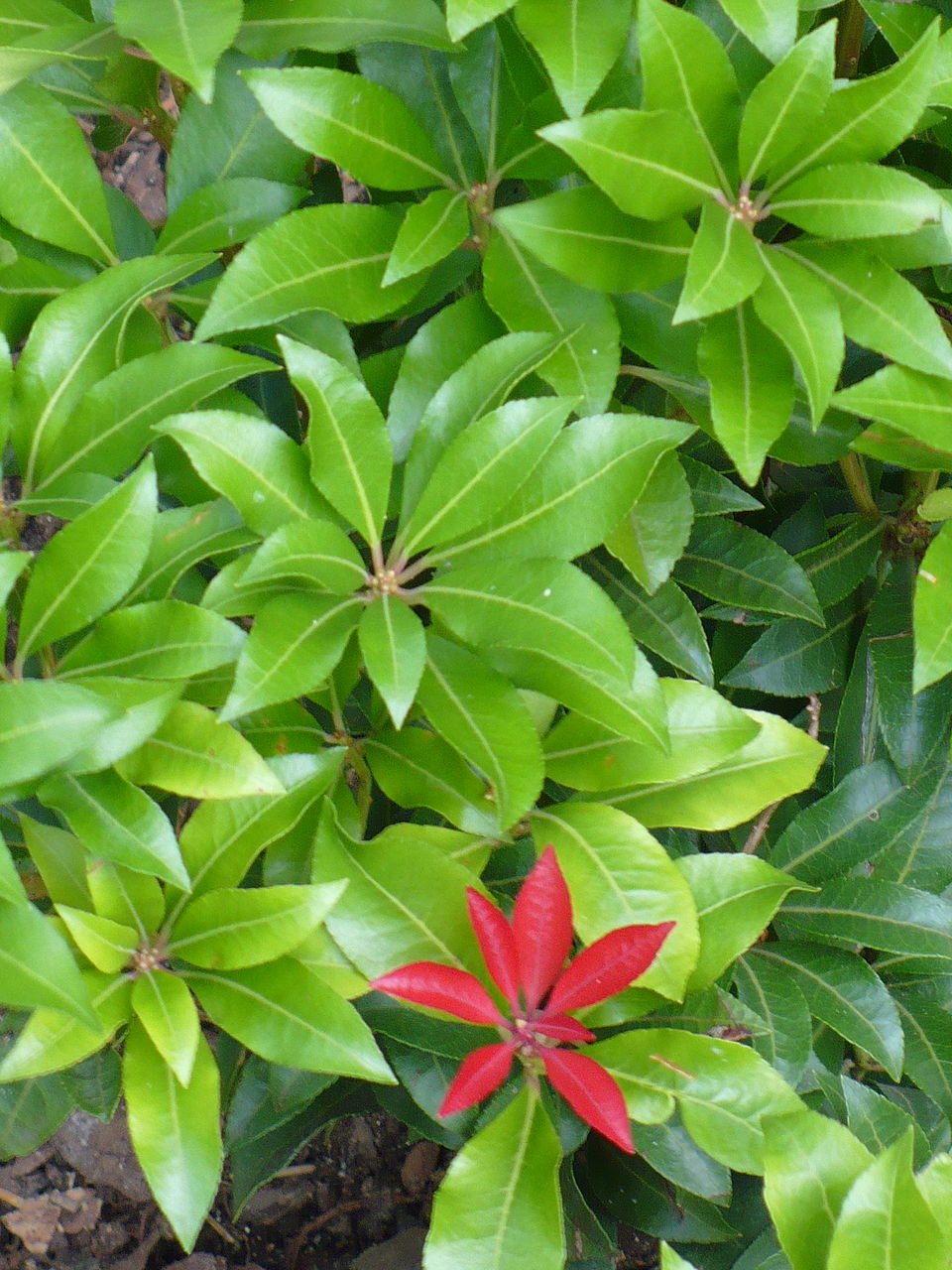
Pieris japonica 'Mountain Fire' is an evergreen shrub reaching 6-10 feet (1.8-3 m) tall and 6-8 feet (1.8-2.4 m) wide with an upright, broadly rounded habit. New foliage emerges bright red in early spring, holds red color for 3-4 weeks, then matures through bronze to glossy dark green. Mature leaves are narrow oblanceolate, 1.5-3.5 inches (4-9 cm) long, arranged in whorls at branch tips. Pendant terminal panicles 4-6 inches (10-15 cm) long open in March-April with urn-shaped white flowers, each 1/4 inch (6 mm) long. Flower buds form in late summer and remain visible on the shrub through winter as small green-pink clusters. Annual growth is 4-6 inches (10-15 cm); plants reach mature size in 10-12 years. Roots are shallow and intolerant of dry soil; a 2-3 inch (5-7.5 cm) mulch layer reduces root desiccation in zones 7 and warmer. All plant parts contain grayanotoxins; ingestion causes vomiting, weakness, and irregular heartbeat in humans, dogs, cats, and livestock.
Native Range
Pieris japonica is native to forested mountainsides in Japan, Taiwan, and eastern China at elevations of 2,000-6,000 feet (600-1,800 m), growing on acidic, humus-rich slopes alongside rhododendrons and other ericaceous species. The species was introduced to European cultivation in 1870. 'Mountain Fire' was selected in the Netherlands in the 1960s for the intensity and persistence of its red new growth.Suggested Uses
Used as a foundation planting, woodland edge specimen, or massed shrub border at 5-7 feet (1.5-2.1 m) spacing. Companion species include rhododendrons, azaleas, and other ericaceous shrubs requiring similar acidic, moist soils. Grows in 10-15 gallon (38-57 L) containers with regular watering and acidic potting media; lifespan in containers is shorter than in ground (8-12 years versus 30 years and longer).How to Identify
Appearance
Size & Dimensions
Height6' - 10'
Width/Spread6' - 8'
Bloom Information
Pendant white flower panicles 4-6 inches (10-15 cm) long open in March in zones 7-8 and April in zones 5-6, opening before the new leaf flush. Bloom lasts 2-3 weeks. Flowers form on the previous year wood; flower buds set in late summer and overwinter as visible green-pink clusters at branch tips, persisting through winter. Bee visitation is heavy during bloom.
Detailed Descriptions
Foliage Description
New growth bright red, maturing to dark greenGrowing Conditions
Sun Requirements
Requires 4-6 hours of direct sunlight daily
• Full Sun: 6+ hours of direct sunlight
• Partial Shade: 3-6 hours of direct sunlight
• Full Shade: Less than 3 hours of direct sunlight
Care & Maintenance
Care Guide
Plants establish in 2-3 growing seasons with weekly deep watering during the first summer. Mature plants need consistent moisture; soil should not dry below 6 inches (15 cm) deep. Foliage requires acidic soil at pH 4.5-6.0 with sustained organic matter; chlorosis develops in soils above pH 6.5. Lacebugs feed on the underside of leaves in hot, dry conditions in zones 7 and warmer, causing stippled bronzing of the upper leaf surface. Phytophthora root rot occurs in heavy clay soils with poor drainage. Annual mulch replenishment in spring before new growth maintains soil moisture and acidity.Pruning
Removal of spent flower panicles after bloom in late April or May redirects energy into new growth. Light tip-pruning after bloom shapes the plant; heavy cuts into older wood regrow slowly and unevenly. Damaged or crossing branches can be cut to ground level in early spring. Flowers form on the previous year wood, so pruning later than June eliminates the following spring bloom.Pruning Schedule
Prune: May
late spring
Container Growing
Suitable for container growing
Minimum container size: 10 gallons