Philadelphus, Genus, coronarius, Species,
- Genus & species
Mock orange
Southern and central Europe to the Caucasus
Overview
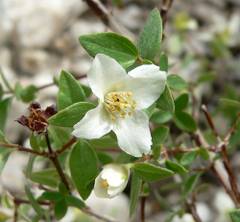
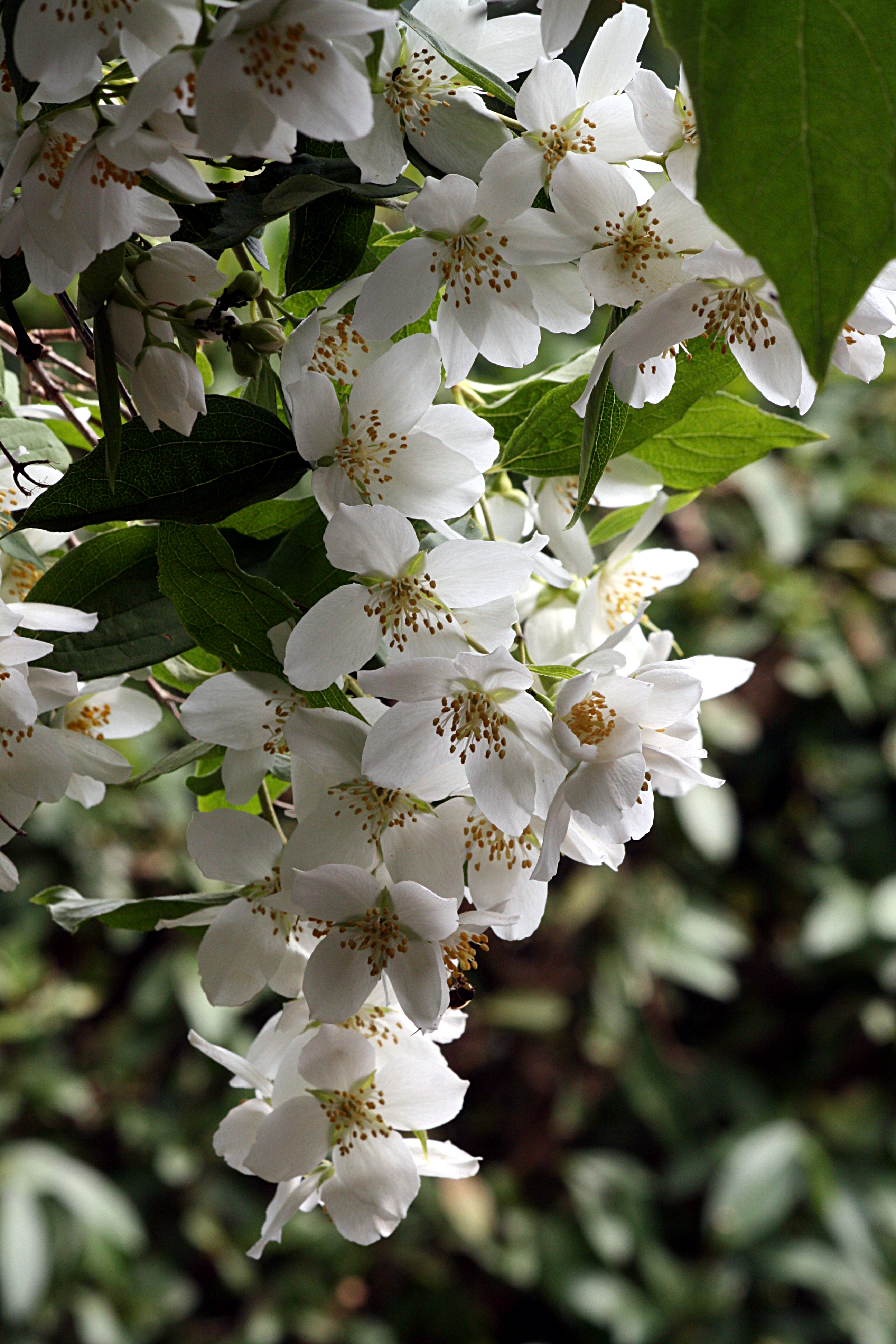
Philadelphus coronarius is a deciduous shrub reaching 10-12 feet (3-3.7 m) tall and 8-10 feet (2.4-3 m) wide, with upright stems that arch outward under the weight of flowers. Bark on stems over three years old peels in thin brown strips. Leaves are opposite, ovate, 1.5-4 inches (4-10 cm) long, dull mid-green with widely spaced teeth, turning yellow-green before falling in October. Flowers open cream-white, 1-1.5 inches (2.5-4 cm) across, with four petals around a cluster of yellow stamens, carried in racemes of 5-9 on the previous season's wood. The scent resembles orange blossom and carries 15-30 feet (4.5-9 m) in still air. Bloom lasts 2-3 weeks from late May into June, and the remaining 40 weeks of the year are foliage and bare stems only. Seed capsules are dry, four-parted, and 0.3 inch (7-8 mm) long. Stems older than 5-6 years flower sparsely, and the base opens up to leave bare wood 3-4 feet (0.9-1.2 m) high unless old stems are cut out. Suckers extend the clump 6-12 inches (15-30 cm) per year.
Native Range
Native to southern and central Europe from Italy and Austria through the Balkan Peninsula to the Caucasus, growing on rocky slopes, woodland margins, and river banks at 500-4,900 feet (150-1,500 m). Grown in northern European gardens since the 1560s and naturalized in parts of Britain, Scandinavia, and northeastern North America.Suggested Uses
Planted as an informal screen or boundary shrub at 6-8 foot (1.8-2.4 m) spacing, in mixed shrub borders, and near paths and windows where the scent carries during the 2-3 week bloom. Bare lower stems on older plants are commonly masked by perennials or low shrubs set 3-4 feet (0.9-1.2 m) in front. Container culture lasts only 2-3 years before root volume limits growth.How to Identify
Appearance
Size & Dimensions
Height10' - 12'
Width/Spread8' - 10'
Bloom Information
Flowers for 2-3 weeks between late May and late June, opening in mid-May in zones 7-8 and mid-June in zones 4-5. Individual flowers last 4-6 days. Bloom forms on wood grown the previous season, so stems cut in late winter or early spring carry no flowers that year. Late frost below 28F (-2C) at bud break lowers flower count for that season without lasting damage to the shrub.
Detailed Descriptions
Flower Description
Cream-white with yellow stamensFoliage Description
Dull mid-greenGrowing Conditions
Sun Requirements
Requires 6-8 hours of direct sunlight daily
• Full Sun: 6+ hours of direct sunlight
• Partial Shade: 3-6 hours of direct sunlight
• Full Shade: Less than 3 hours of direct sunlight
Care & Maintenance
Care Guide
Water weekly through the first two seasons; established shrubs hold through 3-4 weeks without rain, though leaf margins brown during prolonged drought on sandy soil. Growth continues across pH 6.0 to 8.0 including chalk soils, and no fertilizer is needed beyond an annual 2 inch (5 cm) compost mulch. Cutting one-third of the oldest stems to ground level each year after flowering holds stem age below six years and keeps flower numbers steady. Aphids colonize shoot tips in spring and leave honeydew and sooty mold on the foliage below. Suckers rise 6-12 inches (15-30 cm) from the crown each year and are severed below soil level where the clump is held to a set width. Powdery mildew forms on shaded lower foliage in humid summers without reducing the following season's bloom.Pruning
Stems that have flowered are cut back to a vigorous side shoot within 2-4 weeks of the last flower fading, since buds for the next season form on growth made from July onward. One-third of the oldest stems are taken to ground level in the same operation, replacing the framework over three years. Shrubs cut hard to 12 inches (30 cm) in late winter regrow 3-5 feet (0.9-1.5 m) in one season and resume flowering in the second year.Pruning Schedule
Prune: June–July
summer