Philadelphus, Genus, lewisii, Species,
- Genus & species
Lewis' mock orange
Inland Pacific Northwest and Northern Rockies
Overview
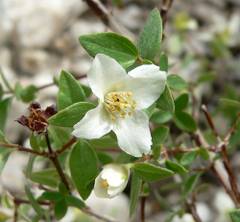
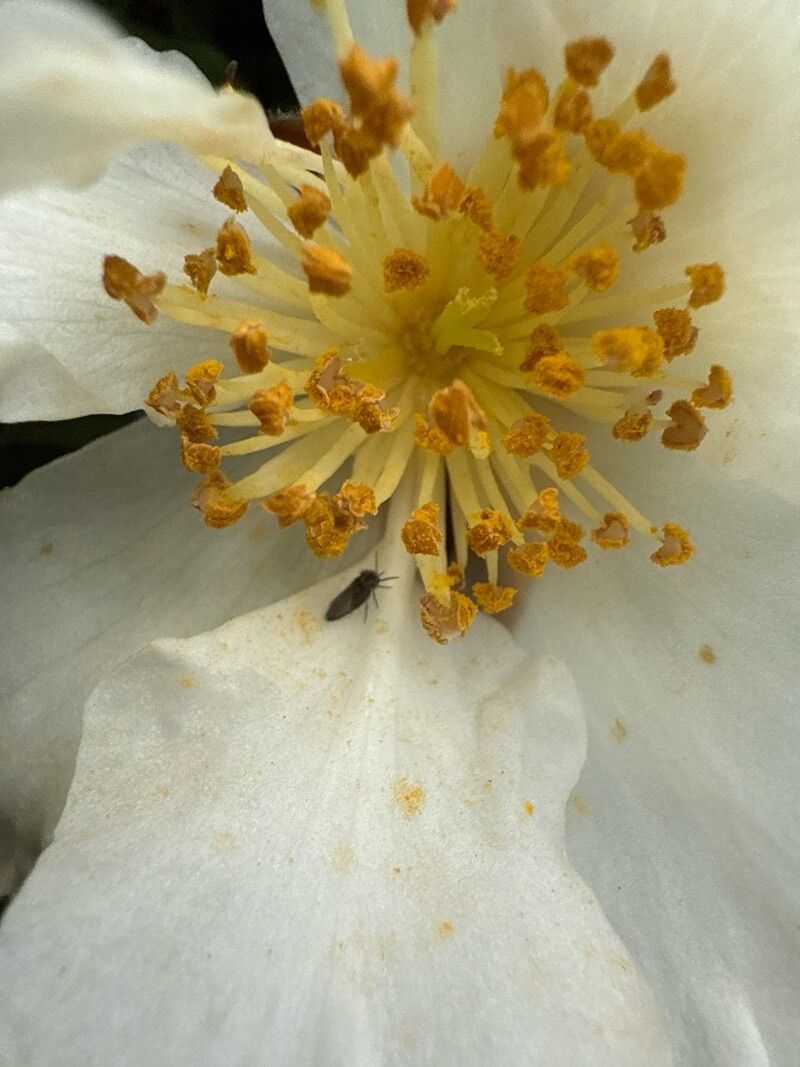
A deciduous shrub reaching 5-10 feet (1.5-3 m) tall and 4-8 feet (1.2-2.4 m) wide with multiple stems arising from the base. Bark on young branches reddish-brown, peeling in thin strips on older wood to reveal gray-tan inner bark. Leaves opposite, ovate to elliptic, 1.5-3 inches (4-7.5 cm) long, with smooth or sparsely toothed margins, light to medium green and slightly hairy. Flowers borne in clusters of 3-15 at the tips of short lateral branches, each 1-1.5 inches (2.5-4 cm) across with 4 (occasionally 5) white petals surrounding 25-40 yellow stamens, strongly fragrant with a citrus-orange-blossom scent. The fragrance is the source of the common name 'mock orange'. Capsules 0.3-0.4 inch (8-10 mm), ripening in late summer and persisting through winter. Plants live 20-30 years in stable garden conditions; older stems can be removed annually to encourage replacement from the base. Designated as the state flower of Idaho. Foliage turns yellow to gold in autumn before dropping in October-November.
Native Range
Native to western North America from southern British Columbia south through Washington, Oregon, Idaho, Montana, and into northern California. Found on dry to moist rocky slopes, streambanks, and open coniferous forest at 500 to 7,000 feet (150-2,130 m) elevation.Suggested Uses
Commonly planted in mixed shrub borders, naturalistic native plant gardens, and streambank restoration projects at 6-10 foot (1.8-3 m) spacing. Suitable for large containers of at least 15 gallons (57 L) but reaches mature size faster in the ground. Pairs in cultivation with other inland Pacific Northwest natives such as Holodiscus discolor, Ribes aureum, and Symphoricarpos albus.How to Identify
Appearance
Size & Dimensions
Height5' - 10'
Width/Spread4' - 8'
Bloom Information
Detailed Descriptions
Flower Description
white with yellow stamensFoliage Description
light to medium greenGrowing Conditions
Sun Requirements
Requires 6-12 hours of direct sunlight daily
• Full Sun: 6+ hours of direct sunlight
• Partial Shade: 3-6 hours of direct sunlight
• Full Shade: Less than 3 hours of direct sunlight
Care & Maintenance
Care Guide
Plant container-grown or bare-root specimens in autumn through early spring. Water weekly during the first growing season; established shrubs tolerate periods of 4-6 weeks without rain in zones 5-7. Plants in dry sites flower less profusely than those with consistent spring moisture. Powdery mildew develops on stressed plants in humid conditions but does not kill them. Aphids and spider mites appear in hot dry weather but rarely defoliate. Plants grow 12-24 inches (30-60 cm) per year in good conditions and reach mature size in 5-7 years. Suckering at the base is common and forms loose clonal thickets over 10-15 years.Pruning
Prune immediately after flowering in late June or July, removing one-third of the oldest stems to ground level annually to encourage replacement from the base. Cutting flowering stems back hard in autumn or late winter removes that year's flower buds, since flowers form on year-old wood. Suckers can be removed at the base at any time during the growing season.Pruning Schedule
Prune: June–July
summer
Container Growing
Suitable for container growing
Minimum container size: 15 gallons