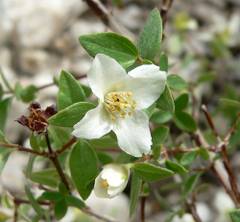
Philadelphus, Genus, coronarius, Species, 'Aureus', Cultivar,
- Genus & species
- Cultivar
golden mock orange
Species native to southern Europe (Italy, Austria, the Balkans); cultivar selected for golden foliage
Overview
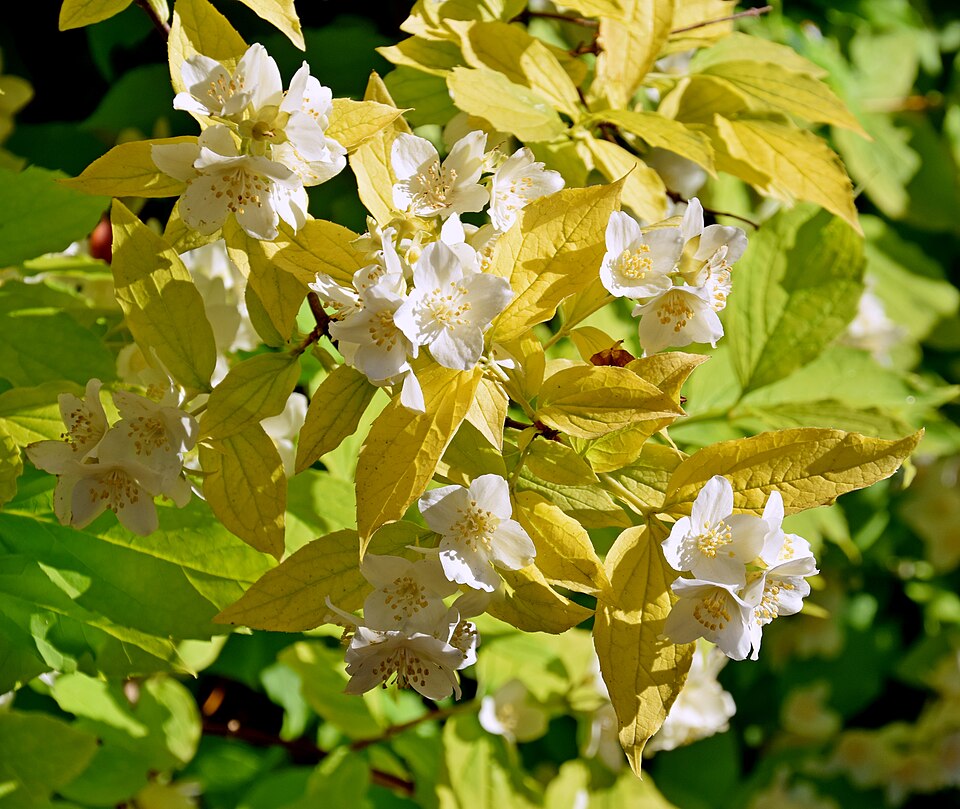
Philadelphus coronarius 'Aureus' is a deciduous shrub reaching 6–8 feet (1.8–2.4 m) tall and 5–7 feet (1.5–2.1 m) wide, with an upright arching habit. The European mock orange species P. coronarius has been in cultivation since the 16th century; this golden-leaved cultivar is selected for foliage color rather than for a bloom variation. Leaves are opposite, ovate, 2–4 inches (5–10 cm) long, emerging bright golden-yellow in April–May, gradually fading to yellow-green through June and July, and settling to a muted greenish-yellow by late summer before autumn color develops. The full sun position that produces the saturated golden-yellow spring color also carries a risk of leaf-margin scorch in summer heat above 85°F (29°C); partial shade eliminates the scorch risk but shifts the spring color toward a paler chartreuse rather than a saturated gold. Flowers are single, 4-petaled, white, 1–1.5 inches (2.5–4 cm) across, borne along the arching stems in May–June over a 2–3 week window on the previous year's wood. Fragrance is sweet and intense, detectable 25–40 feet (7.5–12 m) from the plant on still evenings — the strongest fragrance in the cultivated Philadelphus group, exceeding the 20–30 foot (6–9 m) range of hybrid cultivars such as 'Belle Etoile' and 'Innocence'. Growth rate is moderate; the shrub reaches full mature size in 5 growing seasons. Hardy to USDA zone 4. Not known to be toxic to pets or humans.
Native Range
Philadelphus coronarius is native to southern Europe — Italy, Austria, and the Balkans — occurring on rocky slopes and woodland edges. 'Aureus' is a golden-leaved cultivar of the species.Suggested Uses
Used as a specimen shrub in mixed borders, near outdoor seating, at the back of a perennial planting, or as a foliage accent in shrub groupings at 5–6 foot (1.5–1.8 m) spacing. The golden-yellow spring foliage reads as a color element from late April through mid-June, after which the leaves fade to yellow-green and the shrub reverts to a less prominent green mass through the rest of the season — this narrow 6–8 week window of peak foliage color makes the cultivar a spring-focused feature rather than a year-round color anchor. Fragrance at 25–40 feet (7.5–12 m) from the plant on still evenings sits at the strongest range of cultivated mock oranges and suits siting near evening-used outdoor spaces. The plant does not grow well in full sun above 6 hours of direct midday light in hot-summer climates (leaf scorch), or in sites requiring year-round foliage color interest.How to Identify
Appearance
Size & Dimensions
Height6' - 8'
Width/Spread5' - 7'
Bloom Information
Single 4-petaled white flowers 1–1.5 inches (2.5–4 cm) across appear along arching stems in May–June over a 2–3 week window on the previous year's wood. Sweet-scented fragrance carries 25–40 feet (7.5–12 m) from the plant on still evenings — the strongest fragrance range in the cultivated Philadelphus group.
Detailed Descriptions
Flower Description
White; single 4-petaled flowers 1-1.5 inches across; sweet-scented fragrance carrying 25-40 feet on still evenings; May-June on previous year's woodFoliage Description
Bright golden-yellow at emergence in April-May; fades to yellow-green through June-July; settles to muted greenish-yellow by late summer; opposite, ovate, 2-4 inches longGrowing Conditions
Sun Requirements
Requires 3-8 hours of direct sunlight daily
• Full Sun: 6+ hours of direct sunlight
• Partial Shade: 3-6 hours of direct sunlight
• Full Shade: Less than 3 hours of direct sunlight
Care & Maintenance
Care Guide
Grow in partial shade to full sun with 3–8 hours of direct light in moist, well-drained loam, clay, sand, or silt at pH 5.5–7.5. Siting trade-off: full sun produces the saturated golden-yellow spring foliage color but can scorch leaf margins in summer heat above 85°F (29°C), while partial shade eliminates scorch risk but shifts spring color toward paler chartreuse. A position receiving morning sun (3–6 hours before noon) and afternoon shade captures most of the color saturation while reducing scorch, which makes east-facing planting sites the workable compromise in hot-summer regions. The shrub flowers on wood produced the previous growing season — prune only after flowering ends. Water deeply once per week during the first two growing seasons, then rely on natural rainfall during typical weather. Apply 2–3 inches (5–8 cm) of organic mulch over the root zone in spring. Hardy to USDA zone 4.Pruning
Prune immediately after flowering ends in June or July. Remove up to one-third of the oldest stems at ground level each year to encourage new flowering wood from the base; renewal pruning over 3–4 years replaces the full framework of the shrub and maintains vigorous bloom. Do not prune between September and the following May — winter and spring cuts remove the flower buds forming on the previous year's wood.Pruning Schedule
Prune: June–July
summer