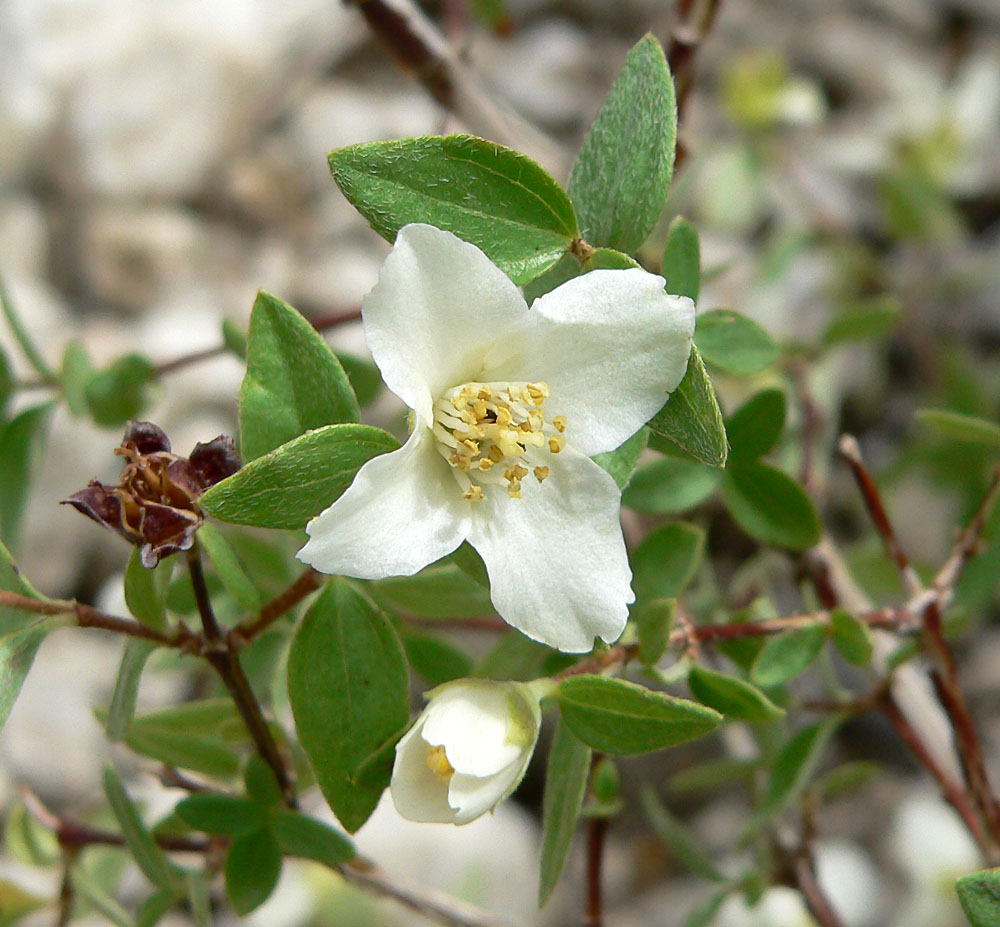
Philadelphus, Genus, microphyllus, Species,
- Genus & species
littleleaf mock orange
Southwestern United States and Mexico (Colorado, Utah, New Mexico, Arizona, and northern Mexico; dry rocky slopes, canyons, and pine-juniper woodland at 5000-9000 ft / 1500-2700 m)
Overview
Philadelphus microphyllus is a deciduous shrub reaching 3–5 feet (0.9–1.5 m) tall with a spread of 3–4 feet (0.9–1.2 m) and a compact dense twiggy habit. Native to the southwestern United States and Mexico, this species carries unusually small leaves for the genus—opposite ovate leaves run only 0.3–0.8 inches (8–20 mm) long, which reads as the smallest leaf scale among commonly cultivated mock oranges (the specific epithet microphyllus translates from Greek as 'small-leaved'). Single white 4-petaled flowers 0.8–1 inch (2–2.5 cm) across open strongly fragrant with a sweet fruity scent from June through July, which runs later than the May–June bloom window carried by most Philadelphus species in commercial trade. Growth rate runs slow. Hardy to zone 5. The small-scale texture from the tiny leaves combined with the compact habit fits the species to rock garden and small-space garden positions where larger mock oranges cannot contribute. Drought tolerance runs higher than most Philadelphus species because the species originates in dry southwestern mountain habitats.
Native Range
Philadelphus microphyllus is native to the southwestern United States and northern Mexico, ranging across Colorado, Utah, New Mexico, Arizona, and the mountain ranges of northern Mexico. The species grows on dry rocky slopes, in canyon systems, and through pine-juniper woodland habitats at 5,000–9,000 feet (1,500–2,700 m) elevation. The dry southwestern montane native ecology translates in garden cultivation to the drought tolerance and alkaline-soil tolerance that separate the species from moisture-loving eastern Philadelphus species.Suggested Uses
Planted in rock gardens, xeriscape compositions, or small-scale mixed borders at 3–4 foot (0.9–1.2 m) spacing in zone-5-and-warmer gardens. The tiny-leaved small-scale foliage texture supplies a compact character that no other commonly cultivated mock orange can match, and that small-scale compact form extends the genus to container plantings and rock-garden pockets where full-sized mock oranges cannot fit. Late-season bloom (June–July) extends the mock orange season by 2–4 weeks beyond the May–June main flush carried by most other Philadelphus. Drought tolerance runs higher than other mock orange species in commercial cultivation. Growth rate runs slow. Moist rich fertile soils and shaded positions are poor fits for the species.How to Identify
Appearance
Size & Dimensions
Height3' - 5'
Width/Spread3' - 4'
Bloom Information
Single white 4-petaled flowers 0.8–1 inch (2–2.5 cm) across open strongly fragrant with a sweet fruity scent from June through July. The species blooms later than most Philadelphus in commercial trade, which extends the mock orange bloom season by 2–4 weeks in gardens that combine the species with earlier-blooming cultivars. Fresh bloom duration runs 2–3 weeks. Flowers open on the previous year's wood.
Detailed Descriptions
Flower Description
White; single 4-petaled 0.8-1 inch across; strongly fragrant with sweet fruity scent; June-JulyFoliage Description
Medium green; tiny ovate 0.3-0.8 inch (the smallest leaves in the genus); opposite arrangement; small-scale foliage textureGrowing Conditions
Sun Requirements
Requires 6-10 hours of direct sunlight daily
• Full Sun: 6+ hours of direct sunlight
• Partial Shade: 3-6 hours of direct sunlight
• Full Shade: Less than 3 hours of direct sunlight
Care & Maintenance
Care Guide
Full sun in well-drained lean soil (pH 6.0–8.0) matches the species' cultivation needs. Hardy to zone 5 (−20°F / −29°C). Drought tolerance runs higher than most Philadelphus species because the species originates in dry southwestern mountain habitats. Lean soil and sharp drainage are essential because rich moist soils cause lush floppy growth that loses the compact habit. Growth rate runs slow. The species tolerates alkaline soils, which extends garden suitability to limestone-based or chalk-based garden soils that defeat many acid-preferring shrubs.Pruning
Pruning runs minimal because of the slow compact growth habit. Light shaping pruning occurs after the bloom window closes in July where form correction is wanted. The oldest stems are cut at ground level every few years to encourage fresh shoots from the base.Pruning Schedule
Prune: July
summer
Container Growing
Suitable for container growing
Minimum container size: 7 gallons


