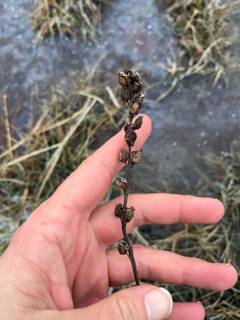
Pedicularis, Genus, densiflora, Species,
- Genus & species
Warrior's plume
Overview
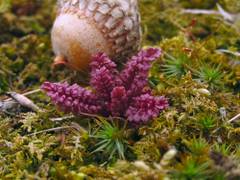
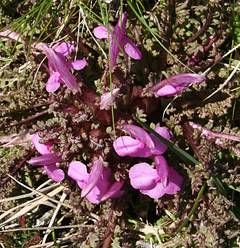
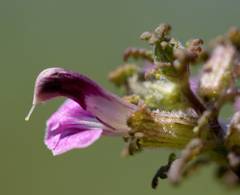
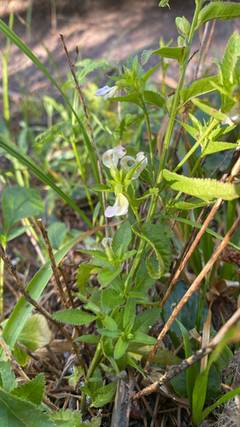
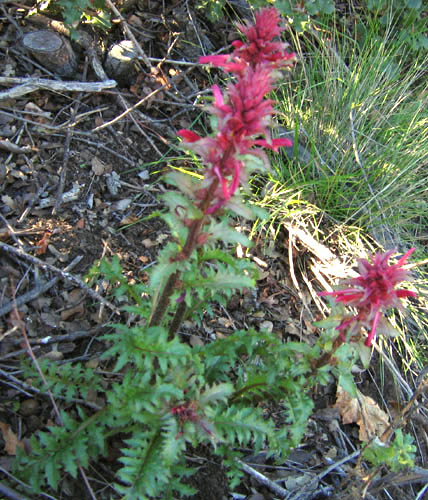
Pedicularis densiflora is a hemiparasitic perennial of the Pacific Coast states, growing 8-20 inches (20-50 cm) tall in clumps that draw part of their water and nutrients from the roots of nearby shrubs. The fern-like leaves are deeply divided, 2-6 inches (5-15 cm) long, and often flushed red, especially in cool weather. Dense spikes of crimson to deep red two-lipped flowers 0.75-1 inch (2-2.5 cm) long appear from January to May, packed tightly above the foliage. The flowers draw hummingbirds and bumblebees in early spring when few other nectar sources are open. Because the roots attach to host shrubs such as manzanita and chamise, the plant rarely survives transplanting or cultivation without its hosts. It grows in chaparral, oak woodland, and coniferous forest below 7,000 feet (2,100 m). The narrow host dependence limits its use to wild and restoration settings rather than ordinary garden beds.
Native Range
Native to the Pacific Coast of North America, from southern Oregon through California into northern Baja California, in chaparral and open woodland.Suggested Uses
Used in habitat restoration and native plant preserves where its host shrubs already grow. It contributes early-season color in chaparral and oak woodland plantings. The plant is seldom grown in conventional borders because of its host needs.How to Identify
Appearance
Size & Dimensions
Height8" - 1'8"
Width/Spread1' - 1'6"
Bloom Information
Detailed Descriptions
Flower Description
crimson to deep redFoliage Description
green to red-tingedGrowing Conditions
Sun Requirements
Requires 4-8 hours of direct sunlight daily
• Full Sun: 6+ hours of direct sunlight
• Partial Shade: 3-6 hours of direct sunlight
• Full Shade: Less than 3 hours of direct sunlight
Care & Maintenance
Care Guide
Grows in part shade to full sun in well-drained, rocky or sandy soils of chaparral and woodland, with a pH of 5.5-7.0. As a root hemiparasite it depends on living host shrubs and seldom establishes from transplants or seed without them. Where it occurs naturally it needs no supplemental water or feeding. Soil must drain freely, as the roots rot in wet ground. Hardy in USDA zones 8-10. Cultivation outside its native range and host associations rarely succeeds.Pruning
Spent flower spikes are removed after bloom in wild stands if seed spread is not wanted. The foliage is left to die back naturally as summer dormancy begins. No structural pruning applies.Pruning Schedule
Prune: June
summer