Oxalis, Genus, corniculata, Species,
- Genus & species
trailing yellow sorrel
Cosmopolitan distribution with probable origin in the tropical and subtropical Old World; lawns, gardens, nurseries, greenhouse floors, container surfaces, and cracks in pavement from sea level to approximately 6,000 feet (1,800 m).
Overview
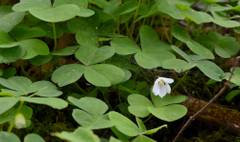
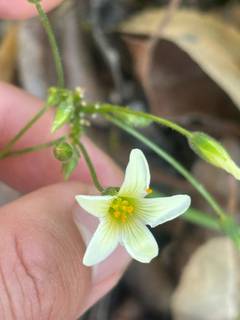
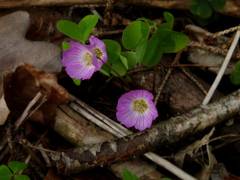
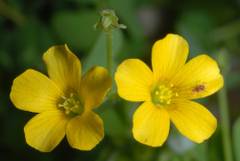
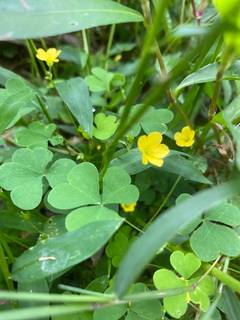
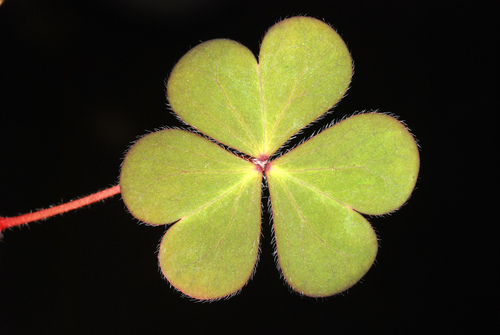
Oxalis corniculata is a prostrate trailing perennial reaching 2-8 inches (5-20 cm) tall and 12-36 inches (30-90 cm) wide, forming dense mat-like colonies of slender hairy stems that root at the nodes. Leaves are alternate, trifoliate with three obcordate (heart-shaped, notched at the apex) leaflets 0.2-0.5 inch (5-12 mm) wide. Foliage ranges from green to purplish-bronze, and the purple-leaved form is common in the Pacific Northwest and is sometimes sold as an ornamental in nurseries. Leaflets fold downward along the midrib at night and under drought stress (nyctinastic movement). Five-petaled yellow flowers 0.2-0.4 inch (5-10 mm) across open in clusters of 1-5 on slender peduncles from the leaf axils from April through October. Fruit is an elongated cylindrical capsule 0.4-0.8 inch (10-20 mm) long that splits explosively along its length when ripe and ejects seeds up to 6 feet (1.8 m). A single plant produces 500-5,000 seeds. Seeds are small, sticky when wet, and adhere to shoes, hand tools, and nursery pots, which means contaminated potting mix and container surfaces are the primary vector for greenhouse and nursery spread. Hardy in USDA zones 5-10. Plants contain oxalic acid and soluble oxalates that give foliage a sour taste; ingestion of substantial quantities by cats or dogs can produce oxalate-associated gastrointestinal irritation and in rare cases acute kidney injury from calcium-oxalate crystalluria.
Native Range
Oxalis corniculata has a cosmopolitan distribution with a probable origin in the tropical and subtropical Old World, though the species has been naturalized worldwide for so long that pinning down an exact origin is not possible from the historical record. Plants grow in lawns, gardens, nurseries, greenhouse floors, container surfaces, and cracks in pavement from sea level to approximately 6,000 feet (1,800 m) and are present on all continents except Antarctica.Suggested Uses
The species is used in nursery and greenhouse weed management training as the primary container-weed case study. The explosive capsule dispersal mechanism is a teaching demonstration in plant dispersal ecology, and the nyctinastic leaf-folding behavior is studied in plant circadian biology. Oxalic acid content and calcium-oxalate crystal formation are taught in plant secondary chemistry and in veterinary toxicology. Dried specimens are used in Oxalidaceae morphology exercises for the trifoliate obcordate leaf and the explosive capsule fruit type.How to Identify
Appearance
Size & Dimensions
Height2" - 8"
Width/Spread1' - 3'
Bloom Information
Five-petaled yellow flowers 0.2-0.4 inch (5-10 mm) across open continuously in the leaf axils from April through October, with a total bloom span of 14-18 weeks. Individual flowers last 1-2 days. Flowers are self-pollinating, and the species sets seed even in the absence of insect visitors. In the Pacific Northwest, flowering occurs nearly year-round in greenhouses and in mild-winter lowland sites outdoors. Capsules mature 3-4 weeks after flowering and split explosively when the drying capsule wall tension releases, ejecting seeds up to 6 feet (1.8 m) from the parent plant.
Detailed Descriptions
Flower Description
Yellow five-petaled flowers 0.2-0.4 inch (5-10 mm) across, produced in clusters of 1-5 on slender peduncles from the leaf axilsFoliage Description
Green to purplish-bronze; trifoliate with obcordate (heart-shaped, notched at the apex) leaflets 0.2-0.5 inch (5-12 mm) wide; leaflets fold downward along the midrib at night and under drought stress (nyctinastic movement); purple-leaved forms are common in the Pacific NorthwestGrowing Conditions
Sun Requirements
Requires 3-10 hours of direct sunlight daily
• Full Sun: 6+ hours of direct sunlight
• Partial Shade: 3-6 hours of direct sunlight
• Full Shade: Less than 3 hours of direct sunlight