Oxalis, Genus, articulata, Species,
- Genus & species
Pink sorrel
Overview
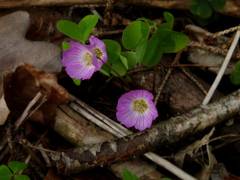
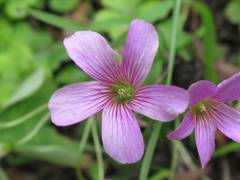
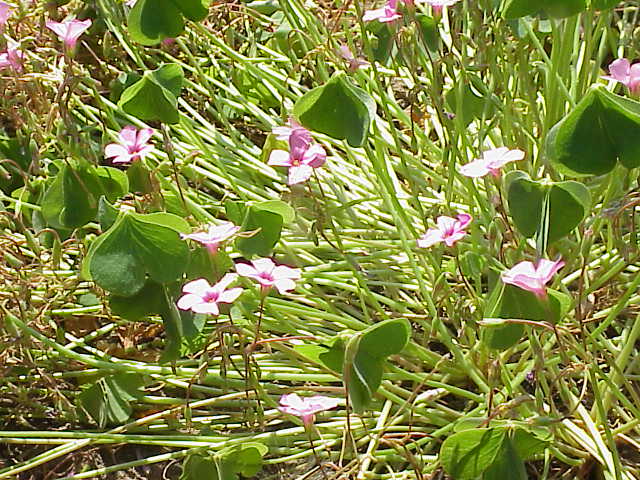
Oxalis articulata is a clump-forming perennial of the wood-sorrel family, growing from a thick, knotted tuberous rootstock to 6-12 inches (15-30 cm) tall and wide. The leaves are basal and trifoliate, each with three heart-shaped leaflets that fold down at night, carried on long slender stalks and often dotted with tiny orange flecks beneath. From late spring to autumn it produces loose umbels of funnel-shaped flowers 0.5-0.8 inch (12-20 mm) across in shades of rose-pink to magenta, held just above the foliage on leafless stems. The flowers close in dull weather and open in sun. It forms dense, weed-suppressing clumps and spreads slowly as the rootstock thickens, and detached pieces of root can establish new plants. Native to temperate South America, in southern Brazil, Argentina, Uruguay, and Paraguay, it has naturalized widely in Europe, North America, and Australasia, sometimes persisting as a garden escape on banks and roadsides. Foliage is damaged by hard frost but resprouts from the rootstock in spring. Growth thins in deep shade, where flowering is sparse.
Native Range
Oxalis articulata is native to temperate South America, including southern Brazil, Uruguay, Paraguay, and northern Argentina. It has naturalized in Europe, North America, southern Africa, and Australasia.Suggested Uses
Used at the front of borders, in gravel gardens, and on sunny banks as ground cover, where the long flowering season draws bees and hoverflies. It suits containers and edging where its spread can be contained.How to Identify
Appearance
Size & Dimensions
Height6" - 1'
Width/Spread6" - 1'
Bloom Information
Flowers appear from late spring through to autumn, with the heaviest flush in early summer. Each umbel carries several pink five-petalled flowers that open in sunshine and close at dusk. Flowering continues intermittently until the first frosts.
Detailed Descriptions
Flower Description
rose-pink to magentaFoliage Description
greenGrowing Conditions
Sun Requirements
Requires 4-8 hours of direct sunlight daily
• Full Sun: 6+ hours of direct sunlight
• Partial Shade: 3-6 hours of direct sunlight
• Full Shade: Less than 3 hours of direct sunlight
Care & Maintenance
Care Guide
Grows in full sun to part shade on most well-drained soils and tolerates poor and stony ground once established. A soil pH from 5.5 to 7.5 suits it, and it needs little feeding. The tuberous rootstock stores water, so established plants withstand short dry spells, though prolonged drought stops flowering. Clumps can be lifted and divided in spring, and stray root fragments left in the soil will regrow. In deep shade the foliage stretches and flowers thin. It is hardy to about USDA zone 7, with foliage cut back by hard frost and regrowth from the rootstock in spring.Pruning
No pruning is needed. Frost-damaged or tatty leaves can be removed in late winter before new growth begins. Spent flower stems can be pulled away to keep clumps tidy.Container Growing
Suitable for container growing
Minimum container size: 1 gallons